

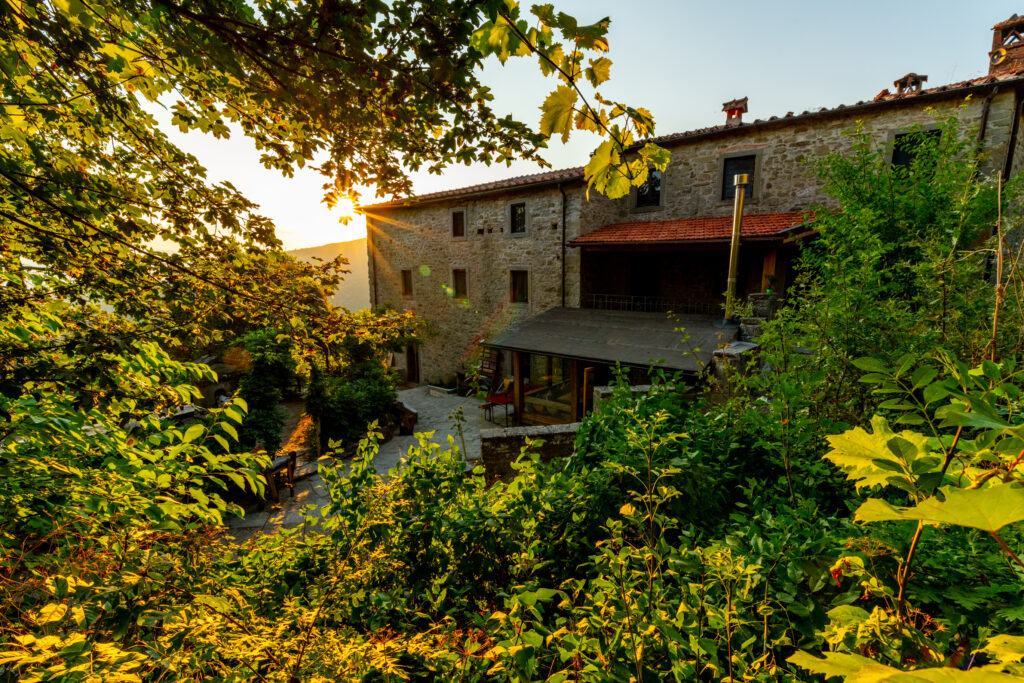
Children rarely get bored on a holiday in Tuscany, as long as you choose an environment that gives them space to explore, move, and participate. The key lies not in organized attractions, but in an authentic setting with nature, freedom, and activities that truly resonate with children. In this article, we answer the most frequently asked questions about a family-friendly holiday in Tuscany.
What makes Tuscany so well-suited for children on holiday?
Tuscany is particularly well-suited for children because the region offers a combination of nature, culture, and space that is rarely found in popular beach resorts or cities. Children are given the freedom to play outside, discover new things, and connect with a different culture in a natural way, without everything having to be organized for them.
What sets Tuscany apart from an average holiday destination is the scale and pace. The hills, forests, and rivers form one big playground. Children can climb, swim, spot animals, and run through meadows. That kind of freedom is increasingly rare in our busy world, and that is precisely why it is so valuable for families looking for more than a sun lounger by the pool.
Moreover, Tuscany is also culturally accessible. Italians are naturally warm-hearted toward children, and in small-scale agriturismo settings, children are treated as full guests, not as an afterthought.
What outdoor activities keep children entertained in Tuscany?
Tuscany offers a wide range of outdoor activities for children of all ages, from swimming in rivers and lakes to hiking through forests, cycling on unpaved tracks, and truffle hunting with a dog. Nature itself is the greatest activity, and that is exactly what children need to truly unwind while staying active at the same time.
- Swimming: In addition to swimming pools, the Tuscan hills are home to countless streams with natural swimming spots, ideal for children who love water.
- Hiking: Short trails through forests and along fields are manageable for children from around age six, especially when there is something to discover along the way.
- E-mountain biking: For older children and teenagers, electric mountain biking on unpaved tracks is a popular activity that also brings along less sporty cyclists.
- Truffle hunting: A truffle hunt with a trained dog is a truly adventurous experience for children that they will not soon forget.
- Foraging tours: Identifying mushrooms, herbs, and wild plants in the forest directly appeals to children’s curiosity.
The great thing about an agriturismo in Tuscany with children is that all these activities take place literally right outside the door. No transport needed, no planning, and no queues.
How do you keep teenagers engaged during a Tuscan holiday?
Keeping teenagers engaged in Tuscany works best by offering them activities that are challenging and authentic, not childish or touristy. Activities such as e-mountain biking on rugged tracks, truffle hunting in the forest, or making pasta from scratch give teenagers the feeling that they are doing something real, not something designed for them.
Teenagers respond well to freedom and responsibility. An environment without cars, with space to explore and without constant supervision, gives them exactly that. Let them choose their own route during a hike, or involve them in cooking a meal with local ingredients.
Social connection also plays a major role. When multiple families stay together in one place, teenagers quickly find peers their own age. Shared meals at long tables, an evening by the pool, or a joint activity create a social dynamic that teenagers appreciate, even if they don’t always admit it.
What can children learn from authentic Tuscan experiences?
Children learn more on an authentic Tuscan holiday than they do at school: they discover where food comes from, what a different culture tastes and sounds like, and what it is like to live outdoors without the distraction of screens and city noise. These are experiences that shape their view of the world in a lasting way.
- Food and its origins: Making pasta from fresh ingredients, smoking sausage, or digging up truffles shows children how food really works, far beyond the supermarket.
- Language and culture: Learning a few words of Italian, joining an Italian lesson, or simply communicating with local residents gives children confidence and cultural curiosity.
- Nature and sustainability: Living in an environment where sustainability is visible — from local produce to energy-efficient systems — makes abstract concepts concrete for children.
- Independence: In a car-free, safe environment, children learn to entertain themselves, explore, and take responsibility for their own enjoyment.
Is an agriturismo in Tuscany child-friendly enough for young children?
A child-friendly agriturismo in Italy is an excellent choice for young children, as long as you choose accommodation with its own kitchen, a safe outdoor area, and a swimming pool. Young children need structure and familiarity, and a holiday home with its own facilities gives parents the control they need without sacrificing the experience.
Practical matters such as a private kitchen for regular mealtimes, a fenced pool, and a safe courtyard are the minimum requirements for families with toddlers or young children. Many agriturismo properties in Tuscany offer this, but it pays to compare carefully. Holiday homes in Tuscany with multiple bedrooms and a private kitchen are often the best choice for young families.
An added benefit of small-scale agriturismo properties is the peaceful surroundings. No busy roads, no noise from other tourists, no overcrowded restaurants. That makes life with young children considerably more pleasant for everyone involved.
When is the best time to visit Tuscany with children?
The best period for a family holiday in Tuscany is from mid-June to the end of August, when the weather is consistently warm, nature is at its most beautiful, and the majority of experiences and activities are available. This coincides with the Dutch and Belgian summer holidays, making it also the most practically convenient period for families.
May and September are alternative options for families with a bit more flexibility in their school schedule. The weather is pleasant, crowds are lower, and prices are often more favorable. For children who cope well with heat, July is the absolute peak month, with temperatures that invite hours of swimming and outdoor play.
Bear in mind that Tuscany can be busy in August in the popular cities, but the remote hills and valleys are actually at their best during this time. A stay in a small-scale hotel or holiday home far from the tourist hotspots gives families the peace and space they are looking for, even during peak season.
How Novanta helps create an unforgettable family holiday in Tuscany
Novanta, tucked away in the Gello valley in the Casentino hills, offers exactly what families are looking for when they want an authentic, active holiday in Tuscany without it becoming a holiday park. The borgo is car-free, nature begins right outside the door, and children are given the freedom to explore at their own pace.
- Holiday homes with 2 or 3 bedrooms, a private kitchen, and access to the 20-metre swimming pool, ideal for families or multiple families together.
- Activities for all ages: truffle hunting, pasta making, e-mountain biking, foraging tours, and river excursions.
- Communal tables where children make friends and families eat, drink, and share stories together.
- 300 hectares of nature bordering the Casentino National Park, with walking trails, forests, and rivers directly accessible from the borgo.
- Sustainable approach with local produce, energy-efficient systems, and respect for nature — values that children take away with them too.
Would you like to see which accommodations are available for your family or group? Browse the holiday homes at Novanta and plan an unforgettable summer in the Tuscan hills.
Frequently Asked Questions
How far in advance should I book an agriturismo in Tuscany when travelling with children?
For a summer holiday in Tuscany, especially in July and August, it is strongly recommended to book at least four to six months in advance. Small-scale agriturismo properties with child-friendly facilities such as a fenced pool and multiple bedrooms fill up quickly, precisely because families are increasingly choosing this type of accommodation. If you plan to travel in May or September, you have a little more flexibility, but the same rule applies: the earlier you book, the more choice you have.
What is the minimum age for activities such as truffle hunting or e-mountain biking?
Truffle hunting is an activity that is already suitable for children from around age five, because the adventurous nature of the activity and the dog immediately capture their attention and no physical exertion is required. E-mountain biking is generally suitable for children from around age ten to twelve, depending on their riding ability and height. When booking activities, always ask about the specific age and height requirements so you are not caught off guard on the day.
Do I need to speak Italian to stay comfortably with children at a Tuscan agriturismo?
Speaking Italian is absolutely not a requirement, but learning a few basic words is both practical and fun, especially for children. At most small-scale agriturismo properties and borgos that cater to international guests, the staff speak English and sometimes Dutch as well. Children also love picking up a few Italian words themselves and using them, which immediately adds an extra educational dimension to the holiday.
How do I deal with the heat when staying with young children during the Tuscan summer?
The hottest hours in Tuscany fall between twelve and five in the afternoon, and it is wise to use those hours for an afternoon nap, swimming in the pool, or activities in the shade. Plan walks and outdoor activities preferably early in the morning or late in the afternoon, when temperatures are more pleasant. Always make sure you have enough water, sunscreen and a hat for the children, and choose accommodation with air conditioning or good shade for the bedrooms.
Can children with food allergies or intolerances be well catered for in Tuscany?
Italy is generally well set up for common food intolerances, particularly gluten intolerance, because there has long been a high level of awareness around coeliac disease in the country. In an agriturismo with a private kitchen, you also have the freedom to cook for yourself using local, fresh ingredients, which makes it easier to accommodate specific dietary needs. When booking, always clearly state any allergies or intolerances so that the accommodation and any shared meals can be adapted accordingly.
What should I pack when hiking or foraging in the Tuscan countryside with children?
Good walking shoes or sturdy trainers are a must, as the paths in the Tuscan hills can be unpaved and rocky. Always bring enough water, a small first aid kit, sun protection, and a light rain jacket, as the weather in the hills can change quickly. A magnifying glass, a small notebook, or a nature app on your phone makes a foraging trip or hike extra adventurous and educational for children.
Is it possible to combine Tuscany with a city trip to Florence or Siena when travelling with children?
Yes, that is certainly possible, but bear in mind that cities like Florence and Siena can be very busy and hot in summer, which can quickly become tiring for young children. A day in the city works best if you set off early, plan a clear route with stops along the way, and return to base in the afternoon for rest and swimming. Choose one or two highlights per city rather than trying to see everything, and turn it into an experience for the children by visiting a local market or going to pick out gelato themselves.
