

The most beautiful historic villages in Tuscany in winter are Cortona, Montepulciano, Poppi, Anghiari, and the remote borgos in the Casentino valley. It is precisely in winter that these medieval villages reveal their authentic character, without the crowds of high season. In this article, we answer the most frequently asked questions about Tuscany in winter.
Which villages are the quietest and most atmospheric in the winter months?
The quietest and most atmospheric historic villages in Tuscany in winter are the smaller, lesser-known borgos that lie off the main tourist routes. Think of Poppi with its imposing castle in the Casentino valley, the medieval Anghiari perched on a ridge above the Tiber plain, and the tranquil Caprese Michelangelo. These villages attract few crowds even in summer, but in winter they are truly yours.
More popular places such as Cortona and Montepulciano are also considerably more pleasant in the winter months. The stone alleyways are empty, the local bars and trattorias are open for real residents, and there is an atmosphere of everyday Italian conviviality that you never experience in summer. Markets, Christmas lights, and open fireplaces complete the picture.
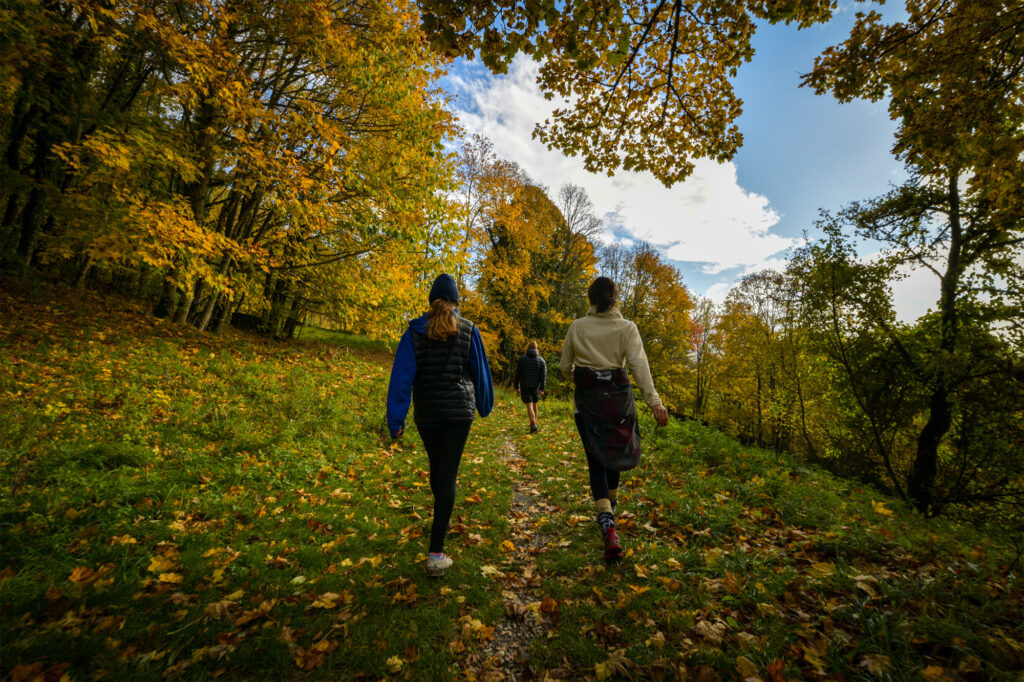
Those who truly want to escape seek out the smallest borgos in the hills of the Casentino or the Chianti. These are hamlets of sometimes just a handful of houses, surrounded by forests and meadows, where time seems to have stood still. It is precisely in autumn and winter that they take on an almost cinematic quality: mist in the valleys, smoke from the chimneys, chestnut trees shedding their leaves.
What makes Tuscany in winter different from summer?
Visiting Tuscany in winter is a fundamentally different experience from a summer trip. Where summer revolves around sun, swimming pools, and crowded terrace benches, winter offers peace, depth, and a much more direct connection with local culture. The flow of tourists largely dries up, prices are lower, and the Tuscans themselves are more visibly present in their own villages and towns.
The landscape also changes dramatically. The rolling hills turn gold and red in autumn, and in winter bare vines and cypress trees stand out sharply against a grey-blue sky. Morning mist drifts through the valleys, lending even everyday views a sense of mystery. This is the Tuscany of the painters, not of the travel guide.
Gastronomically speaking, winter is the highlight. Truffles, wild mushrooms, chestnuts, ribollita, and game meat take center stage on menus. Local producers have more time for visitors, and wine tastings at small aziende agricole become a personal and relaxed experience rather than an organized attraction.
What activities are there in Tuscan villages in winter?
In and around the historic villages of Tuscany, there are plenty of meaningful and atmospheric activities in winter. The cooler temperatures make active outings even more enjoyable, and the season brings its own traditions and experiences that are not available in summer.
Some popular winter activities in Tuscany:
- Walking through forests and hills on cool, clear days with views over the valleys
- Truffle hunting with trained dogs, as the winter truffle (tartufo bianco e nero) is at its best during this season
- Visits to monasteries and churches such as the impressive La Verna in the Casentino, which radiates an almost meditative silence in winter
- Cooking workshops with local chefs, from pasta making to preparing traditional winter dishes
- Wine tastings at small producers who have more time and attention for visitors in the low season
- Local markets and Christmas fairs on village squares, where artisans and farmers offer their products
- Relaxing in a hot tub or thermal baths after a long day of walking in the fresh air
Those who want to stay active will find that walking trails are particularly inviting in winter. Without the summer heat, longer routes through national parks are very manageable, and nature is quieter and more evocative than in the busy season.
Are Tuscan villages easily accessible in winter?
Most historic villages in Tuscany are easily accessible in winter too, though it sometimes requires a little more preparation than in summer. The main connecting roads remain open and passable throughout the year. For the smaller hill roads in remote areas, such as the Casentino or the Garfagnana, a car with good grip is recommended in case of frost or snow.
By train, Tuscany is excellently connected. From Florence, Arezzo, or Siena, trains run to larger regional cities, from where you can reach the smaller villages by bus or car. Arezzo is a convenient hub for the Casentino valley and is less than an hour and a half from Florence.
Bear in mind that some smaller restaurants, shops, and attractions have limited opening hours in the low season or may be temporarily closed. It is always wise to check in advance whether a specific restaurant or museum is open. This applies in particular to the very smallest borgos, where facilities are limited at the best of times.
What weather can you expect in the Tuscan hills in winter?
In the Tuscan hills in winter, you can expect daytime temperatures between 3 and 12 degrees Celsius, with regular frost at night in higher areas. The weather is changeable: clear, sunny days alternate with rainy periods and occasional snow on the hills. A warm coat and rain gear are essential.
Autumn, from October to mid-November, is milder and often offers beautiful, clear days with autumn colors in the forests. For many, this is the finest time to visit Tuscany outside of high season. December and January are cooler and wetter, but even then there are regularly dry spells with a sharp, clear light that shows the landscape at its most beautiful.
Snow is rare in the lower valleys, but in areas above 600 meters, such as parts of the Casentino valley, it can snow a few times per winter. This makes the landscape spectacular, but does require preparation if you plan to walk or drive on smaller roads. Low hiking shoes and an extra sweater are always a good idea.
How do you combine a visit to historic villages with a stay in nature?
The best way to combine historic villages in Tuscany with a stay in nature is to choose an accommodation that sits in the middle of the landscape while also being within driving distance of several villages. The Casentino valley is ideal for this: from this green heart of Tuscany you can reach Poppi, Bibbiena, Anghiari, and Arezzo within an hour, while being surrounded by the forests and hills of the national park.
A practical approach for such a combined winter trip:
- Choose a central base in nature, preferably an authentic borgo or agriturismo with good connections to the surrounding area
- Plan day trips to historic villages in the morning, when the light is beautiful and the villages are still quiet
- Reserve the afternoons for nature: walking, truffle hunting, or a visit to a monastery in the forests
- End the day with a local dinner in the village or at your accommodation, with seasonal dishes and local wine
- Build in rest days to enjoy the views, a book, a massage, or the warmth of an open fire
The combination of culture and nature works so well in Tuscany because the historic villages have literally grown out of the landscape. A walk through the forests naturally ends at an old chapel or a medieval tower. There is no sharp boundary between nature and culture, and that is what makes a winter trip through Tuscany so organic and satisfying.
Novanta: your base for historic Tuscany in winter
Those who want to discover the historic villages of Tuscany in winter from an authentic and peaceful setting will find an ideal base in Novanta. The experience hotel is tucked away in the Gello valley, high in the Casentino hills, surrounded by approximately 300 hectares of forest and meadows bordering the Casentino National Park. From here you can reach Poppi, Bibbiena, and Arezzo within half an hour, and Florence in an hour and a half.
What makes Novanta particularly suited for an autumn or winter stay:
- Authentic stone cottages and rooms with rustic charm and modern comfort, perfect for cold evenings
- Guided walks and active experiences through the valleys and forests of the national park
- Seasonal culinary experiences such as truffle hunting, pasta making, and wine tastings with local producers
- A wooden hot tub to warm up in after a day of walking, with views over the valley
- A car-free village where peace, nature, and connection take center stage
Novanta is not a traditional luxury hotel, but a place for travelers who want to feel, taste, and experience Tuscany at their own pace. Curious? Discover the story of Novanta or plan your winter stay in the Casentino hills directly.
Related Articles
- Wat is de beste maand om rustig Toscane te verkennen?
- Why Do Families Choose the Tuscan Countryside Over the City?
- Agriturismo met zwembad in Toscane: wat kun je verwachten?
- Waar moet je op letten bij het huren van een vakantiehuis in Toscane voor een grote groep?
- Waar vind je een kindvriendelijk vakantiehuis in Toscane?
