

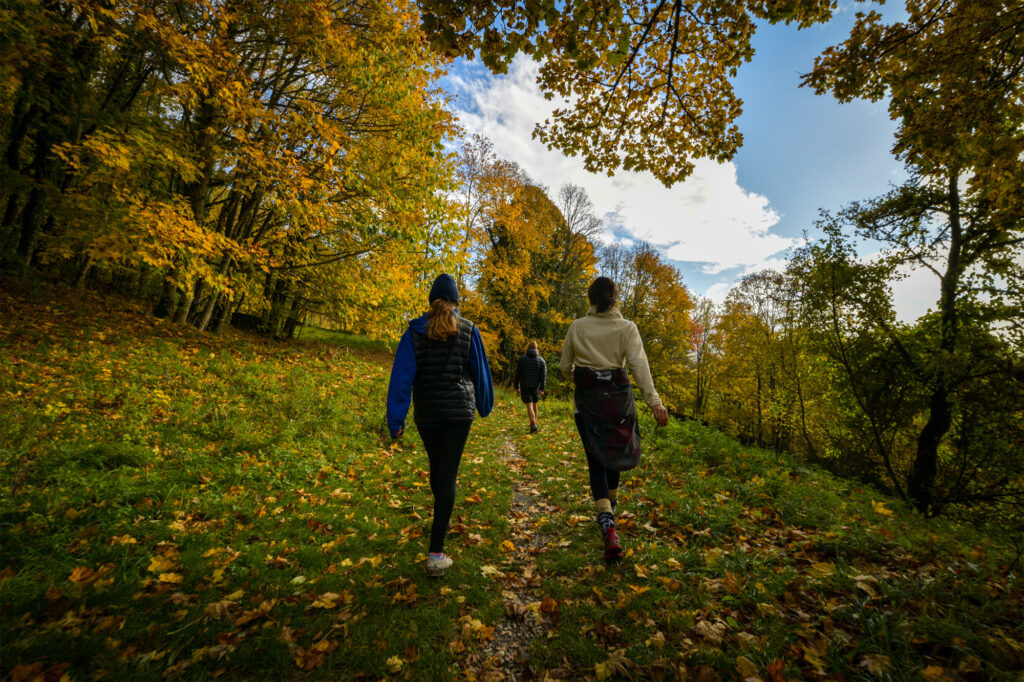
In autumn, Tuscany receives more rainfall on average than in summer, but it is by no means a persistently rainy season. October and November are the wettest months of the year, with showers that are typically short and intense, interspersed with clear, sunny days. Travellers who are well prepared will find that the rain rarely spoils a holiday. This article answers the most frequently asked questions about precipitation, weather, and what you can realistically expect during the Tuscan autumn.
When does most of the rain fall in Tuscany?
Most of the rain in Tuscany falls in October and November. These are the wettest months of the year, with precipitation often coming in the form of short, powerful showers rather than prolonged grey rainy spells. September is still relatively dry, while December already sees slightly less rainfall than the peak months.
Autumn marks the transition in the Mediterranean region from the dry summer season to a more humid climate. Warm air above the Mediterranean Sea collides with cooler air masses from the north, leading to showery conditions. In the Tuscan hills, such as the Casentino valley, this effect can be stronger than on the coast, because the terrain amplifies the rainfall. In between, however, there are also long periods of glorious autumn weather with temperatures that remain pleasant during the day.
How many millimetres of rain fall on average per autumn month?
In Tuscany, September averages around 60 to 80 millimetres of rainfall, October sees this rise to 90 to 120 millimetres, and in November the total can reach 100 to 140 millimetres. These are regional averages; in the hills and mountainous areas such as the Casentino, these figures tend to fall at the higher end of the range.
For comparison: in the summer months of June and July, many parts of Tuscany receive only 20 to 40 millimetres of rain per month. Autumn is therefore noticeably wetter, but it is important to put these figures in perspective. The rainfall is spread across an average of eight to twelve rainy days per month in October and November. This means that even in the wettest months there are still plenty of dry days to be active outdoors.
How does the weather in October differ from November in Tuscany?
October and November differ noticeably from each other in Tuscany. October is often still pleasantly warm, with daytime temperatures that can reach 18 to 20 degrees Celsius, while rainfall is already increasing. November is cooler, more humid, and cloudier, with average daytime temperatures of around 12 to 15 degrees.
October often offers the best of both worlds: the summer crowds are gone, nature turns spectacularly colourful, and the weather is still mild enough for long walks and outdoor activities. The forests of the Casentino National Park are ablaze with autumn colours in October, chestnut trees bear fruit, and truffles are fully in season.
November already feels more like a true autumn month. The days grow shorter, temperatures drop, and there is a greater chance of longer periods of cloud and rain. Yet November has its own charm: the valley is quiet, the air is clear after a shower, and the atmosphere is intimate and authentic. For those seeking peace and seclusion, November is a special season.
What are the driest periods within the autumn in Tuscany?
The driest period within the Tuscan autumn is generally the first half of September. During these weeks the summer dryness is still palpable, temperatures are pleasant, and the chance of rain is the lowest of the entire autumn season. Early October also frequently sees several consecutive dry weeks.
Within October and November, wet and dry periods alternate. A practical fact is that showers in the Tuscan hills often fall in the afternoon or early evening, while mornings are regularly clear and sunny. Those who plan activities in the morning hours therefore statistically have the best chance of dry weather. After a shower the air also clears quickly, and the view across the valley is exceptionally beautiful.
Does rain affect activities in the Tuscan hills?
Rain certainly affects outdoor activities in the Tuscan hills, but less than many travellers expect. Most activities can continue perfectly well in light rain or can be shifted to a dry moment later in the day. Moreover, the autumn rain brings nature to life in a way that is simply not possible in summer.
Consider the advantages that rain brings for specific autumn experiences:
- Truffles: Rain is essential for truffle growth. Autumn is the peak of the truffle season, precisely because the ground is moist. A culinary experience such as truffle hunting is at its best in autumn.
- Mushrooms and chestnuts: After a shower, mushrooms shoot up from the ground in the forests of the Casentino. Foraging trips are particularly rewarding in autumn.
- Walks: The paths are fresh after rain and the air is clear. The forests smell of wet earth and moss, a sensory experience that summer walks cannot offer.
- Indoor activities: Pasta-making, wine tastings, and other culinary workshops are ideal to book on rainy afternoons.
Anyone planning a walk to the monastery of La Verna or a river hike through the Corsalone would do well to check the weather forecast and bring a rain jacket. But a single shower need not spoil a day in the hills at all.
Is Tuscany in autumn still worth it despite the rain?
Tuscany in autumn is absolutely worth it, even with the increased chance of rain. Autumn offers a completely different, and for many travellers a richer, experience than summer. The crowds are gone, prices are lower, nature is at its most beautiful, and local culture is more accessible because tourists are scarce.
The reasons to travel to Tuscany specifically in autumn are numerous:
- Peace and space: Popular villages and routes are empty. You experience Tuscany the way the locals know it.
- Gastronomy at its peak: Truffles, wine, chestnuts, wild mushrooms, and freshly pressed olive oil make autumn the culinary season par excellence.
- Stunning autumn colours: The forests of the Casentino turn deep orange, red, and yellow in October. Walking through this landscape is a visual spectacle.
- Pleasant walking weather: The summer heat is over. Temperatures of 15 to 20 degrees are ideal for longer walks and active days outdoors.
- Authentic atmosphere: Local festivals, harvest celebrations, and markets fill the autumn calendar in Tuscany.
Rain is part of the season, but those who embrace it discover that a misty morning above the Casentino valley or a shower that clears the air for a brilliant afternoon actually adds to the magic of autumn in Tuscany.
How Novanta makes an autumn stay in Tuscany complete
Novanta, tucked away in the Gello valley on the edge of the Casentino National Park, is ideally set up for an autumn stay that does not depend on fine weather. Whether it rains or shines, there is always something to enjoy. This is how Novanta makes autumn in Tuscany tangible and complete:
- Truffle hunting with local guides: Especially in autumn, this is the most authentic activity the area has to offer.
- Culinary workshops: Pasta-making, wine tastings, and local cooking workshops are perfect for rainy afternoons.
- Hot tub after a walk: After a long walk through the autumn forests, the wood-fired hot tub is a welcome reward.
- Hiking and e-mountain biking: The active experiences in the valley are at their most beautiful in autumn, with autumn colours and fresh air.
- Atmospheric accommodations: The rustic rooms and cottages with stone walls and wooden beams feel extra warm and cosy in autumn.
Would you like to discover Tuscany outside the high season, in complete peace and with a totally different experience from summer? Browse the holiday homes at Novanta and plan your autumn stay in the Casentino valley.
