

A nature holiday is great for children because it stimulates them in ways that a screen or a theme park never can. They move more, discover all sorts of things, and are surprisingly rarely bored. This applies to children of all ages, as long as the environment offers challenge without being overwhelming. In this article, we answer the most frequently asked questions about family holidays in nature, from the right age to the best destination.
What do children need to truly relax outdoors?
Children relax best outdoors when they have space to explore on their own, without a rigid schedule. They don’t need luxury facilities, but they do need a safe environment where they can move freely, play, and occasionally get dirty. Structure helps, but too much planning is counterproductive.
What really makes the difference is that children don’t feel observed or judged. In nature, that social pressure disappears. There’s no waiting your turn at an attraction, no queuing, no screen demanding attention. That creates space for genuine rest, even if it looks busy from the outside.
- Freedom of movement: running, climbing, swimming, roaming
- Unstructured time: deciding for themselves what to do
- Nature as a play environment: stones, water, mud, trees
- Present but non-directive adults: available, not dominant
- A fixed home base: a house or room they can return to after adventure
Which outdoor activities are the most fun for children?
The most enjoyable outdoor activities for children combine movement with discovery. Swimming in a river or natural pool, searching for animals or plants, hiking with a concrete goal (a waterfall, a viewpoint), and simple culinary adventures such as picking fruit or baking bread score highest with children of different ages.
Activities work best when children feel they are doing something real, not something designed for them. Searching for truffles in the forest feels like a genuine treasure hunt. Making pasta with local ingredients is not only educational, the end result is also edible. That combination of adventure and outcome keeps children engaged.
- Swimming in a river, stream, or outdoor pool
- Treasure hunts in the forest, such as searching for truffles or mushrooms
- Hiking with a clear goal or endpoint
- Cycling on e-mountain bikes through hills or forests
- Cooking and eating with local produce, such as making pasta or bread
- Observing animals and plants in a national park
How old do children need to be for an active nature holiday?
There is no minimum age for an active nature holiday. Toddlers already enjoy water, sand, and open space. School-age children between six and twelve benefit most from adventurous activities and making new friends. Teenagers, on the other hand, need challenge and autonomy, and find more freedom in nature than in a city or resort.
The key is to tailor the activities to the age, not the destination. A valley with a swimming pool, a river, and hiking trails offers something for every child. Younger children play closer to the home base, older children explore further afield. Travelling together with multiple families works well: children of different ages find each other, and parents don’t have to constantly entertain.
Why do children get bored less in nature than at home?
In nature, children get bored less quickly because the environment constantly changes and invites action. At home, everything is familiar and predictable. Outside, turning over every stone is a surprise, every walk is different. That unpredictability stimulates curiosity and holds attention without any screen involvement.
Moreover, boredom in nature is more productive. When a child has nothing to do for a moment, they come up with something themselves: building a dam in the stream, making a den from branches, following an insect. That creative freedom exists far less at home, because the default solution for boredom is always a tablet or television. In an environment without those distractions, children activate their own imagination more quickly.
What is the difference between a child-friendly hotel and a holiday park?
A child-friendly hotel offers an environment that is suitable for children, but not specifically designed for them. A holiday park, on the other hand, revolves entirely around children’s entertainment: animation, water slides, playgrounds, and a packed schedule. The difference lies in the atmosphere and the target audience. A hotel invites children to be part of a broader experience; a holiday park places the child at the centre.
For families looking for an authentic holiday, a child-friendly hotel or agriturismo in Tuscany is often a better choice than a holiday park. Children get more freedom, the environment is less artificial, and parents don’t have to participate in a programme they don’t enjoy themselves. The downside is that there is less organised entertainment, but that is precisely what many families are looking for.
How do you ensure children genuinely enjoy a relaxed holiday?
Children enjoy a relaxed holiday when there is enough to discover at their own pace. The key is not filling every moment, but offering an environment that naturally invites exploration. A swimming pool, a stream, a forest, or a farm with animals does more work than a full activity programme.
Practically speaking, it helps to keep the first day calm and let children settle into the new environment themselves. After that, most energy naturally finds its way. Communal meals at long tables, where children from other families join in, create social connection without you having to organise anything. Those spontaneous moments are often what children remember most afterwards.
Which nature destination is suitable for a family holiday?
A good destination for a family holiday in nature combines safety, variety, and a comfortable home base. Mountainous areas with a swimming pool, hiking trails, and access to local culture score highly. Tuscany is a popular choice for Dutch and Belgian families because of the climate, accessibility, and the combination of nature and culinary experience.
Renting a holiday home in Tuscany is ideal for families who want flexibility: a private kitchen, space for multiple families, and access to nature without the feeling of being in a tourist bubble. Areas such as the Casentino, bordering a national park, offer hiking trails, rivers, and an authentic agriturismo atmosphere that is far removed from the busy coastal areas.
How Novanta helps with a child-friendly nature holiday
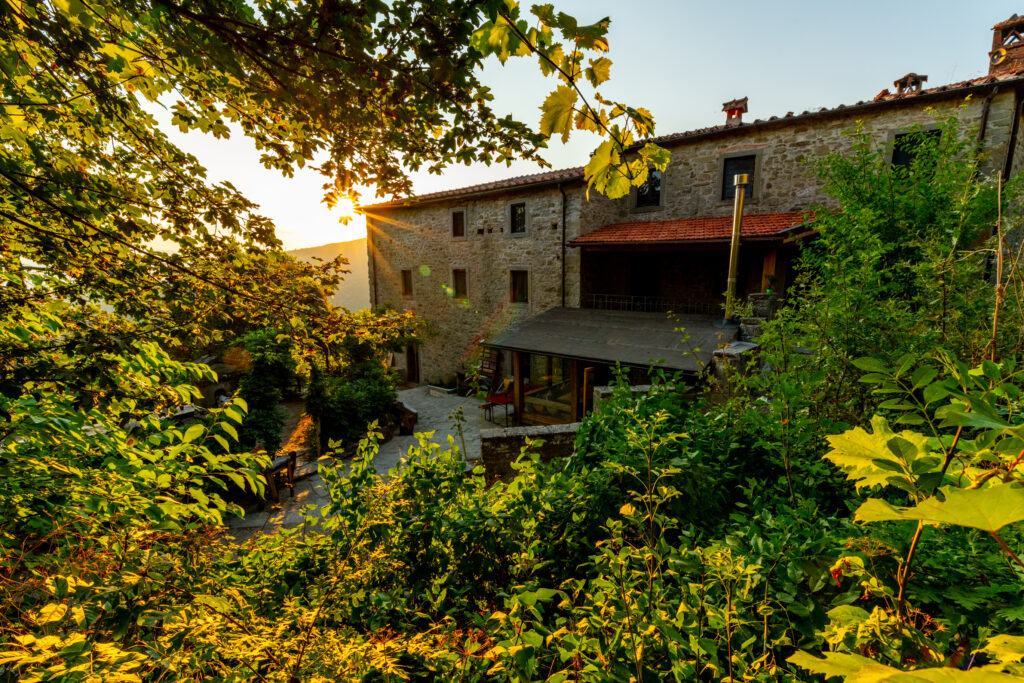
Novanta is an experience hotel tucked away in the Casentino hills of Tuscany, set on approximately 300 hectares of rolling fields and forests bordering a national park. It is not a holiday park, but an authentic borgo where children truly have the space to discover, move, and enjoy themselves, while parents can finally genuinely relax.
- Car-free village: the car stays at the entrance, luggage travels by 4×4, children roam freely
- Two swimming pools and a river within walking distance
- Activities for all ages: truffle hunting, pasta making, e-mountain biking, river trips
- Holiday homes with private kitchen for multiple families together
- Communal tables where children naturally make new friends
- An environment without artificial distractions: nature as a playground
Novanta is ideal for families looking for a child-friendly agriturismo in Italy without the atmosphere of a holiday park. Browse the available holiday homes and experiences on the website and plan your family holiday in Tuscany for 2026.
Frequently Asked Questions
How far in advance should you book a holiday home in Tuscany for a family holiday in summer?
For a summer holiday in Tuscany, especially in popular areas such as the Casentino, it is strongly recommended to book at least six to nine months in advance. The best accommodations for multiple families together fill up quickly, especially in July and August. Those who are flexible with the period and choose June or September will have more options and also benefit from more pleasant weather for active outings with children.
What if my child doesn't like hiking or being outdoors? Does a nature holiday still work?
Yes, even children who prefer to stay indoors at home often thrive in an environment that naturally invites movement and discovery. The key is not to present hiking as a mandatory element, but to choose activities that match their interests, such as spotting animals, searching for truffles, or swimming in a river. Once children feel the freedom and don’t feel they ‘have to’ do anything, their attitude often changes surprisingly quickly.
Is it realistic to go on holiday with multiple families together, and how do you handle it practically?
Travelling together with other families works excellently, as long as you make clear agreements in advance about shared costs, meals, and activities. A holiday home with multiple bedrooms or adjoining accommodations gives each family enough private space, while the children spend the days together. The biggest practical tip: plan shared moments such as evening meals, but let the rest of the day be flexible and allow each family to follow their own rhythm.
What equipment or items are truly essential for children on an active nature holiday?
The absolute basic equipment consists of good hiking shoes or sturdy sandals, swimwear, and a water bottle that children can carry themselves. Sun protection, a light rain jacket, and a small backpack for the children themselves encourage independence and engagement along the way. What you are better off leaving at home: too many toys and electronic devices, as these compete with the environment rather than complementing it.
How do you manage children of very different ages on the same holiday?
A destination with variety in activities and levels of freedom is the key: younger children play closer to the home base, while older children explore more terrain and choose more challenging activities such as e-mountain biking or longer hikes. Activities where ages are mixed, such as a joint treasure hunt or a cooking workshop, create connection without anyone getting bored or feeling left out. Count on older children naturally involving the younger ones once the environment offers space and freedom.
What are common mistakes parents make on a first nature holiday with children?
The most common mistake is planning too many activities out of fear that children will get bored. Paradoxically, an overpacked programme is precisely what causes stress and reluctance in children. A second common mistake is tailoring the holiday entirely to the children at the expense of the parents’ relaxation: choose a destination where adults can also truly unwind, because relaxed parents are the best guarantee of relaxed children.
Can you combine a child-friendly nature holiday with a culinary experience, or is that only for adults?
Absolutely, and children are often more enthusiastic about it than expected. Activities such as making pasta from local ingredients, baking bread on a farm, or searching for truffles in the forest combine adventure with a tangible result, which is precisely what motivates children. Especially in Tuscany, eating is a social and cultural experience that brings the whole family together, and children who help with the cooking will surprisingly eat much more adventurously too.
