

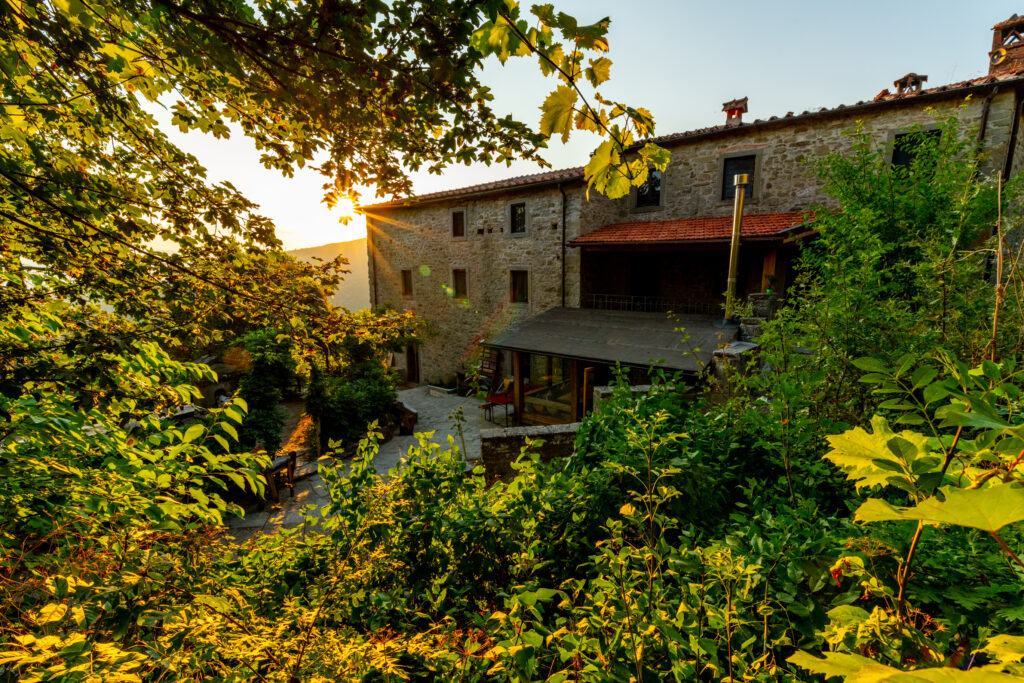
Tuscany is warm in summer, but certainly not too hot for most children, as long as you plan wisely. Temperatures in July and August average between 30 and 35 degrees, but those who choose the Tuscan countryside and hills over the cities experience considerably more pleasant conditions. In this article, we answer the most frequently asked questions from parents about heat, timing, and cooling down during a family holiday in Tuscany.
How hot does it get in Tuscany during the summer holidays?
During the summer holidays, from mid-June to the end of August, temperatures in Tuscany average between 28 and 36 degrees during the day. In the hottest weeks of July and August, peaks of 38 degrees or higher can occur, especially in cities and lower-lying areas. At night, temperatures drop to between 18 and 22 degrees.
The heat is most intense between 12:00 and 16:00. Outside those hours, being active outdoors is perfectly manageable, even for children. The Tuscan way of life is well adapted to this: the siesta was invented for good reason. Those who make use of the mornings and evenings for activities and reserve the afternoon for rest or the pool will get the most out of summer without suffering from the heat.
Which ages of children suffer most from the heat?
Babies and toddlers under three years old are most vulnerable to high temperatures. Their bodies regulate temperature less efficiently, they cannot communicate when they are overheating, and they do not always drink enough on their own. Children over six generally adapt better, especially when they drink enough and play in the shade.
Teenagers have the least difficulty with the Tuscan summer heat of all age groups, especially when there is a pool or river nearby. For families with young children aged two or under, it is wise to avoid the hottest weeks — typically the first three weeks of August — and to opt for June or the second half of September instead.
When is Tuscany most pleasant for a family holiday?
The most pleasant periods for a family holiday in Tuscany are mid-June to early July and the second half of August to mid-September. During these weeks, temperatures are comfortably warm without extreme heat waves, popular spots are less crowded, and nature is at its most beautiful.
- Mid-June – early July: Pleasantly warm, long daylight hours, nature is green and lush, fewer tourists than in August
- First half of August: Hottest period, busiest weeks, but also the most vibrant atmosphere in villages and towns
- Second half of August – mid-September: Temperatures drop slightly, crowds thin out, evenings become more pleasant, truffles begin to ripen
For families travelling during fixed school holidays, early July or the last week of August is the smartest choice.
How can children cope well with the heat in Tuscany?
Children cope best with the Tuscan summer heat by following a daily routine that aligns with local customs and avoiding the hottest hours. The key lies in hydration, shade, and a good daily schedule.
- Start early: Plan walks, excursions, and activities in the morning, before 11:00
- Rest in the afternoon: Keep the period from 12:00 to 16:00 free for the siesta, the pool, or indoor play
- Drink plenty of water: Make sure children drink water continuously, even when they don’t say they’re thirsty
- Protect against the sun: High-factor sunscreen, a hat, and light clothing are essential
- Make use of the evenings: After 17:00 it’s lovely outside; perfect for a walk through the surroundings or an outdoor evening meal
Having your own holiday home with a kitchen makes this routine considerably easier. You are not dependent on restaurant schedules and can decide for yourself when to eat, rest, and head out.
Are there enough cooling activities for children in Tuscany?
Yes, Tuscany offers plenty of cooling options for children, even on the hottest days. The stereotypical image of a dry, dusty holiday does not apply to the Tuscan countryside, where rivers, forests, and swimming pools are plentiful.
- Swimming in a private pool: Many holiday homes in Tuscany have their own or shared pool, making the afternoon much more enjoyable
- Rivers and streams: In the Casentino area there are several spots along the river where children can safely swim and play
- Forests and shaded walking trails: The wooded hill landscape offers cool walks, even in summer
- Indoor activities: Making pasta, baking bread, or a wine tasting for the parents are activities you can also do in the cooler indoor spaces
The combination of outdoor activities in the morning and cooling activities in the afternoon ensures that children are never sitting still, but also never overheating.
What is the temperature difference between Florence and the Tuscan countryside?
The temperature difference between Florence and the Tuscan countryside can reach 5 to 8 degrees on a hot summer day. Florence, built in a basin along the Arno, traps heat and barely releases it. In the hill areas such as the Casentino or the Chianti region, there is almost always a breeze and temperatures are noticeably lower.
For families with children, this is an important consideration. A day in Florence in August can be exhausting, especially with young children. The same day spent in the countryside, at an altitude of 400 to 600 metres, feels far more bearable. Moreover, air quality outside the city is better and shade can always be found under the trees.
Those who choose a stay in the Tuscan hills rather than an urban hotel will notice that the nights are also considerably cooler, which benefits children’s sleep quality.
How Novanta helps with a child-friendly summer holiday in Tuscany
Novanta is nestled in the Gello valley in the Casentino, at an altitude where the summer heat is more bearable than in the cities and lower-lying areas. The resort offers an environment that is particularly suited to families who want to experience the Tuscan summer without the drawbacks of crowds and extreme heat.
- Two swimming pools each 20 metres long, ideal for the hot afternoon hours
- Self-contained holiday homes with their own kitchen, so you set your own daily rhythm
- Car-free village: children play freely and safely, without traffic
- Cooling activities such as river trips, truffle hunting in the forest, and making pasta indoors
- 300 hectares of nature bordering the Casentino National Park, with shaded walking trails and forest paths for e-mountain biking
- Local meals at long tables during the cooler evening hours, based on simple Tuscan cuisine
Would you like to plan a summer holiday in Tuscany that is truly enjoyable for children too? Browse the holiday homes at Novanta and discover which home best suits your family or group of friends.
Frequently Asked Questions
Is it worth bringing sunscreen from home, or is it better to buy it locally?
It is worth bringing sunscreen from home, especially if your children have sensitive skin and you already know which brand works well. Italian supermarkets and pharmacies have a wide selection, but familiar brands from home may not always be available. Choose factor 50 or higher for young children, and don’t forget to apply it to the lips and ears — spots parents often miss.
What are the signs of overheating in children and what is the best way to respond?
Signs of overheating include a red, hot face, fatigue, irritability, headache, and infrequent urination. Move the child immediately to a cool space, give small sips of water, and place a damp cloth on the back of the neck. If symptoms do not improve within fifteen minutes, or if the child shows signs of confusion or vomiting, seek medical help immediately — in Italy call 118 for an ambulance.
Should I bring special baby food or children's food to Tuscany, or is it readily available there?
Italian supermarkets have a wide range of baby food, porridge, and children’s snacks from well-known European brands. For very specific dietary needs or brands your child is used to, it is safest to bring a supply for the first few days. If you are staying in a holiday home with your own kitchen, you can also easily prepare fresh meals using local ingredients, which many children actually prefer.
How do I plan a day trip to Florence with children without the heat ruining it?
Set off as early as possible, preferably before 9:00, so you get ahead of the busiest and hottest hours. Visit the main sights in the morning and around midday find a restaurant or café for a long lunch in the shade or air conditioning. Plan your return journey for 16:00 or 17:00, so you can enjoy the evening in the cooler countryside — with the right planning, a day trip to Florence really doesn’t have to be exhausting.
Are there mosquitoes in Tuscany and how do I protect my children from them?
Yes, mosquitoes are present in Tuscany, especially in the evenings and near water. Bring a good mosquito-repellent lotion or spray suitable for children, and check whether the holiday accommodation has windows with fly screens. Light, long clothing in the evening also helps. In the hill areas there are generally fewer mosquitoes than on the coast or in the lower-lying river valleys.
What should I pack for children who struggle with the heat during long car journeys to Tuscany?
Make sure you have plenty of water and cool snacks such as cucumber, watermelon, or yoghurt in a cool bag. A small portable fan or sun shades for the side windows will keep the temperature in the car more comfortable. Plan the longest stretches of driving early in the morning or after 17:00, and build in regular breaks to let children move around and drink — even if they don’t ask to stop.
Are there facilities in the Casentino for children with allergies or special medical needs?
Pharmacies are available in the nearby villages of the Casentino, and larger towns such as Arezzo, about half an hour’s drive away, have hospitals and specialist pharmacists. Always bring enough medication for the full duration of the holiday, including a backup supply, and store it in a cool place. It is also advisable to bring a European Health Insurance Card (EHIC), so that you can access the same reimbursement as Italian residents if you need medical assistance.
