

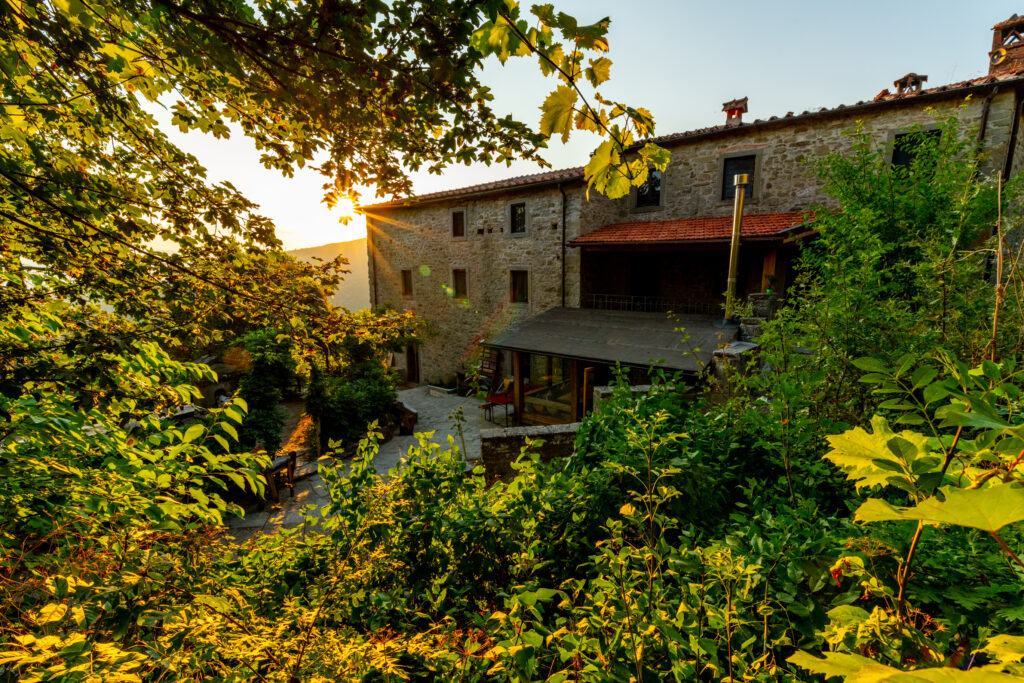
An agriturismo in Tuscany sounds romantic, but for parents with children it immediately raises practical questions. Is it child-friendly enough? What do the kids do all day? And isn’t it too rustic for a family that also just wants to relax? The popularity of child-friendly agriturismi in Italy is steadily growing, and for good reason. More and more families are deliberately choosing a stay that offers more than a hotel room with a pool: a place where children experience real things, play outside, and get to know nature.
Yet not every agriturismo is equally suitable for families with children. It pays to understand what this type of accommodation entails, what children can experience there, and what to look for when making your choice. This article gives honest answers to all those questions.
How an agriturismo differs from a regular hotel
An agriturismo is a working or former agricultural property that welcomes guests, often in combination with food production, livestock farming, or winemaking. The difference from a regular hotel lies not only in the location, but in the entire philosophy behind it.
Where a hotel revolves around service and convenience, an agriturismo revolves around experience and authenticity. Guests are not anonymous visitors, but people who temporarily become part of a place with its own history and character. The rooms are rustically decorated, meals are prepared with local ingredients, and the surroundings invite you to walk, explore, and slow down. That requires a different mindset than an all-inclusive resort, but also offers something a standard hotel can rarely provide: the feeling that you are truly somewhere.
For families accustomed to a traditional hotel with room service and an entertainment team, an agriturismo may take some getting used to. For families looking for nature, flavor, and active moments, it is exactly the right choice.
What children experience at an agriturismo
Children experience things at an agriturismo that they won’t find in any theme park or hotel complex. And that is precisely its strength.
Think of making pasta with real flour and eggs, searching for truffles in the forest with a dog as a guide, or cycling through the hills on an e-mountain bike. These are not simulated activities for tourists, but experiences rooted in local culture and the landscape. Children learn how food is made, how nature smells and sounds, and how people have lived here for generations.
Beyond organized activities, the space around an agriturismo offers endless opportunities for play. Forests to explore, fields to run through, animals to observe. For children used to a screen, it is a breath of fresh air. For their parents too.
Why an agriturismo works practically for families
One of the greatest advantages of an agriturismo for families is that everything is in one place. There is no hassle with daily trips to busy cities or endless driving to attractions. Life unfolds within the boundaries of the property itself, which brings peace to both parents and children.
Many agriturismi offer vacation homes with their own kitchen and outdoor space, which is ideal for families with young children who have their own rhythm. Meals don’t always have to be in a restaurant; preparing a simple lunch outside while the children play is perfectly possible.
Moreover, the atmosphere at an agriturismo is generally informal and relaxed. There are no dress codes, no rigid schedules, and no feeling that you have to conform to conventions. That gives families the freedom to structure the day however suits them.
At what age is an agriturismo most suitable?
There is no fixed age limit, but the experience varies greatly by age group. Toddlers and babies have different needs than teenagers, and a good agriturismo takes that into account.
For children between the ages of 5 and 12, an agriturismo is often most ideal. They are old enough to participate in activities such as cooking, hiking, and foraging, but young enough to be genuinely enthusiastic about everything they discover. They enjoy the freedom and space without needing nightlife or Wi-Fi.
Teenagers may initially be skeptical, but are often surprised by what’s on offer. Active experiences such as e-mountain biking through the hills, or wine tastings for the parents while they get more freedom, also appeal to older children. Very young children under three require extra attention: check whether the accommodation is safely arranged and whether there is a quiet space for sleep routines.
What to look for when choosing an agriturismo with children
Not every agriturismo is automatically suitable for families. A few targeted questions when booking can prevent a lot of disappointment.
- Is there a swimming pool? For children (and parents), a pool on the property is a big plus, especially during the warm summer months.
- What activities are available for children? Ask specifically about age-appropriate experiences, not just what is offered for adults.
- How is the accommodation arranged? Are there separate bedrooms? Is there a kitchen or kitchenette? Is the outdoor space safe for young children?
- How far is it from the nearest amenities? At a remote agriturismo in the Tuscan hills, it may be a drive to a supermarket or pharmacy.
- What is the atmosphere like? Some agriturismi focus on peace and quiet for adults. Others are explicitly family-friendly. Read reviews and ask follow-up questions.
An agriturismo in Tuscany with children also requires an honest expectation of the environment. It is nature, and nature is sometimes unpredictable. Insects, heat, unpaved paths: it all comes with the territory. Families who embrace that will get the most out of it.
How Novanta makes the agriturismo adventure concrete for families
Novanta, nestled in the Casentino hills of Tuscany, is designed for families looking for exactly this kind of vacation. Not a classic luxury hotel, but an authentic “barefoot luxury” experience where nature, flavor, and active experiences take center stage.
What Novanta concretely offers for families:
- Making pasta and sausage together with locals, where children actively participate and learn what Tuscan food really tastes like.
- Truffle hunting in the forest, a unique experience that resonates with children of all ages and stays with them long after.
- E-mountain biking through the rolling hills surrounding the borgo, suitable for families with children who enjoy active outings.
- A 20-meter-long swimming pool on the grounds, ideal for hot summer afternoons.
- Spacious vacation homes with their own space, so families can maintain their own rhythm alongside the shared activities.
The borgo counts 16 houses with a total of 18 hotel rooms and 2 cottages, surrounded by around 300 hectares of fields and forests, bordering the Casentino National Park. Everything a family needs for an unforgettable summer vacation is available in one place. Explore the offerings on the Novanta website and discover which accommodation best suits your family.
Frequently Asked Questions
Hoe ver van tevoren moet ik een agriturismo boeken voor een zomervakantie met kinderen?
Voor een zomervakantie (juli en augustus) is het sterk aan te raden om minimaal 4 tot 6 maanden van tevoren te boeken. Kindvriendelijke agriturismi met een zwembad en ruime vakantiewoningen zijn erg populair en raken snel volgeboekt. Boek je later, dan loop je het risico dat alleen de kleinste of minst geschikte accommodaties nog beschikbaar zijn.
Wat als mijn kind geen Italiaans eet of kieskeurig is met eten?
De meeste kindvriendelijke agriturismi zijn hier goed op voorbereid en bieden eenvoudige, herkenbare gerechten naast de traditionele Toscaanse keuken. Een groot voordeel van een vakantiewoning met eigen keuken is dat je zelf ook iets kunt bereiden als dat nodig is. Bovendien is de ervaring van zelf pasta of worst maken een bewezen manier om kieskeurige eters nieuwsgierig te maken naar nieuwe smaken.
Is een agriturismo ook geschikt als het regent of slecht weer is?
Regen hoort bij een authentieke natuurvakantie en de meeste agriturismi bieden ook binnenshuis genoeg te doen, zoals kooklessen, ambachtelijke workshops of gewoon gezellig samenzijn in de gemeenschappelijke ruimtes. Het is verstandig om vooraf te vragen welke activiteiten ook bij slecht weer doorgaan en of er binnenspeelgelegenheid is voor jonge kinderen. Combineer je verblijf eventueel met een dagtrip naar een nabijgelegen Toscaans stadje op regenachtige dagen.
Moet ik Italiaans spreken om me te redden op een agriturismo?
Op de meeste kindvriendelijke agriturismi die zich richten op internationale gasten, spreekt het personeel Engels en soms ook andere talen. Het helpt wel om een paar basiszinnen Italiaans te kennen, zeker als je de omgeving wilt verkennen of boodschappen wilt doen in een lokaal dorp. Een kleine woordenlijst of vertaalapp op je telefoon is altijd handig, maar vormt zelden een echte barrière voor een prettig verblijf.
Wat zijn de grootste fouten die gezinnen maken bij het boeken van een agriturismo?
De meest gemaakte fout is aannemen dat elke agriturismo automatisch gezinsvriendelijk is, terwijl sommige locaties juist gericht zijn op rust en romantiek voor stellen. Een tweede veelgemaakte fout is de afstand tot voorzieningen onderschatten: een afgelegen ligging klinkt idyllisch, maar kan lastig zijn als je dagelijks boodschappen nodig hebt of een apotheek zoekt. Lees altijd recente recensies van andere gezinnen en stel gerichte vragen aan de eigenaar voordat je boekt.
Kunnen we een agriturismo combineren met uitstapjes naar steden zoals Florence of Siena?
Absoluut, en dat is zelfs een populaire combinatie. Veel agriturismi in Toscane liggen op een uur of minder rijden van culturele steden als Florence, Siena of Arezzo. Plan dergelijke uitstapjes bij voorkeur op een doordeweekse dag om drukte te vermijden, en houd de tocht kort genoeg zodat jonge kinderen niet overprikkeld raken. Wissel stadsdagen af met rustige dagen op de agriturismo zelf voor de beste balans.
Wat moet ik meenemen op vakantie naar een agriturismo met jonge kinderen?
Denk aan goede wandelschoenen of stevige sandalen voor de onverharde paden, een goede zonnebrandcrème en insectenwerende spray voor buiten, en een lichte regenjas voor wisselvallig weer. Neem ook voldoende vermaak mee voor de avonduren, zoals kaartspellen of boeken, want de avonden zijn rustig en er is zelden een animatieteam aanwezig. Controleer vooraf of de accommodatie essentiële babyspullen zoals een kinderbedje of kinderstoel beschikbaar heeft, zodat je niet onnodig veel hoeft mee te sjouwen.
Related Articles
- What Are Fun Alternatives to Ski Vacations in Italy?
- Is Tuscany Suitable for Young Children?
- Which Parts of Tuscany Are Less Crowded in Summer?
- How to Plan a Vacation in Tuscany That Both Parents and Kids Will Enjoy
- What is better for a child-friendly holiday: a holiday park or an agriturismo in Tuscany?
