

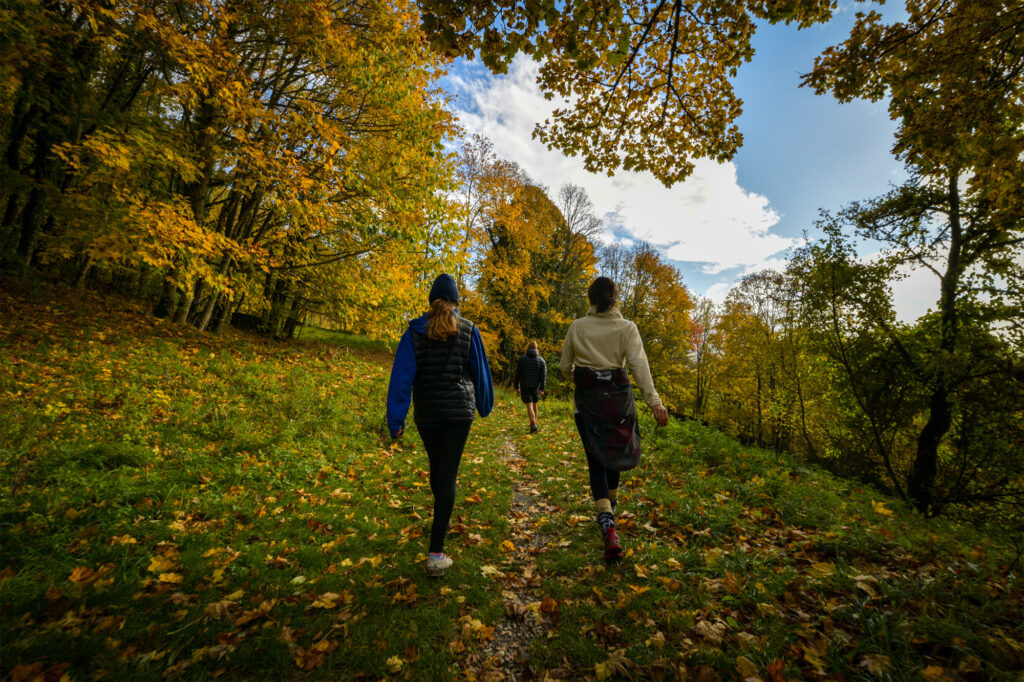
Winter hiking in Tuscany is absolutely possible and, for many hikers, even the most rewarding choice. The Tuscan hills and forests are accessible year-round, and in winter they offer an atmosphere you simply won’t find in summer: quiet trails, crisp air, and a landscape that breathes. Those willing to prepare well for changeable weather are rewarded with an authentic and unforgettable hiking experience. In this article, we answer the most frequently asked questions about hiking in Tuscany during the cooler months.
What are the best months to hike in Tuscany?
The best months to hike in Tuscany are April through June and September through November. During these periods, temperatures are pleasant, trails are walkable, and nature is at its most beautiful. For those specifically wanting to hike in autumn or winter, October, November, and even December are excellent options, especially in the hills of the Casentino area.
October and November are, for many hikers, the absolute highlights of the year. The forests turn red, orange, and gold, the trails are quiet, and daytime temperatures sit comfortably between 10 and 18 degrees. Moreover, this is the season of truffles and chestnuts, giving hiking trips an extra gastronomic dimension.
December and January are quieter and cooler, but on clear days they offer spectacular views across the valley. The low sun casts long shadows over the hills, and the morning mist that hangs in the valleys gives the landscape an almost magical quality. Those who want to experience Tuscany without a single tourist on the trail should choose the winter months.
What is the weather like in Tuscany during winter?
Winter weather in Tuscany is mild but changeable. In the hills and mountain areas, such as the Casentino, daytime temperatures average between 5 and 12 degrees. Rain is possible, as is snow at higher altitudes, but extended periods of clear and dry winter weather are very common and make hiking in Tuscany in winter entirely feasible.
The climate varies considerably by region and altitude. In coastal cities such as Pisa or Livorno, winter is mild and rarely harsh. In the Apennines and the Casentino hills, at altitudes of 400 to 900 metres, nights can be frosty and snow can fall. This need not prevent hiking, but it does call for the right equipment and careful planning.
What makes winter weather in Tuscany special is the quality of the air. After rain showers, the air is crystal clear and the views across the valley and distant mountain peaks are unrivalled. Autumn and winter are the seasons of light and depth in the Tuscan landscape.
Which hiking routes are suitable for a winter outing in Tuscany?
For winter hiking in Tuscany, routes in the Casentino National Park and around the monastery of La Verna are particularly well suited. The trails are well marked, pass through sheltered forests, and offer a rich hiking experience even on cooler days. Other good options include the hills around Arezzo and the routes through the Chianti region.
Hiking in the Casentino National Park
The Casentino is one of the least known but most impressive hiking areas in Tuscany. The vast forests of beech, oak, and chestnut offer a spectacular palette of colours in autumn and winter. Routes range from short two-hour forest walks to multi-day hikes along rivers, waterfalls, and medieval villages. In winter, the trails are quiet and wildlife such as deer and wild boar are spotted more frequently.
The hike to La Verna
One of the most beautiful active experiences in the region is the hike to the Franciscan monastery of La Verna, perched high on the rock above the valley. The path winds through a magical ancient forest and ends at one of the most impressive monastery complexes in Italy. In winter, the atmosphere is especially austere and serene. The route takes four to five hours and is perfectly walkable in the cooler months.
What can you combine with winter hiking in Tuscany?
Winter hiking in Tuscany combines beautifully with local gastronomy, culture, and relaxation. Think truffle hunting in the forests, wine tastings at local producers, visits to historic cities such as Arezzo or Florence, and exploring medieval villages that fully reclaim their authentic character in winter.
The combination of hiking and eating is almost second nature in Tuscany. After a morning on the trails, an elaborate Tuscan lunch or dinner with local wine and seasonal dishes is the perfect way to end the day. In autumn and winter, menus feature typical dishes such as ribollita, cinghiale (wild boar), and fresh truffles. A flavourful experience with local producers rounds off a perfect hiking day.
Those who want to combine the cold outdoor air with relaxation might consider visiting a local sagra (village festival), joining a pasta workshop, or spending an afternoon driving through the Casentino valley. Arezzo is less than an hour’s drive away and Florence is reachable in an hour and a half, making a day trip to the city easy to combine with a stay in the hills.
What should you bring for a hike in the Tuscan winter?
For winter hiking in Tuscany, your best bet is waterproof hiking boots, layered clothing, a rain jacket, and a small backpack with water and a snack. On higher routes in the Casentino, trails can be slippery after rain or frost, so hiking poles are a smart addition.
A practical packing list for a winter hike in Tuscany:
- Sturdy, waterproof hiking boots with grip
- Thermal base layer and fleece as a mid-layer
- Wind- and waterproof outer jacket
- Hiking poles for wet or steep trails
- Map or offline navigation app (coverage in the valley is limited)
- Sufficient water and a hearty lunch or snack
- Sunglasses and sunscreen for clear winter days
- An extra layer for breaks, as you cool down quickly when you stop
Also remember that days are shorter in winter. In December and January it gets dark early, so plan your route to ensure you are back before dusk. Preferably set off early in the morning to make the most of the daylight.
Is winter hiking in Tuscany suitable for beginners?
Yes, winter hiking in Tuscany is also suitable for beginners, provided you choose the right routes and prepare well for the weather. The Casentino area offers routes for all levels, from easy two-hour forest walks to longer day hikes. Beginners are well advised to start with a guided hike or a well-described route.
Most hiking trails in the region are clearly marked and pass through sheltered forests, making them accessible even in winter. The greatest risk for beginners is not the length or altitude of the route, but underestimating the cold and changeable weather. With the right clothing and realistic planning, however, there is nothing to stop a beginner from enjoying the trails.
Those hiking in Tuscany in winter for the first time are best off starting with a two-to-three-hour route on lower-lying trails. This builds confidence and teaches you how the terrain and weather behave. From there, you can gradually explore longer and more challenging routes, such as the hike to La Verna or a multi-day route through the Casentino.
How Novanta helps with winter hiking in Tuscany
Novanta is an experiential hotel tucked away in the Gello valley, within walking distance of the vast forests and hiking trails of the Casentino National Park. It is a base that perfectly suits what winter hikers are looking for: peace, nature, authenticity, and a warm home after a day on the trails. What Novanta concretely offers for those who want to discover Tuscany in winter:
- Guided hikes through the valley and to La Verna, with local guides who know the area like the back of their hand
- Truffle hunting in the forest with trained dogs, a unique autumn and winter activity in the region
- Culinary experiences such as pasta workshops, wine tastings, and meals featuring local, seasonal produce
- Hot tub to warm up delightfully outdoors after a cold day of hiking
- Accommodation in authentically restored Tuscan buildings, from characterful rooms to spacious holiday houses
Novanta is not just a summer destination. It is precisely in autumn and winter that the Gello valley shows its most authentic face. Explore the active experiences at Novanta and plan your winter hike in Tuscany in a place where nature, culture, and hospitality come together.
