
Italy offers plenty of great alternatives to ski holidays, from cultural city breaks to active nature holidays in the hills. Those who don’t want to strap on skis can choose regions such as Tuscany, Umbria, or the Amalfi Coast, where hiking, local gastronomy, and historic villages form the heart of the winter experience. In this article, we answer the most frequently asked questions about a winter holiday in Italy without skiing.
Which regions in Italy are best outside the ski season?
The best regions for a winter holiday in Italy without skiing are Tuscany, Umbria, Puglia, and the Amalfi Coast. These areas offer a combination of mild temperatures, a relaxed atmosphere, and rich culture in autumn and winter, without the crowds of the summer peak season. For those seeking nature and authenticity, the Tuscan hills are an excellent choice.
Tuscany is particularly attractive outside of summer. The rolling landscapes turn ochre and red in autumn, local markets are full of seasonal products such as chestnuts and truffles, and the famous cities of Siena, Arezzo, and Florence can be explored at a leisurely pace. Umbria, also known as the green heart of Italy, offers a similar experience with medieval villages and vast forests.
Puglia in the south is an alternative for those who prefer higher winter temperatures. The Salento region and the Valle d’Itria with their characteristic trulli houses are almost tourist-free in winter, which only enhances their authenticity. The Amalfi Coast is overcrowded in summer but reveals its most picturesque side in November and December.
What are the best winter activities in Tuscany?
The best winter activities in Tuscany are hiking in national parks, truffle hunting, wine tastings, visits to historic monasteries, and local cooking workshops. The season brings unique experiences that are simply not available in summer, such as searching for white truffles in the forests or attending local chestnut festivals.
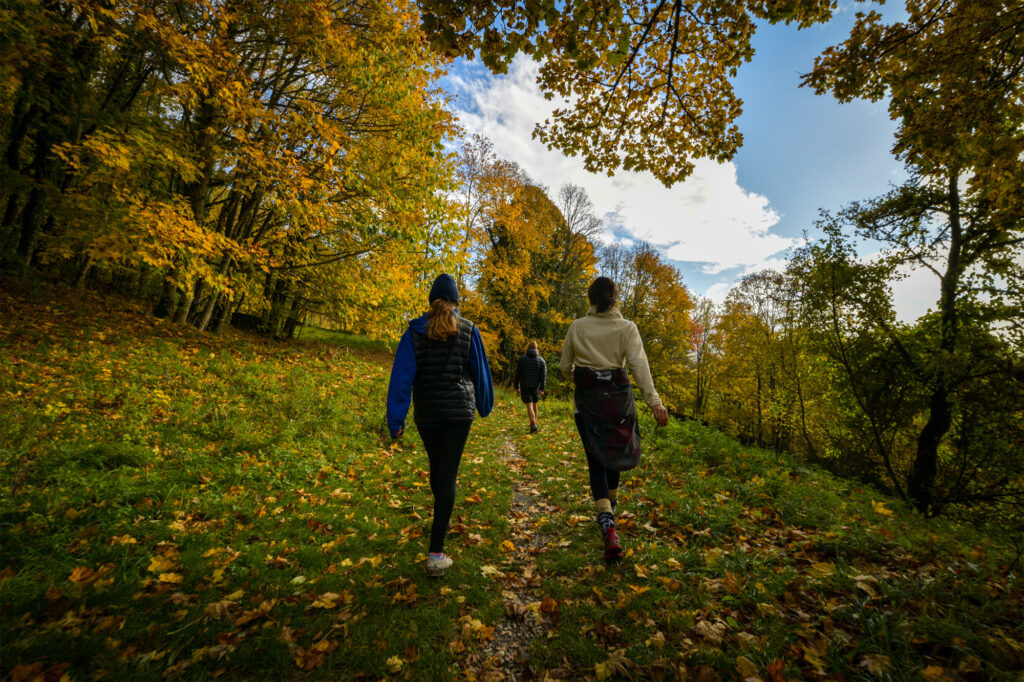
Hiking in the Casentino region is particularly beautiful in autumn and early winter. The forests of the Casentino National Park display spectacular colors and the trails are virtually deserted. A hike to the monastery of La Verna, nestled in the forest on a high rocky plateau, combines a historic experience with breathtaking nature.
Gastronomically, autumn is the richest season in Tuscany. Local producers harvest olives for freshly pressed olive oil, the truffle season is at its peak, and the wines from the new harvest are being presented. A culinary experience such as pasta making or a wine tasting with local producers fits perfectly into this.
How does an agriturismo holiday differ from a ski holiday?
An agriturismo holiday differs fundamentally from a ski holiday in pace, activities, and atmosphere. Where a ski holiday revolves around sporting achievements, après-ski, and fixed daily schedules, an agriturismo offers peace, flexibility, and deep immersion in local culture. It is a type of holiday for those who want to slow down rather than perform.
At an agriturismo, the connection with the surroundings is central. Guests eat what the land and the season provide, get acquainted with local crafts, and move through the landscape at their own pace. There is no lift queue, no ski pass, and no mandatory schedule. Instead, there is the freedom to go for a morning walk, make pasta in the afternoon, and sit down to a long dinner table with other guests in the evening.
Another fundamental difference is the social dimension. Ski holidays are often group-oriented but individual in activity. An agriturismo stay creates organic connections between guests through shared meals, joint excursions, and the informal atmosphere of a historic village. For couples and families who truly want to be together, this is a more meaningful choice.
When is the best time to visit Tuscany outside the peak season?
The best periods to visit Tuscany outside the peak season are September to November and March to May. Autumn is particularly attractive because of the fall colors, the truffle season, and the harvest period. Temperatures are pleasant, crowds are minimal, and nature is at its most beautiful.
October and November are the most underrated months for a Tuscany holiday. Daytime temperatures are still comfortably around 12 to 18 degrees Celsius, ideal for hiking and cycling. Rain is possible but only makes the forests and fields greener and more atmospheric. The chance of a misty morning above the valleys is high during this period and produces unforgettable images.
December and January are quieter and cooler, but offer their own charm. Small Tuscan towns decorate themselves for the holidays and local markets sell seasonal products. For those who truly want to escape the crowds and enjoy quiet walks and long evenings by the fireplace, the winter months are a hidden gem.
Is a winter holiday in Italy cheaper than skiing?
A winter holiday in Italy without skiing is generally considerably cheaper than a traditional ski holiday. Ski passes, ski rentals, après-ski costs, and accommodation in ski resorts make a ski holiday one of the most expensive types of vacation. A stay in Tuscany during the low season offers more for less, especially in terms of accommodation costs and restaurant prices.
For comparison: a ski pass at a popular Italian ski resort quickly costs 50 to 80 euros per day per person, excluding equipment rental. Accommodation in popular ski resorts is scarce and expensive during peak season. In Tuscany, low-season prices for hotels and holiday homes are noticeably lower than in summer, while the quality of the experience is equivalent or even higher.
Moreover, many of the most beautiful experiences in Tuscany in winter are free or inexpensive: hiking in national parks, visiting churches and monasteries, exploring markets, and enjoying the landscape cost nothing. The investment goes toward what truly matters: good food, an authentic stay, and special local experiences.
What are fun activities for families in Tuscany during the autumn school holiday?
For families, Tuscany offers a wide range of activities during the autumn school holiday, from adventurous hiking and archery to truffle hunting with dogs and pasta making with local chefs. These are experiences that captivate both children and parents equally and create memories that last a long time.
Below is an overview of activities that are particularly suitable for families in autumn:
- Truffle hunting with trained dogs through the forests, an exciting search that enthuses children
- Hiking along rivers and through forests full of autumn colors, with the chance of encountering wildlife
- Pasta making and other cooking workshops in which children actively participate
- Archery in the open air, an activity that combines concentration and fun
- E-mountain biking through the hills, also suitable for less experienced cyclists
- River exploration and wild swimming in the quiet stretches of the Corsalone river
The autumn school holiday in the Netherlands typically falls in October, precisely the period when Tuscany is at its most beautiful. Families benefit from quiet roads, affordable rates, and a holiday atmosphere far removed from the busy European tourist circuits.
What type of accommodation is best suited to a winter holiday without skiing in Italy?
For a winter holiday in Italy without skiing, agriturismos, historic borgos, and holiday homes are the best fit. These accommodation types offer the authenticity, space, and atmosphere that make a low-season trip to Tuscany or Umbria complete. They are also generally better equipped for shared stays and longer durations than a standard hotel.
A borgo, a historically restored village, is the most special option. Guests stay in centuries-old stone buildings surrounded by nature, while still having access to modern comfort. The social structure of a borgo, with shared spaces, communal meals, and an informal atmosphere, fits perfectly with the relaxed winter experience that many travelers seek.
Holiday homes are ideal for families or small groups who want more privacy but still prefer the atmosphere of an authentic location. With your own kitchen, living room, and outdoor space, you create a home base from which to explore the surroundings at your own pace. Holiday homes in Tuscany combine this comfort with the charm of a historic setting.
Novanta as an alternative to a ski holiday in Italy
Novanta, nestled in the Casentino hills of Tuscany, is exactly the kind of destination that shows how rich a winter holiday in Italy can be without a ski pass in your pocket. The experience hotel in the historic Borgo di Gello offers a complete alternative to the classic ski holiday, with an emphasis on nature, authenticity, and genuine connection.
What Novanta offers for autumn and winter travelers:
- Hiking and nature in the adjacent Casentino National Park, with beautiful autumn colors and quiet forest trails
- Truffle hunting with a local guide and trained dogs through the valley forests
- Culinary workshops such as pasta making and wine tastings with local producers
- Hot tub under the open sky, perfect after a cold day of hiking in the mountains
- E-mountain biking through the national park, also for less experienced cyclists
- Historic accommodation in an authentic borgo with 16 houses and a church
Novanta is not a luxury hotel in the traditional sense. It is a place for travelers who consciously choose nature, sustainability, and genuine experiences over fuss and frills. The active experiences are designed to bring guests closer to the landscape and the local community, especially in the seasons when Tuscany is most itself. Discover the possibilities and plan your stay outside the peak season for the most authentic version of Italy you can imagine.
