

The truffle season in Tuscany runs roughly from September through March, depending on the variety. White truffles are the most sought-after and are found primarily between October and December, while black truffles have a longer season that extends well into winter. Below you will find a complete overview of all seasons, varieties, and what to expect from a real truffle hunt in Tuscany.
Which varieties of truffles grow in Tuscany?
Two main varieties of truffles grow in Tuscany: the white truffle (Tuber magnatum) and the black truffle (Tuber melanosporum). Lesser-known varieties also occur, such as the summer truffle (Tuber aestivum) and the black winter truffle. Each variety has its own season, aroma, and culinary application.
The white truffle is the undisputed star of the Tuscan truffle world. It has an intense, earthy scent that is difficult to describe: a blend of honey, garlic, and damp forest floor. Because of its exceptional flavor and short season, the white truffle is also the most expensive. The black truffle is milder in flavor but more versatile in the kitchen and available for a longer period of the year.
Tuscany is particularly well suited to truffles thanks to its combination of calcium-rich soil, humid forests, and a temperate climate. Areas such as the Casentino, the Mugello, and the Crete Senesi are known for their abundant truffle yields. The forests of the Casentino National Park offer a virtually pristine environment that is ideal for the growth of wild truffles.
When is the white truffle season in Tuscany?
The white truffle season in Tuscany runs from October through December, with November as the absolute peak month. During this period, truffles are at their largest, ripest, and most aromatic. Outside this window, white truffles are rarely found.
The white truffle is entirely dependent on the right weather conditions. The finest specimens grow after a wet summer and a gradually cooling autumn. Too much drought in summer leads to a disappointing harvest, while early frost can bring the season to an abrupt end. This makes every hunt a surprise, and that is precisely what makes the experience so special.
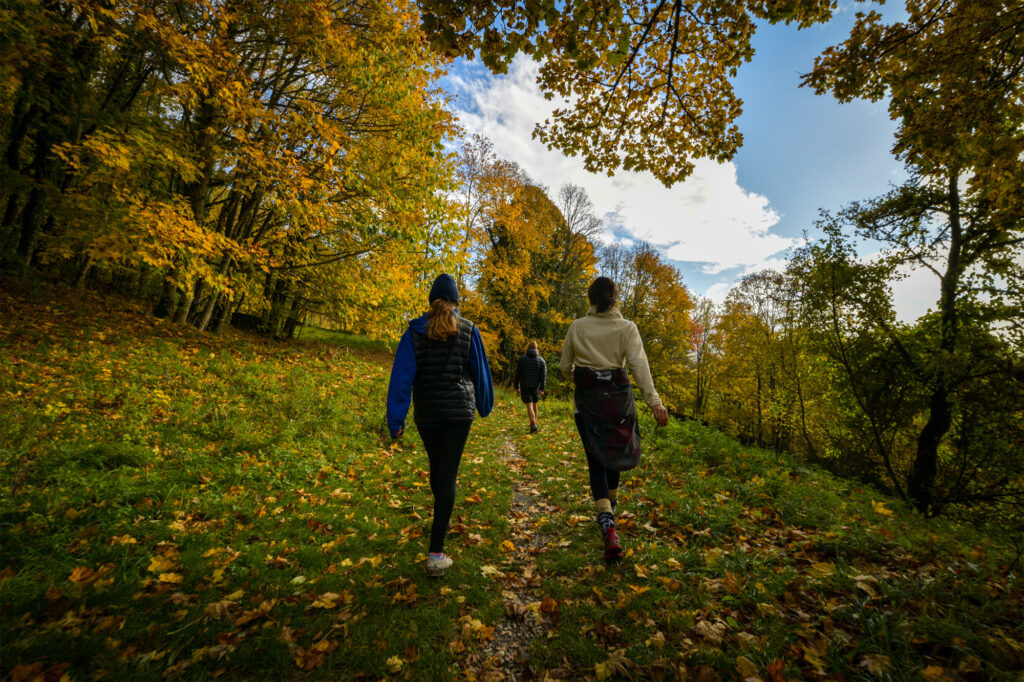
Travelers visiting Tuscany in October or November arrive at the best possible time. The forests turn gold and red, temperatures are pleasant for a walk, and the chance of a beautiful find is at its greatest. This is also why autumn is considered by many connoisseurs to be the finest time to visit Tuscany: the summer crowds are gone, and nature and gastronomy are at their peak.
When is the black truffle season in Tuscany?
Black truffles in Tuscany have two seasons. The black winter truffle (Tuber melanosporum) is available from December through March, while the summer truffle (Tuber aestivum) is found from May through August. Together they offer a truffle experience for almost the entire year.
The black winter truffle is known for its robust, earthy flavor and is particularly beloved in the Tuscan kitchen. It can be heated more readily than the white truffle, making it ideal for warm dishes such as pasta, risotto, and sauces. In the cooler winter months, when Tuscany is quiet and atmospheric, hunting for black truffles is an excellent reason to head into the forests.
The summer truffle is less intense in flavor than its winter cousin, but certainly not without merit. It is more accessible in price and is widely used in salads, carpaccio, and light pasta dishes. For those traveling in the summer months who still want a taste of truffle culture, the summer truffle offers a fine alternative.
How does a truffle hunt in Tuscany work?
A truffle hunt in Tuscany always takes place alongside an experienced trifulau, a certified truffle hunter, and his specially trained dog. The dog can smell the truffle dozens of centimeters below the surface. The hunter then carefully digs with a small spade to remove the truffle undamaged. A typical hunt lasts one to two hours.
Here is how a classic truffle hunt unfolds, step by step:
- Early departure: the best hours are early in the morning, when the ground is still moist and the scents are at their strongest.
- The dog takes the lead: the truffle hunter follows his dog through the forest and watches its behavior closely.
- Pointing and digging: once the dog marks a spot, the hunter digs carefully. A skilled truffle hunter leaves the soil as undisturbed as possible.
- Assessing and storing: the truffle found is assessed for ripeness, size, and aroma. Unripe specimens are returned to the ground.
- Tasting and learning: after the hunt, an explanation of the different varieties often follows, along with guidance on how to identify fresh truffles by scent and texture.
The truffle hunt at Novanta is led by Nicola, a local truffle hunter who knows the forests of the Casentino like the back of his hand. The combination of pristine nature, age-old forest traditions, and personal contact makes this one of the most authentic experiences you can have in Tuscany.
What can you do with fresh truffles after the hunt?
Fresh truffles are at their best when used as soon as possible after the hunt. The finest applications are simple: over pasta, on fried eggs, on fresh bread with butter, or in a light cream sauce. The less you do with truffles, the more the flavor comes into its own.
Here are the most popular ways to use fresh truffles:
- Pasta with truffle: freshly grated truffle over tagliatelle or pappardelle with butter is the classic Tuscan preparation.
- Scrambled eggs with truffle: eggs absorb the scent of truffles exceptionally well. Store the truffle overnight next to raw eggs in a sealed jar for extra aroma.
- Truffle butter: mix grated truffle with soft butter and store it in the refrigerator. Ideal on toast or as a finishing touch on a warm dish.
- Making your own truffle oil: leave a piece of truffle in olive oil for a few days to create a fragrant oil that keeps for weeks.
- Risotto: add freshly grated truffle at the very last moment to a simple risotto bianco for an unforgettable dish.
Fresh truffles keep for a maximum of five to seven days in the refrigerator, wrapped in kitchen paper and stored in a sealed glass jar. Replace the paper daily to prevent moisture build-up. White truffles lose their aroma more quickly than black ones, so use them preferably within three days.
When is the best time to hunt for truffles in Tuscany?
The best time to hunt for truffles in Tuscany is in October and November. During these months, the white truffle season overlaps with ideal weather conditions: cool nights, sufficient rainfall, and a rich forest floor full of leaves and organic matter. The combination of season, nature, and atmosphere makes this the most complete truffle experience.
Those with more flexibility in their travel dates can also go in December or January for the black winter truffle. The forests are quieter then, the air is clear, and the chance of an undisturbed walk through nature is high. For families with children, the autumn school holiday in October offers a practical and appealing travel window that coincides with the peak of the white truffle season.
Outside the summer season, Tuscany has a completely different character: quieter, more authentic, and closer to nature. That is precisely what makes the truffle experience so special. You walk through forests you have to yourself, follow a local guide who knows the region inside and out, and then taste what you have found yourself. That is an entirely different kind of holiday from lying on a crowded beach.
Experience a truffle hunt at Novanta in the Casentino
Novanta, located in the secluded Gello valley high in the Casentino hills, offers its guests the opportunity to experience truffle culture from the inside. Its position on the edge of the Casentino National Park makes the hotel an ideal base for everything the Tuscan autumn has to offer.
What Novanta offers around the truffle season:
- Guided truffle hunt with local hunter Nicola and his trained dog
- Direct access to the pristine forests of the Casentino National Park
- Culinary experiences based on cucina povera, with seasonal and local ingredients
- Atmospheric accommodations in an authentic Tuscan village, suitable for couples, families, and travelers seeking tranquility
- Additional autumn experiences such as walks, wine tastings, and pasta workshops
Novanta is not a classic luxury hotel, but a place for people who want to truly experience Tuscany: barefoot, authentic, and close to nature. Autumn is the perfect season for that. Browse the available experiences and plan your stay in the heart of the truffle season.
