

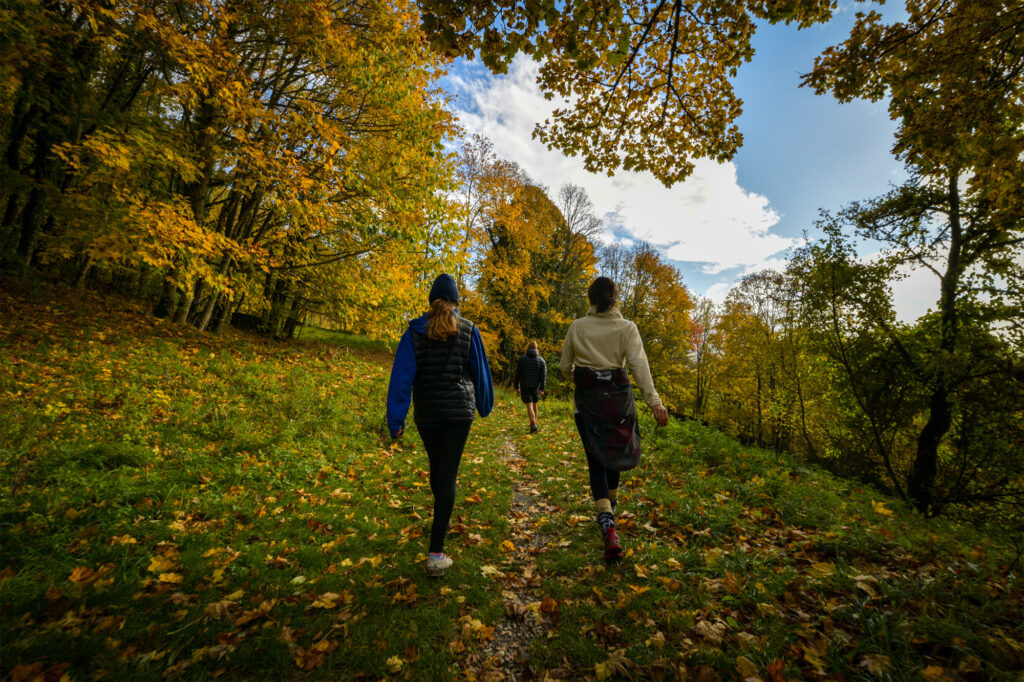
Hiking in Tuscany in November is absolutely possible and, for many hikers, one of the most enjoyable times of the year. Temperatures are mild enough for active days in nature, the trails are quiet, and the autumn colours make the landscape particularly beautiful. In this article, we answer the most frequently asked questions about hiking in Tuscany in autumn, so you can set off well prepared.
How warm is it in Tuscany in November?
In November, daytime temperatures in Tuscany average between 10 and 16 degrees Celsius, depending on altitude and region. In the hills and mountain areas, such as the Casentino, it can cool down significantly in the early morning and evening, dropping to around 4 to 6 degrees. Rain is possible, but prolonged spells of bad weather are the exception rather than the rule.
Compared to summer, conditions in November are more pleasant for those who want to be active. While August in Tuscany can feel hot and heavy for hikers, November offers fresh air, clear visibility, and no scorching sun. The days are shorter than in summer, with an average of around nine hours of daylight — enough for a solid day hike.
In higher areas such as the Casentino National Park, there can be occasional snowfall on the highest peaks in November, but this is rare and the lower trails generally remain easily walkable. It is a month in which Tuscany shows its most authentic face.
Are the hiking trails in Tuscany walkable in November?
Yes, most hiking trails in Tuscany are in good condition in November. After rainfall, muddy sections can occur on unpaved paths, but the major trail networks in the Casentino and surrounding areas are maintained year-round and remain accessible. Sturdy hiking boots are recommended, but special winter gear is not necessary for most routes.
The forests of the Casentino are among the best preserved in all of Italy. In November, the beech and chestnut trees are in full autumn colour, making the hiking trails visually stunning. The absence of summer crowds means you can walk for hours without encountering other hikers.
One thing to be aware of: some mountain trails at higher elevations can be slippery in the early morning after a night frost. If you set off early, check the previous evening’s weather conditions and, if in doubt, opt for a lower-lying route along the river or through the valleys.
What are the advantages of hiking in Tuscany off-season?
Hiking in Tuscany in the low season offers advantages that are simply not available in summer. The combination of tranquillity, nature, and gastronomy reaches its peak in autumn — something many active travellers consider the true essence of Tuscany.
The main advantages at a glance:
- No crowds: Popular trails and viewpoints are virtually empty. You experience nature as it was meant to be.
- Pleasant hiking climate: Fresh temperatures make longer hikes more comfortable than in the summer heat.
- Autumn colours: The forests of the Casentino turn a spectacular gold, red, and orange in October and November.
- Seasonal produce: Truffles, chestnuts, mushrooms, and new olive oil are at their best in autumn.
- Better photography: Soft autumn light and mist in the valleys give Tuscany a painterly quality.
- Lower prices: Accommodation and experiences are often more affordably priced in the low season.
For travellers who want to experience Tuscany rather than simply visit it, November is one of the most rewarding months of the year.
What clothing and equipment do you need for November hikes in Tuscany?
For hiking in Tuscany in November, you don’t need heavy winter gear, but a well-thought-out layering approach is essential. Temperatures can be pleasant during the day, but it cools down quickly in the early morning and after sunset. Preparation makes the difference between a comfortable hike and a cold surprise.
Bring the following clothing and equipment:
- Sturdy hiking boots with good grip: Waterproof boots are preferable due to possible mud and dew on the trails.
- Functional base layer: A moisture-wicking underlayer keeps you dry during exertion.
- Fleece or wool mid-layer: For warmth during breaks and in the shade of the forests.
- Lightweight rain jacket: Compact and windproof — essential when conditions change.
- Hiking poles: Useful on wet or slippery slopes.
- Hat and gloves: Especially for early morning hikes or higher routes.
- Small backpack with water and snacks: Facilities are scarce outside the villages.
What you don’t need: heavy winter footwear, ice axes, or crampons. November in the Casentino is autumn, not winter. Anyone accustomed to hiking in autumn conditions will find the circumstances familiar, albeit in a far more spectacular setting.
Which hiking routes are most suitable in November?
The most suitable hiking routes for November in Tuscany are those through the lower valleys, along rivers, and through the beech forests of the Casentino. These routes benefit most from the autumn colours and are least susceptible to wet or slippery conditions at higher altitudes.
Hiking through the Gello valley
The Gello valley in the heart of the Casentino offers varied routes for hikers of all levels. Forest paths wind along the Corsalone river, through chestnut woods, and past old farmhouses. The active experiences in the valley are designed to let hikers discover the most authentic spots, even in autumn.
La Verna monastery
One of the most beautiful day hikes in the region leads to the Franciscan monastery of La Verna, perched high on a rocky plateau above the Casentino. The walk through the forests is particularly atmospheric in November, thanks to the autumn colours and the peaceful surroundings. The monastery itself has an impressive history and is open to visitors year-round.
Other suitable routes for November include walks along the river, through the ancient chestnut forests, and along the hillside paths with views of the historic towns of Bibbiena and Arezzo. Shorter routes of two to four hours are ideal when the weather is changeable; on clear days, longer hikes of five to seven hours pair well with a picnic along the way.
What can you combine with hiking in Tuscany in November?
Hiking in Tuscany in November is at its best when combined with the gastronomic and cultural highlights of the season. Autumn is the richest time of year for local produce and traditions, and many activities that are less accessible in summer come fully into their own in November.
Think of combinations such as:
- Truffle hunting: November is one of the best months for white truffles. A guided truffle hunt with trained dogs through the forests is an unforgettable experience that pairs perfectly with a morning hike.
- Wine tastings: The new harvest has just come in and local producers open their cellars for tastings. Tuscan wine tastes best after a day in the fresh air.
- Pasta making: A cooking workshop after an active day is an ideal way to discover Italian culinary tradition from the inside.
- Relaxing in the hot tub: After a long hike, a warm soak under the open sky is a well-deserved end to the day.
- Cultural visits: Arezzo is less than an hour’s drive away and offers medieval architecture, museums, and local markets without the summer tourist crowds.
The combination of moving through nature and then enjoying honest, seasonal food is precisely what makes Tuscany in autumn so appealing to those seeking authenticity over superficiality.
How Novanta helps you make the most of November in Tuscany
Novanta is an experience hotel tucked away in the Casentino hills, right in the heart of the area featured in this article. It is not a conventional hotel, but a fully restored medieval borgo where nature, community, and authentic Tuscan culture come together. For hikers and nature lovers who want to discover Tuscany in November, Novanta offers an ideal base.
What Novanta concretely offers autumn travellers:
- Direct access to hiking trails through the Gello valley and the Casentino National Park
- Guided truffle hunts and wine tastings with local producers
- Pasta and sausage-making workshops based on the cucina povera tradition
- A wood-fired hot tub, perfect after a cold autumn day in nature
- Atmospheric hotel rooms and holiday cottages with rustic charm and modern comfort
- A car-free village where peace and connection take centre stage
Novanta is not a destination for those who expect to be waited on. It is a place for people who want to hike, taste, learn, and be truly present in nature. Ready to experience Tuscany in November the way it should be? Discover the story of Novanta and plan your stay in the low season.
