

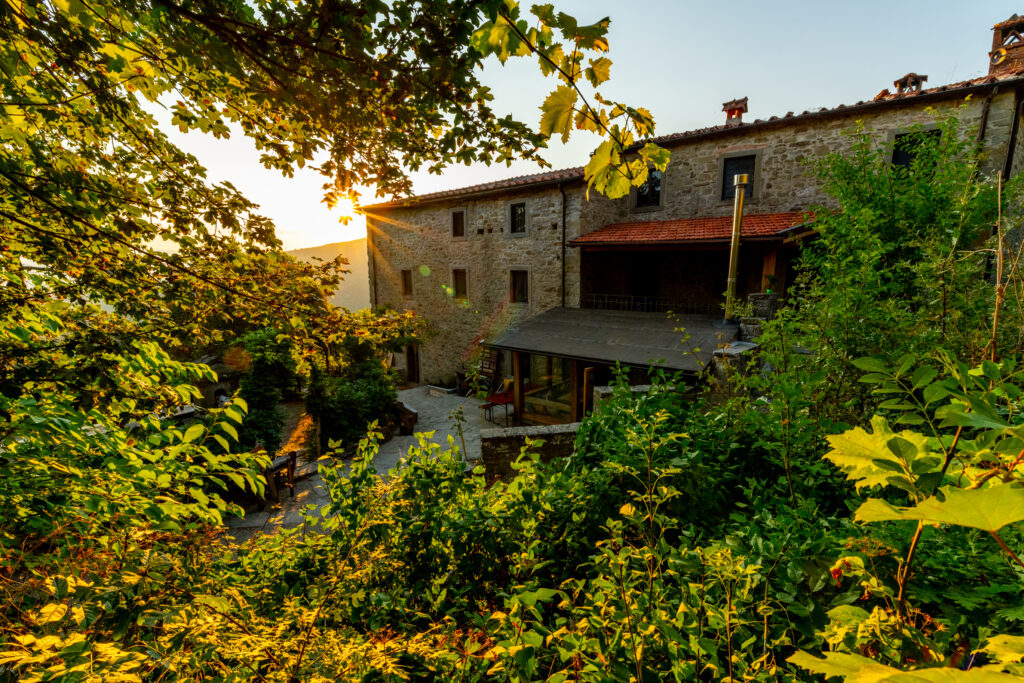
An agriturismo is a revelation for many families: no crowded tourist hotel, no all-inclusive resort, but a stay on a working or historic farm in the heart of nature. Italians have sworn by this concept for decades, and more and more families are discovering it as the ideal base for a family holiday in Tuscany. But what exactly does it involve, and is it suitable for children? Below you’ll find everything you need to know before you book.
How an agriturismo differs from a regular hotel
An agriturismo is a legally recognized form of accommodation in Italy where guests stay on a farm or rural estate that is actively connected to local agriculture and horticulture. The difference from a regular hotel lies not only in the location, but in the entire philosophy behind it.
Where a hotel runs on service and efficiency, an agriturismo runs on authenticity and rootedness in the region. Think of meals made with produce from the land, owners who tell you about this year’s harvest, and a rhythm dictated by nature rather than a reception desk. There’s no room service, but there is a long table where you get to know your neighbors.
That also means you need a different mindset as a guest. An agriturismo is not for those who expect to be pampered. It’s for those who want to enjoy genuine silence, space, and local flavors, even if that means the parking area is a short walk from your accommodation.
What guests can expect at an agriturismo
The experience at an agriturismo is broad, but a few elements recur almost everywhere. Don’t expect a minibar or a spa with white bathrobes. Do expect space, character, and a connection with the surroundings that a standard hotel can never provide.
Typical features of an agriturismo stay include:
- Meals based on the “cucina povera”: simple, honest dishes made with local ingredients
- Activities that connect to the region, such as truffle hunting, wine tasting, or pasta making
- Accommodations with character, often in renovated farmhouses or historic buildings
- Direct access to nature: forests, hills, rivers, or vineyards within walking distance
- An informal atmosphere where owners and guests regularly interact
Comfort varies greatly by location. Some agriturismi are simple and modest; others combine rustic charm with modern amenities such as a swimming pool or private kitchen. It’s always worth comparing carefully what a specific location offers before you book.
Is an agriturismo suitable for children?
For many families, an agriturismo is actually ideal with children, but it does require the right expectations. Children who love playing outdoors, want to explore open spaces, and are open to new experiences thrive in this environment.
The open nature offers what a holiday park never can: real freedom. Children can roam around, discover animals, swim in a river, or take part in activities like pasta making or a forest walk. There’s no entertainment program, but there’s also no boredom when the surroundings invite adventure.
At the same time, an agriturismo is not always suitable for very young children who need a fixed structure and a lot of convenience. A few honest considerations:
- Roads and paths can be unpaved, which is tricky with a stroller
- Insects and small animals are part of nature, including indoors
- Meals are often at fixed times and less flexible than in a hotel
- WiFi and screen time are scarce, which takes some getting used to for some teenagers, but is actually liberating for many
Families with children from around age eight through to teenagers generally find the perfect balance at an agriturismo: enough comfort, enough adventure, and enough space to make friends with other families staying there.
Practical tips for an agriturismo holiday with family
Good preparation makes the difference between a memorable holiday and a week full of small frustrations. A few practical points to keep in mind:
- Book early: Popular agriturismi in Tuscany fill up quickly in summer, especially during the school holiday weeks in July and August.
- Choose the right type of accommodation: For larger families or multiple families together, a holiday home with its own kitchen is often more practical than separate hotel rooms.
- Pack light but smart: Walking shoes, insect repellent, and a good flashlight are essential. Don’t forget bikes if the location offers e-bikes.
- Discuss expectations with children: Explain in advance that this will be a different kind of holiday from a hotel or holiday park, and emphasize the adventurous side.
- Plan activities locally: Ask the owners for recommendations on hiking routes, markets, and nearby attractions. They know the region better than any travel guide.
An agriturismo holiday calls for an open mindset, but rewards you with an authentic experience that children and parents will remember for years to come.
Why Tuscany is the most popular region for agriturismo
Tuscany has earned its reputation as the heart of Italian agriturismo culture for good reason. The combination of rolling hills, ancient forests, rich culinary traditions, and a temperate climate makes the region exceptionally well suited to this type of holiday.
The region counts thousands of agriturismi, from small family farms to expansive estates. What sets Tuscany apart from other regions is the density of experiences within a small geographical area: wine tasting in Chianti, truffle hunting in the Casentino, swimming in a river, and dining by candlelight at a long table in the evening. All of this without having to drive far.
Moreover, Tuscany has a strong tradition of local products and crafts. Families who holiday here introduce children to how food is made, what nature looks like without human interference, and how a community lives together. That is a form of education no classroom can provide.
The Casentino, one of the greenest and least touristy valleys in Tuscany, is a special discovery within that context. Bordering a national park, with ancient forests and a river winding through the valley, it offers exactly the combination of nature and authenticity that families looking for something beyond the beaten tourist trail are seeking.
How Novanta brings your agriturismo holiday in Tuscany to life
Novanta is an experiential hotel, tucked away in the Gello valley in the Casentino, surrounded by some 300 hectares of fields and forests. It is neither a traditional hotel nor a run-of-the-mill agriturismo, but a borgo with soul: 16 authentic houses, a church, and a community built on local flavors, communal tables, and adventure in nature.
For families, Novanta offers the following:
- Self-contained holiday homes with their own kitchen for multiple families together, with 2 or 3 bedrooms
- A car-free village: the car stays at the entrance, luggage is transported by 4×4
- A 20-meter swimming pool and direct access to the river
- Activities such as truffle hunting, pasta making, e-mountain biking, and wine tasting
- Meals inspired by the cucina povera, at long tables shared with other guests
- Directly borders the Casentino National Park, with endless hiking opportunities
Novanta is not a place for those who expect pampering. It is a place for families seeking a genuine experience: nature, freedom, honest food, and the space to discover something together. Browse the available rooms and cottages or plan a stay in one of the holiday homes for the coming season.
Frequently Asked Questions
Hoe ver van tevoren moet ik een agriturismo in Toscane boeken voor een zomervakantie?
Voor de populaire zomermaanden (juli en augustus) raden we aan om minimaal zes tot negen maanden van tevoren te boeken, zeker als je een grotere accommodatie zoekt voor meerdere gezinnen. Goede agriturismi zoals Novanta zijn snel vol in de schoolvakantieperiodes. Buiten het hoogseizoen, bijvoorbeeld in mei, juni of september, heb je meer keuze en profiteer je bovendien van aangenamer weer en rustigere omgeving.
Wat is het verschil tussen een vakantiehuis op een agriturismo en een gewone hotelkamer?
Een vakantiehuis op een agriturismo geeft je veel meer zelfstandigheid: je beschikt over een eigen keuken, eigen buitenruimte en je eigen ritme, zonder afhankelijk te zijn van vaste eettijden of hotelregels. Dit is vooral praktisch voor gezinnen met jonge kinderen die flexibiliteit nodig hebben rondom slaap- en eetmomenten. Tegelijkertijd ben je onderdeel van een grotere gemeenschap op het terrein, zodat je het beste van twee werelden combineert.
Welke leeftijd is ideaal voor kinderen om een agriturismo-vakantie echt te kunnen waarderen?
Kinderen vanaf een jaar of zes beginnen de vrijheid, natuur en activiteiten van een agriturismo echt te waarderen, maar de zoete plek ligt vaak tussen acht en vijftien jaar. Op die leeftijd zijn kinderen avontuurlijk genoeg om mee te doen aan activiteiten zoals truffels zoeken of pasta maken, en oud genoeg om zelfstandig te verkennen. Peuters en baby’s zijn zeker welkom, maar houd dan rekening met onverharde paden en een minder gestructureerd dagprogramma dan in een kindvriendelijk resort.
Wat als mijn kind kieskeurig is met eten — past een agriturismo dan nog wel?
De cucina povera die op een agriturismo centraal staat, bestaat uit eenvoudige, herkenbare gerechten zoals pasta, brood, kaas en gegrilde groenten — vaak minder exotisch dan je misschien verwacht. Veel eigenaren zijn bereid om rekening te houden met kinderen die niet van alles lusten, zeker als je dit vooraf aangeeft. Als je in een vakantiehuis met eigen keuken verblijft, kun je daarnaast altijd zelf iets klaarmaken met verse lokale producten van de markt of het bedrijf zelf.
Hoe bereik ik een agriturismo in Toscane het beste, en heb ik een auto nodig?
Een huurauto is voor de meeste agriturismi sterk aanbevolen, omdat ze vaak buiten dorpen en steden liggen en slecht bereikbaar zijn met openbaar vervoer. De rit vanuit de grote Toscaanse steden zoals Florence of Arezzo duurt doorgaans een uur of minder. Eenmaal ter plaatse, op locaties zoals Novanta, kun je de auto parkeren bij de ingang en het terrein autovrij beleven — wat juist een groot voordeel is voor gezinnen met kinderen.
Wat zijn de meest gemaakte fouten bij het kiezen van een agriturismo voor een gezinsvakantie?
De meest voorkomende fout is kiezen op basis van foto’s alleen, zonder te controleren welke voorzieningen daadwerkelijk aanwezig zijn voor kinderen, zoals een zwembad, speelruimte of veilige buitenomgeving. Een tweede veelgemaakte fout is onderschatten hoe afgelegen sommige locaties zijn: controleer altijd de afstand tot de dichtstbijzijnde supermarkt, apotheek en attracties. Lees ook altijd recente gastreviews van andere gezinnen — die geven een veel realistischer beeld dan de officiële omschrijving.
Kan ik het Casentino combineren met andere populaire bestemmingen in Toscane zoals Florence of Siena?
Absoluut — het Casentino ligt centraal genoeg om dagtrips te maken naar Florence (ongeveer een uur rijden), Arezzo (dertig minuten) en zelfs Siena (anderhalf uur). Zo combineer je de rust en natuur van een agriturismo-verblijf met de culturele rijkdom van de Toscaanse steden. Het voordeel van het Casentino als uitvalsbasis is dat je ‘s avonds altijd terugkeert naar een stille, groene omgeving — ver weg van de drukte van de toeristische centra.
Related Articles
- Wat kun je in Toscane doen met kinderen als het regent?
- How to Plan a Vacation in Tuscany That Both Parents and Kids Will Enjoy
- Agriturismo met zwembad in Toscane: wat kun je verwachten?
- Vakantiehuis huren in Toscane voor een grote groep: waar moet je op letten?
- Agriturismo with swimming pool in Tuscany: what can you expect?
