

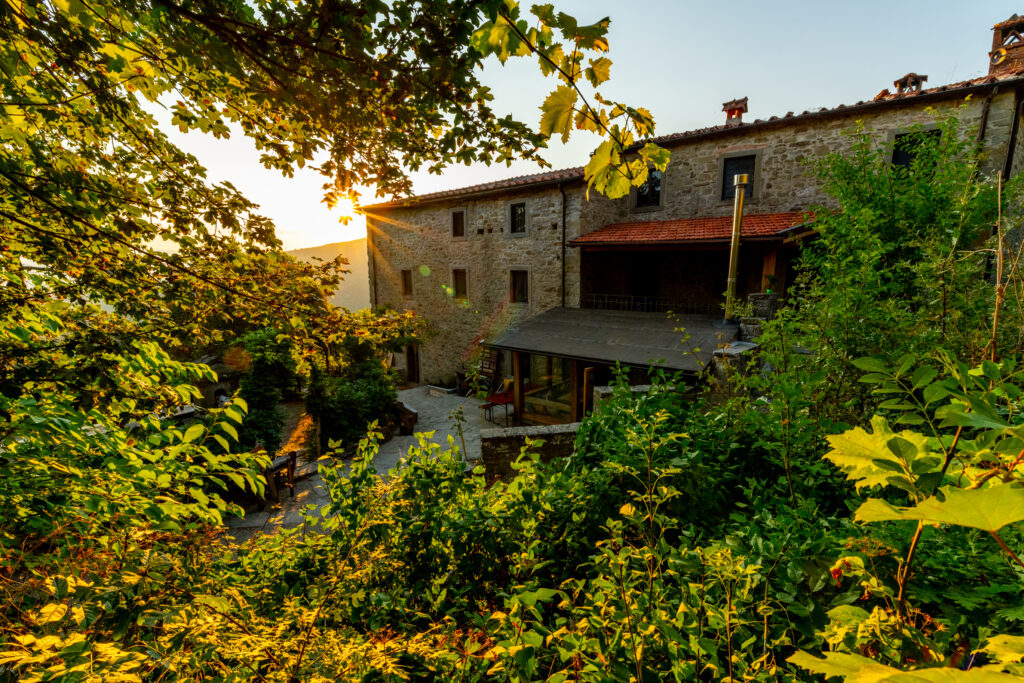
An agriturismo in Italy sounds like the perfect family adventure: space, nature, local flavors, and an atmosphere far removed from the busy tourist circuit. But not every agriturismo is equally suitable for families with children. For a successful family vacation in Tuscany, it pays to know in advance what to look for, because the choice determines whether children feel at home or get bored, and whether parents truly get to unwind or constantly have to improvise.
The popularity of the agriturismo as a vacation option is steadily growing, especially among families who prefer authenticity over all-inclusive convenience. Yet the differences between accommodations are enormous. What makes an agriturismo truly family-friendly? And what pitfalls should you avoid? These are the questions every family traveler should ask before booking.
What sets a truly family-friendly agriturismo apart
A family-friendly agriturismo is more than a place with a playground in the garden. It’s about an environment where children feel free, can move around safely, and keep themselves occupied — without parents having to organize every minute.
The best agriturismo options for families offer plenty of outdoor space without traffic, a pool that is also accessible for children, and an atmosphere that feels relaxed. Think of unpaved paths, forests to explore, animals on the property, or a river nearby. These kinds of environments invite children to discover things on their own, which is a huge added value for both them and their parents.
Also look at the social setting. An agriturismo hosting multiple families at the same time often means children quickly make friends. This completely changes the dynamics of the vacation: children entertain themselves, parents truly relax.
Accommodation: rooms versus vacation homes
The choice between a hotel room and an independent vacation home is one of the most decisive decisions for families. Both have their place, but they address very different needs.
Hotel rooms or suites work well for smaller families who want to travel light and prefer to have everything taken care of. Meals are arranged, there’s no obligation to cook, and the threshold is low. The downside is lack of space: children who wake up early in a small room, parents whispering while the little ones sleep — that’s not the relaxation you’re hoping for.
Vacation homes with their own kitchen, multiple bedrooms, and private outdoor space give families much more freedom. Children can wake up at their own pace, parents can decide when to eat and what time to head out. For larger families or multiple families together, a self-contained vacation home is almost always the better choice. The extra space more than compensates for the slightly higher price.
Activities that truly keep children engaged
At an agriturismo, it’s not about an entertainment program or water park. The activities are different in nature, and precisely because of that, they are often more valuable for children who are used to screens and structured leisure time.
The most memorable experiences are those where children actively participate in something real. Think of:
- Truffle hunting with a local guide and a dog with a keen nose
- Making pasta from authentic Tuscan ingredients
- E-mountain biking through forests and hills
- Swimming in a river or a large outdoor pool
- Roaming freely in a car-free village or borgo
Activities that immerse children in the local way of life — foraging excursions, cooking with regional products, animals on the land — make a bigger impression than any theme park. They also give children conversation topics that stay with them long after returning home.
Location and accessibility: what works for families
The location of an agriturismo largely determines how the vacation feels. Remote and quiet is ideal for peace, but requires good preparation.
Always check how far the nearest supermarket, pharmacy, or hospital is. For families with young children, this is not an unnecessary luxury. An agriturismo deep in the hills sounds romantic, but if a child gets sick in the middle of the night, you want to know how long you’ll be on the road.
At the same time, a certain degree of seclusion is exactly what many families are looking for. No heavy traffic, no tourist crowds, space to move freely. A car-free property or borgo is ideal in this respect: children can safely cycle or walk around without parents constantly having to keep watch. Leaving the car at the entrance and having the luggage brought to you is, incidentally, an adventure in itself for children.
Eating at an agriturismo with children
Food at an Italian agriturismo is never an afterthought. It is a central part of the experience, and that is both an opportunity and a point of attention for families with picky eaters.
Most agriturismo options work with a set menu based on seasonal, local products. That’s wonderful, but not always what an eight-year-old wants. Ask in advance whether there is flexibility in the offerings, whether children can eat at the main table, and whether allergies or preferences can be accommodated.
Families who opt for a vacation home with their own kitchen partially sidestep this issue: they can cook themselves whenever it suits them and don’t have to be tied to a fixed mealtime every evening. Yet it is precisely the shared meal at a long table — with other families, local wine, and homemade pasta — that gives the vacation its character. Let children be part of that; it’s an experience they don’t have at home.
Common mistakes when choosing an agriturismo
Those booking an agriturismo for the first time sometimes make choices that don’t work out well in hindsight. Recognizing what can go wrong helps you make better decisions.
- Relying solely on photos. Atmospheric images say little about practical suitability for families. Always ask for floor plans, distances, and specific amenities.
- Underestimating how remote the location is. An hour’s drive from the highway can be wonderful — or exhausting — depending on how you want to spend your vacation.
- Forgetting to ask about the pool. Is it adults only? Are there set hours? Is there supervision? These are questions that make all the difference.
- Choosing a space that’s too small. With children, you need more space than you think. An extra bedroom or separate living area is not a luxury, but a necessity for a relaxing vacation.
- Not accounting for the season. August is beautiful but also hot. Children who don’t handle heat well are often happier in June or September — and the agriturismo options are quieter then too.
How Novanta helps you choose the right agriturismo for families
Novanta combines everything families look for in an authentic Tuscan agriturismo, without the stiffness of a traditional hotel or the anonymity of a holiday park. The borgo is tucked away in the Casentino hills, bordering a national park, and offers children the freedom to explore in a safe, car-free environment.
What Novanta specifically offers for families:
- Spacious vacation homes with 2 or 3 bedrooms, a private kitchen and outdoor space — ideal for larger families or multiple families together
- A 20-meter outdoor pool and a river within walking distance
- Hands-on activities such as truffle hunting, pasta making, and e-mountain biking
- Meals at long tables with local, seasonal ingredients
- A car-free borgo where children can roam freely
- A small-scale atmosphere with a focus on sustainability and local connection
Novanta is not a place for those who expect to be pampered with room service and daily bed changes. It is a place for families who prefer nature, authenticity, and genuine experiences over polished comfort. Curious whether this suits you? Browse the available hotel rooms and vacation homes and plan a stay that children will remember for years to come.
Frequently Asked Questions
From what age is an agriturismo like Novanta suitable for children?
An agriturismo is actually suitable for all ages, but the experience varies greatly by age group. Toddlers and young children especially enjoy the space, the animals, and the pool, while children from around age six can actively participate in activities such as truffle hunting or pasta making. For teenagers, activities like e-mountain biking through the Casentino hills are often a big hit. It is advisable to check with the accommodation in advance which activities have a minimum age requirement.
How far in advance should I book an agriturismo for the summer vacation?
For a stay during the popular summer months — particularly July and August — we recommend booking at least four to six months in advance. Small-scale agriturismo options have a limited number of accommodations, and the best vacation homes go the fastest. Those who are flexible with timing and opt for June or September will have more choice and benefit from more pleasant temperatures for children.
What if my child is a picky eater and doesn't like the Italian menu?
This is a common concern, but in practice it often turns out to be less of an issue. Many Italian dishes — such as homemade pasta, pizza, or grilled vegetables — are actually popular with children. It is smart to contact the agriturismo in advance to ask about the flexibility of the menu and whether specific preferences or allergies can be accommodated. Families who choose a vacation home with their own kitchen always have the freedom to cook for themselves whenever needed.
Is it wise to rent a car, even if the agriturismo is car-free?
Yes, a rental car is strongly recommended for most families, even if the agriturismo itself is car-free. You need the car to drive from the Netherlands or Belgium, for day trips to nearby villages and towns, and for practical matters such as grocery shopping or visiting a pharmacy. At the agriturismo itself, you park the car at the entrance and enjoy the peace and quiet — the best of both worlds.
Can two families book one vacation home together, or is that too cramped?
It depends greatly on the size of the vacation home and the number of children. A property with three bedrooms and a spacious shared living area can work well for two small families, especially if there is also a private outdoor space. The advantage is that costs are shared and the children immediately have playmates. Always ask at the time of booking about the exact layout and maximum number of guests, so there are no surprises upon arrival.
What clothing and equipment should I bring for activities in the Tuscan countryside?
Think sturdy hiking shoes or trail runners for the children, sun protection (sunscreen, hats, and sunglasses), and light but covering clothing for walks through the forest. A small backpack with water and snacks is handy for day trips. For activities such as e-mountain biking, helmets are generally provided on-site, but check this in advance with the accommodation. Don’t forget a light rain jacket either — even in summer, evenings in the Tuscan hills can cool down or bring a shower.
How do I make sure the vacation is truly relaxing for myself as a parent?
The key lies in preparation and the right choice of accommodation. Choose a vacation home with enough space so children can entertain themselves independently, and select an agriturismo where children can safely roam freely without constant supervision. Don’t plan too many obligatory outings: a vacation at an agriturismo works best when you let go of the day’s schedule and let the surroundings do their work. Also deliberately reserve one or two evenings for a relaxed meal with other adults, while the children play together.
Related Articles
- What Does a Relaxed Family Vacation in Tuscany With Kids Look Like?
- Is een natuurvakantie in Toscane geschikt voor het hele gezin?
- How to Plan a Vacation in Tuscany That Both Parents and Kids Will Enjoy
- What is the best time to visit Tuscany with children?
- Kun je nog last minute een vakantiehuis boeken in Toscane in de zomer?
