

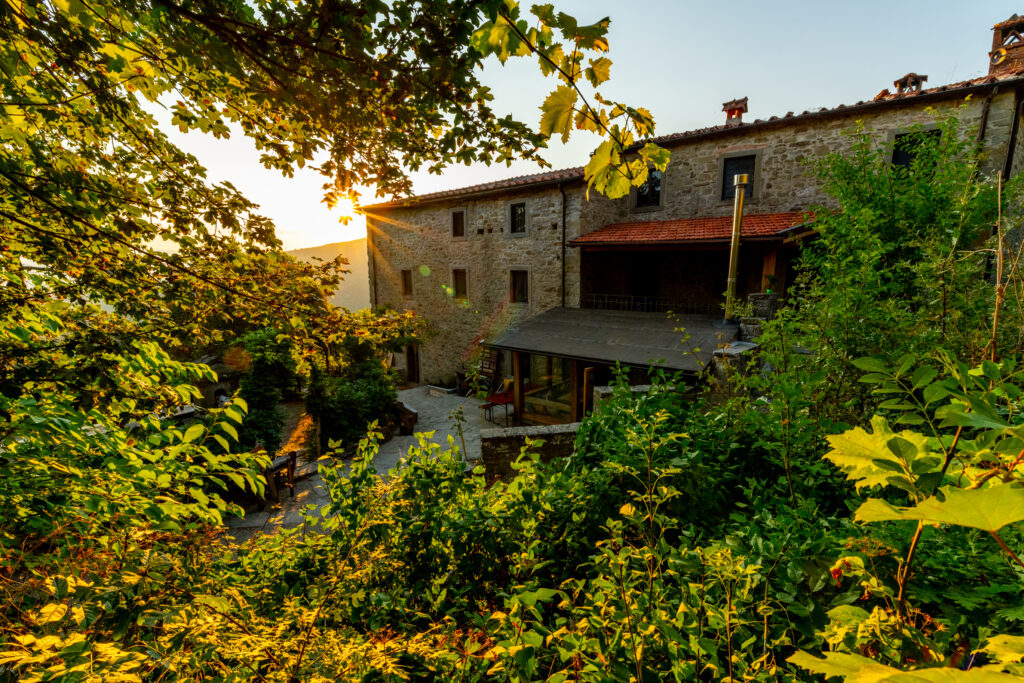
Renting a holiday home in Tuscany sounds like a dream, but anyone who seriously starts looking soon finds that the choices can be overwhelming. Which region? How many bedrooms? With or without a pool? And then there’s the difference between a polished villa that looks great in photos and a place where you truly experience something. Especially for families looking for an authentic family holiday in Tuscany, it pays to pause and think about what you really want.
This article guides you step by step through the most important choices, from the type of property to the right region and the right time to book. No marketing talk, just honest tips to help you along.
Which type of holiday home suits your family?
The first thing to decide is the type of accommodation. A holiday home gives you freedom: your own kitchen, your own pace, children playing outside without worrying about others. A hotel or resort offers more service, but less space and less privacy. For families with children, especially if you’re travelling with multiple families, a self-contained holiday home is usually the best choice.
Also think about the group composition. If you’re travelling as a single family of four, a house with two bedrooms is sufficient. If you’re going with two or three families together, you’ll want enough space to spend evenings together without everyone being on top of each other. A property with a shared outdoor area or terrace makes the difference between conviviality and crowding.
Pay attention to the bedroom layout as well. Teenagers have different needs than toddlers. A house where the bedrooms are spread out, or where a separate floor is available, works much better than an open floor plan where everyone disturbs each other’s sleep.
Choosing the right region: more than just Chianti
Tuscany is larger than many people think, and not every region offers the same experience. The Chianti is beautiful, but also one of the most visited areas. Those looking for peace, nature, and an authentic atmosphere would do well to look further afield.
Regions such as the Casentino, the Garfagnana, or the Maremma are far less touristy, but just as beautiful. The Casentino, in the province of Arezzo, borders a national park and offers lush forests, medieval villages, and a landscape barely changed by mass tourism. Ideal for families who want to combine nature and tranquillity with culture.
Also consider how important accessibility is to you. If you want to drive to cities like Florence or Siena on a daily basis, a central location is the better choice. If you’d rather let the surroundings set the agenda, the location can afford to be somewhat remote.
What to look for when booking a holiday home
Booking a holiday home goes beyond a beautiful photo and a good price. There are a number of practical factors that make the difference between a successful holiday and a disappointment.
- Pool: private or shared? A private pool gives more freedom, but a shared pool at a small-scale property can work perfectly well if the atmosphere is right.
- Air conditioning: Tuscan summers can get very hot. Check whether the bedrooms can be cooled.
- Wi-Fi and connectivity: not a luxury for families with teenagers, especially if you occasionally need to work remotely.
- Cancellation policy: read the fine print, especially if you’re booking well in advance.
- Accessibility by car: some holiday homes in the hills are reached via narrow unpaved roads. Check in advance whether a regular car is sufficient.
Preferably book directly with the owner or through a reliable platform with clear reviews. That way you know what to expect and can ask any questions directly.
Authentic Tuscany versus tourist Tuscany
There is a big difference between Tuscany for the photos and Tuscany as it really is. Popular destinations such as San Gimignano, the Chianti route, or the coast near Forte dei Marmi are busy, expensive, and sometimes disappointing in summer if you’re looking for peace and authenticity.
Authentic Tuscany can be found in the smaller valleys, the lesser-known borghi, and the places where local residents still simply live and work. Where the trattoria has no English menu, where you see the farmer in the fields in the morning, and where children can run freely without a souvenir stall around the corner.
That authentic character sometimes asks something of you as a guest. A short walk from the car park, a winding road to the village, or a shared table with other guests. But it’s precisely those small inconveniences that make the experience richer and more memorable than a polished all-inclusive resort.
Taking activities and surroundings into account in your choice
The surroundings of your holiday home largely determine how you fill your days. Especially with children or teenagers, you want to know what there is to do nearby, without spending hours in the car every day.
Think about walking opportunities directly from the accommodation, cycling paths or mountain bike routes, natural swimming spots such as rivers or lakes, and cultural attractions within a reasonable distance. But also the more unexpected activities make a holiday special: truffle hunting with a local guide, making pasta with a village resident, or a wine tasting at a small producer.
When booking, always ask what the immediate surroundings have to offer. The best experiences are often those not found in a travel guide.
When to book and what does a holiday home in Tuscany cost?
Prices for holiday homes in Tuscany vary considerably, depending on the region, the season, and the size of the property. As a rule of thumb: the closer to the summer holidays, the higher the price and the smaller the selection.
For a family holiday in Tuscany in 2026, the following guidelines apply:
- Book early: the most popular periods — the Dutch and Belgian summer holidays from mid-June to the end of August — fill up quickly. Those who book in January or February have the most choice and sometimes benefit from early-booking discounts.
- Compare weeks: the first and last week of the school holidays are generally cheaper than the weeks in between.
- Budget realistically: a good holiday home for a family of four to six people easily costs between €1,500 and €3,000 per week in high season, depending on the facilities.
- Don’t forget additional costs: cleaning fees, a security deposit, and any tourist tax are not always included in the base price.
- Read reviews critically: pay attention not only to the overall rating, but also to recent experiences from families with children.
Those who are flexible with dates can also find great deals outside the high season. May, June, and September are wonderful months in Tuscany, with pleasant weather, fewer crowds, and lower prices.
How Novanta helps you find your ideal holiday home in Tuscany
Novanta is an experiential hotel tucked away in the Casentino hills, in the secluded Gello valley in Tuscany. It is exactly the kind of place this article focuses on: authentic, surrounded by nature, far from the tourist crowds. No mass tourism, but a place where you truly experience something.
For families and groups of friends, Novanta offers the following:
- Self-contained holiday homes in Tuscany with two or three bedrooms, a private kitchen, and private outdoor space
- Access to a 20-metre swimming pool and the river in the valley
- A car-free village: the car stays at the entrance, luggage is transported by 4×4
- Activities such as truffle hunting, pasta making, e-mountain biking, and wine tastings, together with local residents
- Smaller families or couples can choose a hotel room or cottage in the borgo
Want to know whether Novanta is right for your family or group? Browse the options on the website and get in touch for personal advice on the best choice for your holiday.
Frequently Asked Questions
Hoe ver van tevoren moet ik een vakantiehuis in Toscane boeken voor de zomervakantie?
Voor de Nederlandse en Belgische zomervakantie (half juni tot eind augustus) raden we aan om uiterlijk in januari of februari te boeken. De beste vakantiehuizen — zeker die met een privézwembad en een goede ligging — zijn vaak al in het vroege voorjaar volgeboekt. Hoe eerder je boekt, hoe meer keuze je hebt in locatie, grootte en prijs.
Is een vakantiehuis in Toscane ook geschikt voor gezinnen met jonge kinderen?
Absoluut, maar let op een aantal specifieke zaken. Controleer of het zwembad beveiligd is met een hek of alarm, of de wegen rondom het huis veilig zijn voor kleine kinderen, en of er schaduwrijke buitenruimtes zijn voor de heetste uren van de dag. Kies bij voorkeur voor een woning met een omheinde tuin of een autovrije omgeving, zodat kinderen vrijuit kunnen spelen zonder voortdurend toezicht.
Wat zijn veelgemaakte fouten bij het boeken van een vakantiehuis in Toscane?
Een van de meest gemaakte fouten is te veel focussen op de foto’s en te weinig op de praktische details, zoals de bereikbaarheid via onverharde wegen, de aanwezigheid van airconditioning in de slaapkamers, en de bijkomende kosten zoals schoonmaak en borg. Een andere valkuil is kiezen voor een populaire toeristenregio zonder te beseffen hoe druk het er in de zomer werkelijk is. Lees altijd recente beoordelingen van gezinnen met vergelijkbare reisgezelschappen.
Welke regio in Toscane is het meest geschikt voor een rustige, authentieke gezinsvakantie?
Als je rust, natuur en authenticiteit combineert, zijn minder bekende regio’s zoals het Casentino, de Garfagnana of de Maremma uitstekende keuzes. Het Casentino in de provincie Arezzo is bijzonder geschikt voor gezinnen: het grenst aan een nationaal park, heeft middeleeuwse dorpjes en nauwelijks massatoerisme. Bovendien zijn er volop wandel- en fietsmogelijkheden direct vanuit de accommodatie.
Kan ik in Toscane ook goed terecht buiten het hoogseizoen, bijvoorbeeld in mei of september?
Zeker. Mei, juni en september zijn vaak de allermooiste maanden om Toscane te bezoeken. Het weer is aangenaam warm zonder de extreme hitte van juli en augustus, de drukte is beduidend minder en de prijzen voor vakantiehuizen liggen merkbaar lager. Bovendien zijn activiteiten zoals wandelen, fietsen en het bezoeken van lokale markten en festivals in het voor- en naseizoen veel aangenamer dan in de volle zomer.
Wat is het verschil tussen een vakantiehuis boeken via een groot platform en rechtstreeks bij de verhuurder?
Grote platforms zoals Airbnb of Booking.com bieden overzicht en een zekere mate van consumentenbescherming, maar rekenen vaak servicekosten die de totaalprijs flink kunnen opdrijven. Rechtstreeks boeken bij de verhuurder geeft je de kans om direct vragen te stellen, maatwerk te vragen en soms een betere prijs te bedingen. Zorg er wel voor dat je de verhuurder kunt verifiëren via beoordelingen of een eigen website, en leg afspraken altijd schriftelijk vast.
Welke activiteiten kan ik verwachten als ik kies voor een authentiek vakantiehuis in een afgelegen dal in Toscane?
Juist de minder toeristisch ingestelde locaties bieden vaak de rijkste ervaringen: denk aan truffels zoeken met een lokale gids, pasta of focaccia maken bij een bewoner van het dorp, e-mountainbiken door onontgonnen natuur of zwemmen in een rivier. Vraag bij het boeken altijd naar de activiteiten die de verhuurder of het verblijf aanbiedt — de beste tips staan zelden in een reisgids en worden alleen gedeeld als je ernaar vraagt.
Related Articles
- Bestaat er een rustig alternatief voor de Chianti in Toscane?
- Welke dieren kun je met kinderen tegenkomen in Toscane?
- Why Do Families Choose the Tuscan Countryside Over the City?
- Waar huur je een vakantiehuis met zwembad in Toscane?
- Waar moet je op letten bij het huren van een vakantiehuis in Toscane voor een grote groep?
