

Dozens of species of wild mushrooms grow in the Tuscan forests, of which porcini (Boletus edulis) are by far the most well-known and prized. You will also find chanterelles, chestnut mushrooms, fly agarics, and various other species. The forests of the Casentino are particularly rich in mushrooms thanks to the humid microclimate, the rich forest floor, and the combination of oaks, chestnuts, and conifers. In this article, we answer the most frequently asked questions about foraging for mushrooms in Tuscany, from the best season to what to cook with them.
What species of wild mushrooms grow in Tuscan forests?
The Tuscan forests are home to an impressive variety of wild mushrooms. The most sought-after species is the porcino (plural: porcini), a firm cep with a nutty flavor. Alongside porcini, you will find chanterelles, ovuli, mazzelline, and the popular chiodini. The diversity of species is closely linked to the type of forest and the altitude.
Below is an overview of the most common edible wild mushrooms in Tuscany:
- Porcino (Boletus edulis): the king of Tuscan mushrooms, with a thick stem and brown cap, ideal for pasta and risotto
- Chanterelles (Cantharellus cibarius): golden-yellow, funnel-shaped mushrooms with a mildly fruity aroma, commonly found in coniferous forests
- Ovulo (Amanita caesarea): an orange-red delicacy already eaten by the Romans, rare but exceptionally flavorful
- Chiodini (Armillaria mellea): small, brown mushrooms that grow in dense clusters on tree stumps
- Mazzelline (Calocybe gambosa): an early spring mushroom with a firm texture and mild flavor
- Finferli: the local name for chanterelles in Tuscany, popular in regional dishes
The Casentino valley, surrounded by the National Park of the Casentino Forests, is one of the richest mushroom areas in all of Tuscany. The combination of altitude, humidity, and varied forest floor creates ideal growing conditions for wild mushrooms in Tuscany, autumn after autumn.
When is the best season to find mushrooms in Tuscany?
The best season for foraging mushrooms in Tuscany is from September through November. During this period, temperatures have dropped after the summer heat and there is sufficient rainfall to keep the forest floor moist — the ideal conditions for porcini and other wild mushrooms. An early autumn with rain in August followed by warmth in September typically yields the richest harvest.
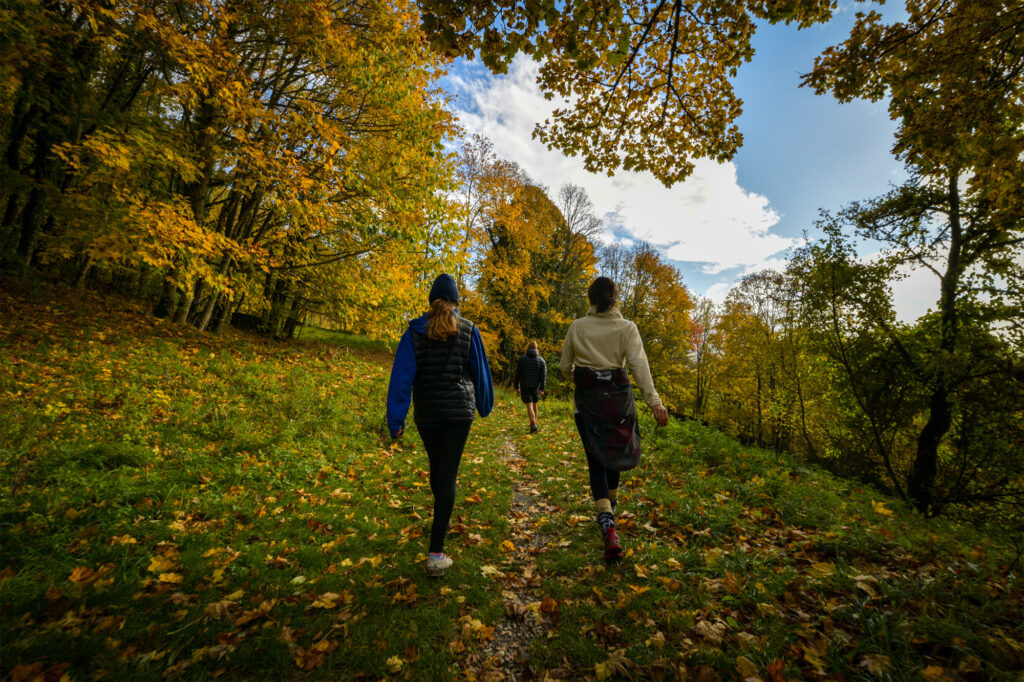
Tuscany actually has two mushroom seasons. In spring, roughly from April to June, the first species appear, such as mazzelline and chanterelles. But the real mushroom fever begins in autumn. October is traditionally the peak month: the forests are also still in full autumn colors, making a walk through the Casentino especially memorable.
What further determines the timing:
- Rainfall: rain at least three to five days before your outing is essential
- Temperature: nights between 8 and 15 degrees Celsius strongly promote growth
- Altitude: at higher elevations, mushrooms start a little later but last longer
- Forest type: chestnut and oak forests yield the best porcini
Those who visit Tuscany in autumn can effortlessly combine mushroom foraging with hiking through the national park, enjoying local gastronomy, and the tranquility of a destination without the summer crowds.
How do you identify edible mushrooms in the wild?
You identify edible mushrooms in the wild by a combination of features: the shape of the cap, the color of the gills or tubes on the underside, the smell, the texture of the stem, and the location where the mushroom grows. With porcini in Tuscany, identification is relatively straightforward, but for other species, knowledge or guidance is indispensable.
Identifying the porcino
The porcino has a brown, rounded cap that can reach a diameter of ten to twenty centimeters in mature specimens. The underside is not gilled but has fine, spongy tubes that are white in young specimens and turn yellow-green in older ones. The stem is thick, pale brown, and has a fine net-like pattern. The smell is nutty and pleasant. Cut through the stem and the flesh stays white: that is a good sign.
Avoiding dangerous lookalikes
The greatest risks when foraging for wild mushrooms in Tuscany are the toxic lookalikes. The fly agaric (Amanita muscaria) is easily recognized by its red cap with white spots, but the deadly death cap (Amanita phalloides) is far more dangerous and less conspicuous. Never eat a mushroom you cannot identify with one hundred percent certainty. Always consult a guide or experienced expert, especially if you are foraging for mushrooms in Italy for the first time.
Practical tips for safe identification:
- Bring an illustrated field guide specifically focused on Italian or European mushrooms
- Always photograph the underside of the cap, the stem, and the base including any bulb
- Smell the mushroom: toxic species often smell unpleasant or chemical
- Never go out alone if you are a beginner: go with a local expert
- Have doubtful finds checked at a pharmacy or mycological association — a service offered free of charge in many Italian municipalities
Are you allowed to freely pick mushrooms in Tuscany?
No, you are not allowed to freely pick mushrooms in Tuscany. The region has strict rules for collecting wild mushrooms in forests, both in national parks and in regular woodland areas. A permit or day pass is required in most municipalities, and maximum quantities per person per day apply.
The main rules for picking mushrooms in Italy are:
- Permit: in Tuscany you generally need a municipal picking permit, available from the town hall or online
- Maximum quantity: most municipalities enforce a limit of one to three kilograms per person per day
- National park: additional restrictions apply in the Parco Nazionale delle Foreste Casentinesi; always check in advance
- Equipment: use a basket with holes so that spores can spread, and a knife to cut the mushroom at the base rather than pulling it out of the ground
- Private land: permission from the landowner is required on private property
Those who break the rules risk a hefty fine. Local forest rangers actively patrol, especially during the peak weeks of October. The best way to forage for mushrooms in Tuscany without worry is to join a guided foraging tour where the organizer arranges the permit.
What do you do with freshly picked porcini in Tuscan cuisine?
Freshly picked porcini from Tuscan forests are a top-quality culinary ingredient. In Tuscan cuisine, they are most commonly used in pasta, risotto, bruschetta, and as a side dish grilled with olive oil and garlic. The flavor is intense, nutty, and earthy, and needs few additional ingredients to shine.
The simplest and most traditional preparations are also the best. Tuscan cooking philosophy, rooted in cucina povera, revolves around honest ingredients and little fuss. Porcini in butter with garlic and parsley on a slice of toasted bread is already a feast. Those who want to cook something a little more elaborate make tagliatelle al porcini: fresh pasta with a sauce of porcini, shallot, white wine, and a splash of cream or broth.
Other classic uses:
- Risotto ai porcini: creamy rice with fresh or dried porcini, finished with Parmesan
- Porcini trifolati: sliced and sautéed with olive oil, garlic, and parsley, as a side dish or on bruschetta
- Zuppa di funghi: a hearty mushroom soup with vegetable broth and stale bread
- Porcini al forno: large caps filled with breadcrumbs, garlic, and herbs, baked in the oven
- Dried porcini: sliced and dried for use throughout the year, with an even more intense flavor than fresh
Drying porcini is the traditional way to preserve the harvest. Slice them thinly and let them dry in the sun or in an oven at low temperature. Dried porcini keep for months and give dishes a deep umami flavor.
Can you go on a mushroom tour from an agriturismo in the Casentino?
Yes, from an agriturismo in the Casentino a mushroom tour can be excellently combined with your stay. The forests surrounding the Gello valley are literally right on the doorstep, and local guides know the best spots for porcini and chanterelles. A guided foraging tour is the safest and most educational way to forage for mushrooms in the Tuscan forests.
The Casentino is one of the least touristy parts of Tuscany and therefore an ideal base for those seeking authentic nature and food experiences. The combination of pristine forests, proximity to the national park, and a strong local food culture makes the area perfect for an active autumn holiday centered around mushrooms, hiking, and local gastronomy.
Mushroom foraging from Novanta
Novanta, tucked away in the Gello valley in the Casentino hills, offers an ideal base for those who want to combine mushroom foraging in Tuscany with an authentic stay. The borgo sits in the heart of nature, surrounded by more than 300 hectares of forests and fields bordering the Casentino National Park. These are the same forests where porcini, chanterelles, and other wild mushrooms grow in autumn.
What Novanta concretely offers for the mushroom enthusiast:
- Direct access to wooded hiking trails through the Gello valley and the national park
- Local foraging tours and culinary experiences with knowledge of the region
- A cooking philosophy based on seasonal, local ingredients, including what you find yourself in the forests
- Atmospheric accommodations in a car-free borgo, from hotel rooms to holiday homes with their own kitchen
- A hot tub to fully unwind after a long day in the forests
Autumn is one of the most beautiful seasons at Novanta: quieter, more atmospheric, and closer to the essence of Tuscany than during the busy summer months. Want to discover the Casentino when the forests turn red and gold and the porcini emerge from the ground? View the offerings and plan your stay via the Novanta website.
Related Articles
- What Are Fun Alternatives to Ski Vacations in Italy?
- Waar vind je het rustige Toscane met kinderen?
- What Does a Relaxed Family Vacation in Tuscany With Kids Look Like?
- Wat zijn de opties voor een agriturismo met kinderen in Noord-Italië?
- Can you still book a last-minute holiday home in Tuscany in the summer?
