

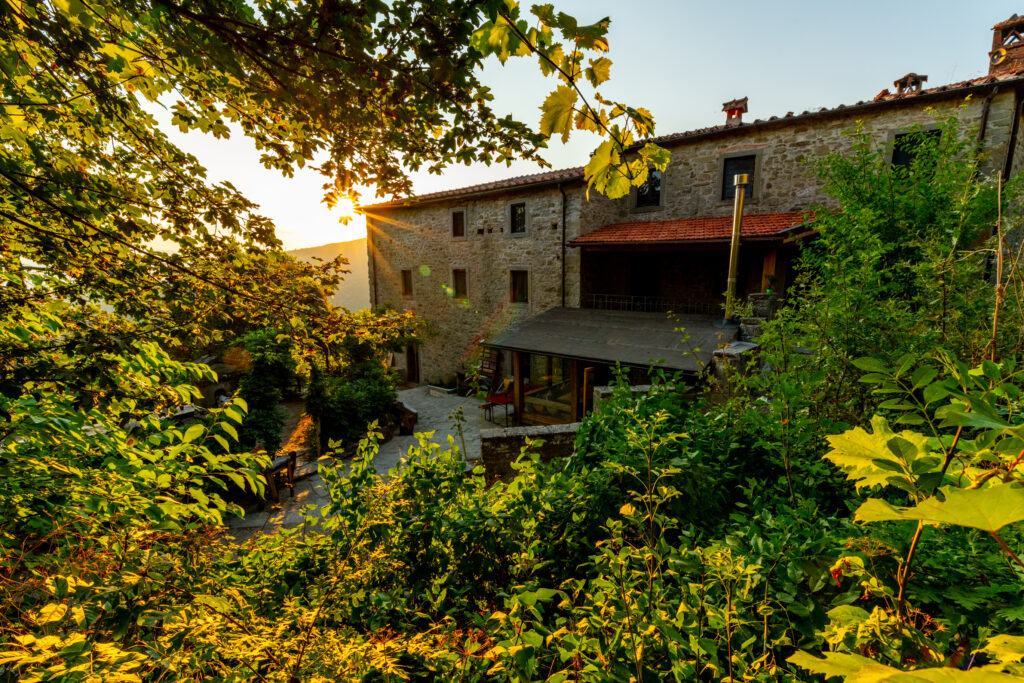
Yes, Tuscany is an excellent destination for a family holiday with children. The combination of space, nature, great food, and a relaxed pace makes the region ideal for families looking for more than a typical beach resort. Tuscany gives children the freedom to explore, and parents the peace to truly unwind. In this article, we answer the most frequently asked questions about a family holiday in Tuscany.
What makes Tuscany so suitable for families with children?
Tuscany is well suited for families with children because the region offers a natural playground that few areas in Europe can match. Rolling hills, forests, rivers, and villages full of authentic experiences create a holiday where children are actively engaged, rather than passively staring at a screen.
What sets Tuscany apart from a typical holiday park is the combination of space and authenticity. Children can roam freely, explore nature, and connect with local traditions. At the same time, there is plenty of comfort for parents: swimming pools, good dining options, and easily accessible amenities.
Tuscany attracts families who travel mindfully. It is not a destination for those seeking entertainment programmes or water parks, but rather for those who want their children to grow up with real experiences: finding a truffle in the forest, making pasta from scratch, or crossing a river barefoot.
What activities are there in Tuscany for children?
In Tuscany there are countless activities for children, from active outdoor pursuits to culinary experiences. The region lends itself perfectly to hiking, cycling, swimming in natural rivers, and exploring medieval villages. Cultural and artisan experiences, such as making pasta or visiting a farm, are also popular with families.
A taste of what children and teenagers can experience in Tuscany:
- Truffle hunting in the forest, guided by a local guide with a keen nose
- Making pasta and sausages the traditional Italian way
- E-mountain biking through hills and forests
- Swimming in a river or an outdoor pool
- Hiking through a national park with recognisable flora and fauna
- Learning about local winemaking and olive oil production (for the parents)
The beauty of Tuscany is that these activities do not feel organised like a holiday club excursion, but like genuine experiences that stay with children. That is precisely what sets a Tuscan family holiday apart from a stay at a holiday park.
Is Tuscany also suitable for teenagers?
Yes, Tuscany is also an excellent destination for teenagers, especially those who enjoy nature, adventure, and a degree of independence. The region offers enough challenge and space to explore independently, without feeling boring or overly touristy.
Teenagers accustomed to busy cities or theme parks may initially need an adjustment period. But experience shows that this very group is quickly swept up by the surroundings: climbing a steep hill on an e-mountain bike, exploring a river, or making new friends from other countries. These are experiences simply not possible on a classic sun-and-sand holiday.
Group stays where multiple families travel together work particularly well for teenagers. They have peers to spend time with, enough space for privacy, and yet the security of a shared environment. Tuscany, and in particular the more remote agriturismo areas, is ideally suited for this.
When is the best time to visit Tuscany with children?
The best time to visit Tuscany with children is from mid-June to the end of August. During this period, temperatures are high enough for swimming and outdoor activities, and it coincides with the Dutch and Belgian summer school holidays. May and September are also excellent months, with more pleasant weather and fewer crowds.
A few considerations for each period:
- May and early June: Fresh and green, ideal for hiking and cycling. Fewer tourists, lower prices. Swimming may still be cold.
- Mid-June to August: The warmest period, perfect for the pool and the river. The most popular travel time for families, so booking early is recommended.
- September: Pleasant temperatures, grape and truffle harvests under way, beautiful colours in the landscape. Excellent for families who want to avoid the crowds.
- October: Autumnal atmosphere, truffle season at its peak. Less suitable for young children who need warmth and water, but interesting for adventurous families with older children.
Where in Tuscany is the best place to stay with children?
For a family holiday in Tuscany, the rural areas outside the major cities are the most suitable. Areas such as the Casentino hills near Arezzo, the Chianti region, and the Val d’Orcia offer space, nature, and authenticity, without the crowds of Florence or Siena.
Cities like Florence are wonderful for a day trip, but less practical as a base for a family with children. The combination of heat, busy streets, and little room to play quickly makes a city stay tiring for young children.
Renting a holiday home in Tuscany in a secluded borgo or on an agriturismo gives families the space they need. Children can roam freely, parents can relax without the bustle of a hotel, and the surroundings are right on the doorstep. That is a very different holiday feeling from staying in a tourist centre.
How child-friendly is an agriturismo in Tuscany?
An agriturismo in Tuscany is very child-friendly, but in a different way from a holiday park or all-inclusive resort. There is no entertainment team and no playground with slides, but there is space, freedom, and genuine experiences that shape children. An agriturismo is child-friendly in the deepest sense of the word: a place where children can be themselves.
Children thrive at an agriturismo because they are actively involved in their surroundings. They help out in the kitchen, discover animals and nature, and make friends with other children who are also staying there. The informal, communal atmosphere means children quickly find their feet.
It is worth knowing that an authentic agriturismo in Tuscany can sometimes call for a small adjustment. Think of a walk from the car park to the house, an unexpected encounter with a scorpion, or an evening without a Wi-Fi signal. Families who see that as an adventure will have the perfect holiday. Those expecting absolute luxury and a fully catered experience would be better off choosing a different type of accommodation.
How Novanta makes your family holiday in Tuscany complete
Novanta, nestled in the Gello valley in the Casentino hills, is exactly the kind of place that suits families looking for an authentic, active, and relaxed holiday in Tuscany. The borgo features self-contained holiday homes with their own kitchen, ideal for families or multiple families travelling together.
What Novanta concretely offers for families:
- Self-contained holiday homes with 2 or 3 bedrooms and their own kitchen, so you can live at your own pace
- Access to two swimming pools, a river, and approximately 300 hectares of nature right on the doorstep
- Activities such as truffle hunting, pasta making, e-mountain biking, and river excursions
- A car-free village: the car stays at the entrance, and luggage is taken to the house by 4×4
- Communal dining tables and a culinary concept based on Tuscan cucina povera
- Location bordering the Casentino National Park, for those who want to hike or explore nature
Novanta is not a holiday park and not a five-star hotel. It is a place for families who are looking for something real, who dare to embrace a little adventure, and who want to show their children that the best holidays are not necessarily the most polished ones. Curious? Browse the available accommodations and plan your family holiday in Tuscany for 2026.
Frequently Asked Questions
How far in advance should I book a holiday home in Tuscany for the summer?
For a summer holiday in Tuscany — especially in the period from mid-June to August — it is strongly recommended to book at least six to nine months in advance. Popular agriturismo properties and borgos such as Novanta are often fully booked early in the year, particularly for the school holidays. Those who are flexible on timing and opt for May or September have a little more room to manoeuvre, but even then the rule applies: the earlier, the better.
What is the best way to manage the long drive to Tuscany with young children (under 6)?
Plan the journey in stages and drive preferably early in the morning or in the evening, when young children are asleep. Build in stops at child-friendly rest areas in Switzerland or northern Italy, such as a playground or a simple picnic spot. Bring familiar toys, snacks, and a tablet with offline content for the journey. Many families also choose to drive via the Brenner or the Mont Blanc tunnel and spend the first night halfway, splitting the trip into two manageable sections.
What should I pack for a family holiday at an agriturismo in Tuscany?
In addition to standard summer clothing, a few specific items are essential: sturdy walking shoes or sandals for the children, a good sunscreen (the Tuscan sun is intense), insect repellent for the evening hours, and water shoes for swimming in the river. Also bring a small first-aid kit and possibly an antihistamine cream for mosquito bites or minor insect stings. At an authentic agriturismo, supermarkets are not always nearby, so it is wise to bring basic supplies or stock up in a nearby village upon arrival.
Are activities such as truffle hunting and pasta making fun for younger children too, or are they more suited to older children?
Most of these activities are actually very accessible and enjoyable for younger children (from age 4–5) as well. Truffle hunting with a dog is an experience for virtually any age, and making pasta by hand is particularly appealing to young children because it involves playing with dough. Local guides and cooking workshops in the region are accustomed to families with children of different ages and generally adapt the pace and explanations accordingly. Older children and teenagers get more out of the cultural and culinary context, while younger children especially enjoy the hands-on nature of the activities.
Can I also make day trips from Tuscany to the coast or cities like Florence, and is it worth it with children?
Yes, that is certainly possible and can provide a welcome change of scenery. The Tuscan coast (Maremma or the Etruscan Rivièra) is reachable from most rural stays within one and a half à two hours by car. A day in Florence is worthwhile, but limit it to één day and focus on a few highlights such as the Ponte Vecchio, an ice cream on the Piazza della Repubblica, and a visit to the Boboli Gardens — that is far more manageable for children than a full museum programme. Plan city visits preferably early in the morning, before the heat and crowds build up.
Is it safe for children to swim in the Tuscan rivers?
Generally yes, but it requires due caution. Many rivers in Tuscany have calm, shallow spots that are ideal for young children, but rapids and deeper sections can be dangerous. Always ask the local owner or guide upon arrival about the safest swimming spots in the area. Keep a close eye on young children at all times and make sure they wear a life jacket if they cannot yet swim well. At well-known swimming spots the water is generally clear and clean, but after heavy rainfall the current can temporarily be stronger.
What if my child gets bored or struggles with the 'quiet' holiday in Tuscany?
This is a reële transition period that many families recognise, especially in the first day or two. The key is to actively involve children in planning the day: let them choose between a hike, a swim in the river, or a cooking activity. Children accustomed to constant stimulation sometimes need two to three days to ‘de-stress’ and come to appreciate their surroundings. Once that switch has been made, it is often precisely these children who enjoy the freedom and space that Tuscany offers the most. A stay where multiple families travel together helps enormously, as children then immediately have peers to play with.
