

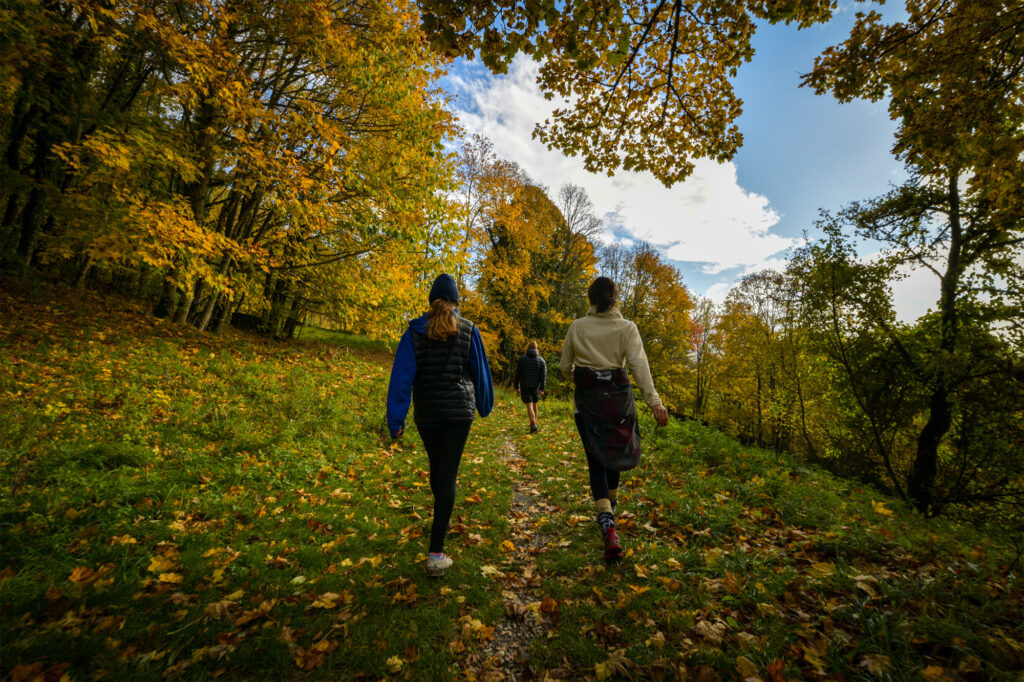
In December and January, the Tuscan cities are considerably quieter than during the summer season. Popular destinations such as Florence, Siena, and Arezzo see very little tourist activity during these months, allowing you to visit museums, squares, and restaurants without queues or crowded terraces. The winter season is therefore one of the best times to truly experience Tuscany. In this article, we answer the most frequently asked questions about Tuscany in December and January.
Which Tuscan cities are the quietest in December and January?
Most Tuscan cities are remarkably quiet in December and January. Florence, Siena, Arezzo, Lucca, and Cortona see their visitor numbers drop sharply during these months. The Uffizi Gallery in Florence, normally one of the most visited museums in Europe, is sometimes almost empty in January. Those who visit Tuscany outside the high season experience the cities as they truly are.
Arezzo is particularly worth a visit in winter. The city has an authentic, non-touristy character and offers beautiful medieval architecture without the summer crowds. Siena is also quiet in December, although the city temporarily attracts more visitors around Christmas due to the Christmas market on the Piazza del Campo. Lucca, with its impressive city walls, is perhaps the quietest major city in Tuscany in January.
Smaller villages and rural areas are even quieter during these months. Those who truly want to escape the crowds will find in the Casentino valley and other remote parts of Tuscany a tranquility that simply does not exist in summer.
What are the busiest times in Tuscany during winter?
Tuscany has two busy periods in winter: the Christmas holiday and New Year. In the week around Christmas and New Year’s Eve, both Italians and international visitors flock to the cities. Florence and Siena are popular destinations at that time, and hotels are more often fully booked during that period than during the rest of the winter.
Outside these peaks, January is the quietest month of the year throughout Tuscany. December, after the holidays, is also very calm. Those who truly want to avoid the crowds are best off planning a trip in the first three weeks of January or in the period just after Christmas until just before New Year’s Eve.
- Busiest winter days: December 24 through January 1
- Relatively busier: weekends in December, due to Italian day-trippers
- Quietest period: early January to late February
- Note: some restaurants and shops are closed in January due to the annual holiday (chiusura annuale)
How does the winter season differ from the summer season in Tuscany?
The winter season in Tuscany differs from summer in virtually every respect. Temperatures in December and January range between 5 and 12 degrees Celsius during the day in the cities, and lower in the hills. The landscape is green and misty, the light is softer, and the atmosphere is intimate and authentic. In summer, the same places are hot, crowded, and noisy.
Practical differences for the traveler
In summer, long opening hours, crowded terraces, and daily events are the norm. In winter, many attractions close earlier and some seasonal restaurants are closed. On the other hand, you can always get a table immediately, museums can be visited without reservations, and the local population is more visibly present in daily life.
Atmosphere and experience
Tuscany in winter feels fundamentally different. The hills are sometimes shrouded in mist, fireplaces burn in the trattorias, and the markets sell seasonal products such as chestnuts, truffles, and local wines. Those looking for authenticity and a genuine connection with Italian life will find it far more easily in winter than in summer.
What activities are special to Tuscany in December and January?
December and January offer activities that are simply not possible in summer. The winter months are the prime season for truffle hunting, wine tastings by the fire, walks through deserted forests, and exploring monasteries and historic villages without other tourists. It is also the season of cucina povera at its best: hearty, seasonal dishes full of flavor.
- Truffle hunting: The black winter truffle (Tuber melanosporum) is harvested from December to March. Guided tours with trained dogs are at their peak during this period.
- Hiking in the national parks: The Casentino National Park is beautiful and almost empty in winter. Clear trails, fresh air, and spectacular views without other hikers.
- Visit to La Verna: The Franciscan monastery high in the hills is particularly impressive and atmospheric in winter.
- Pasta and bread making: Cooking classes and culinary workshops are intimate and personal in winter, without the crowds of the high season.
- Wine tastings: Local winemakers have more time for visitors in winter and the atmosphere in the cantinas is exceptionally authentic.
- Exploring cities without crowds: Museums, churches, and historic centers are at their quietest and most accessible in December and January.
Is it worth visiting Tuscany in December or January?
Yes, visiting Tuscany in December or January is definitely worthwhile, but for a specific type of traveler. Those seeking tranquility, authenticity, gastronomy, and nature will find in winter a Tuscany that is much closer to its true character than the summer version. Those looking for sun, swimming pools, and bustling terraces would be better off choosing a different time of year.
The winter months offer lower prices for accommodations and flights, easier access to sights, and an intimate atmosphere that is lost during the high season. The climate does require preparation: rain is possible, temperatures are low in the evening, and some facilities have limited availability. But it is precisely that raw, unpolished side of Tuscany that makes a winter visit unforgettable for those who are ready for it.
Couples looking for a romantic escape, nature lovers, and travelers who truly want to get to know Italy will find ideal conditions in December and January. It is Tuscany as it has always been, without the tourist veneer of summer.
How far from the Tuscan cities is an agriturismo in the hills?
An agriturismo in the Tuscan hills is typically 30 to 90 minutes’ drive from the major cities, depending on the location. From the Casentino valley, one of the most beautiful and most authentic areas of Tuscany, Arezzo is reachable in less than an hour and Florence in about an hour and a half. This makes a stay in the hills easy to combine with urban day trips.
The distance is therefore not an obstacle, but rather an advantage. You sleep in the tranquility of the countryside and can explore a city on the days you wish to. On other days, you enjoy walks, local experiences, and the slow rhythm of Italian country life. An agriturismo in the hills is not a compromise; it is a deliberate choice for a different way of traveling.
How Novanta helps you discover Tuscany in winter
Novanta, tucked away in the Gello valley in the Casentino hills, is ideally suited for a winter stay in Tuscany. The borgo is less than an hour from Arezzo and an hour and a half from Florence, making city trips easy to combine with the tranquility of the countryside. In winter, Novanta offers experiences that perfectly match the season:
- Guided truffle hunting and wine tastings with local experts
- Walks through the adjacent Casentino National Park, including the hike to the monastery of La Verna
- Culinary workshops such as pasta making, inspired by Tuscan cucina povera
- A wood-fired hot tub, ideal after a cold day of hiking in the hills
- Atmospheric rooms and cottages in authentically restored stone buildings with fireplaces and rustic charm
Novanta is not a classic luxury hotel, but a place for travelers who truly want to experience Tuscany: with mud on their boots, a good glass of local wine in hand, and the silence of the hills all around them. Do you want to discover Tuscany in December or January in a way that stays with you? Read more about Novanta and find out what a winter stay in the Casentino valley looks like.
