

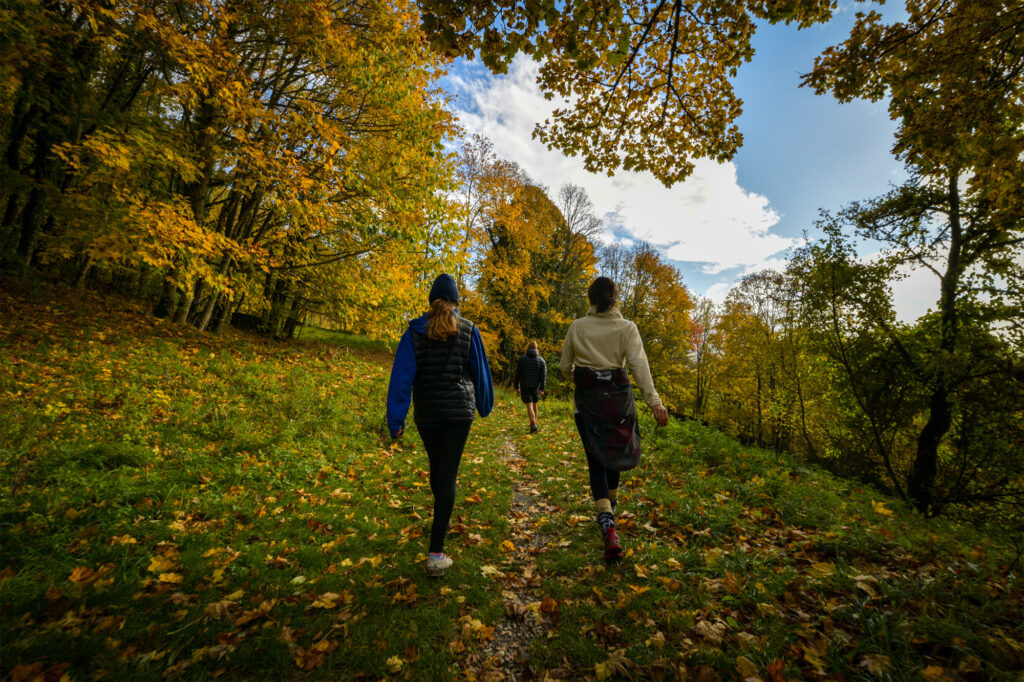
The most beautiful hiking routes in Tuscany in autumn can be found in the Casentino hills, the Chianti area, and the Apennines around Arezzo. The combination of autumn colors, cooler temperatures, and quiet trails makes hiking in Tuscany in autumn more enjoyable than in summer. In this article, we answer the most frequently asked questions about autumn hiking in Tuscany, from the best routes to practical tips for along the way.
Why is autumn the best season to hike in Tuscany?
Autumn is the ideal season for hiking in Tuscany because the temperatures are pleasant, the summer crowds have gone, and the landscape transforms into a palette of gold, red, and ochre. Hikers enjoy cool mornings, clear air, and trails that are barely walked. Moreover, the season brings unique natural riches that are simply not available in summer.
Where the summer heat in Tuscany can make hikes strenuous and unpleasant, temperatures in October and November often hover between 12 and 18 degrees Celsius during the day. That is precisely the range in which longer treks through forests and over hills feel comfortable. The sun sits lower in the sky, making the light softer and the landscape look its most beautiful.
Beyond the climate, nature plays a major role. Chestnut forests turn deep orange, wild mushrooms shoot up from the forest floor, and truffles reach their peak during the autumn months. Those who visit Tuscany in summer miss this entire season of scents, flavors, and sights. Hiking in the Tuscan autumn is therefore a complete sensory experience, not merely a sporting activity.
Which hiking routes in the Casentino are suitable for autumn?
The Casentino valley offers some of the most beautiful hiking routes in Tuscany in autumn. The forests of the Parco Nazionale delle Foreste Casentinesi turn spectacularly colorful and the trails are in good condition. Particularly popular are routes toward the monastery of La Verna, walks along the Corsalone river, and treks through the valley of Gello.
Route to La Verna
The trek to the Franciscan monastery La Verna is one of the most impressive active experiences in the Casentino. The trail winds through dense beech forest that glows with color in autumn. The route takes an average of four to five hours return and ends at an ancient monastery with panoramic views over the valleys. Along the way, you can stop at a local farm for a simple lunch.
Hiking along the Corsalone river
The riverside walk along the Corsalone is better suited for those looking for a less intensive route. The trail follows the river through lush nature, past rock formations and soothing pools of water. In autumn, the water is clear and the banks are quiet. The route pairs well with a picnic on one of the warm rocks along the water.
Hiking through the Gello valley
The valley around Borgo di Gello offers varied walking paths through fields, forests, and past abandoned farmhouses. The routes are less technical and therefore ideal for families or hikers who prefer to enjoy the views rather than the challenge. With a bit of luck, you may encounter wild cattle or horses roaming freely through the valley.
Which other areas in Tuscany are popular for autumn hikes?
Outside the Casentino, the Chianti area, the Maremma, and the Apuan Alps are popular destinations for hiking in the Tuscan autumn. Each area has its own character and offers different landscapes, from vineyards and olive groves to coastal areas and rugged mountain peaks.
- Chianti: Rolling hills with vineyards and cypress-lined lanes. In autumn, the grape harvest takes place here, which gives hiking an extra atmospheric quality. Routes are well signposted and combine nicely with a visit to local wine cellars.
- Val d’Orcia: A UNESCO World Heritage Site with iconic Tuscan vistas. The quiet unpaved roads are ideal for hikers who want to experience the typical Tuscan scenery without major elevation changes.
- Maremma: Wilder and less touristy than the rest of Tuscany. The Parco Regionale della Maremma offers coastal paths, marshlands, and dense Mediterranean vegetation that is particularly quiet and impressive in autumn.
- Apuan Alps: For those who enjoy more challenging terrain. High mountain trails with views of marble rock faces and the Tuscan hinterland. Suitable only for experienced hikers with proper footwear.
- Mugello: A lesser-known valley north of Florence with forested hills and medieval villages. Quiet, authentic, and excellent for multi-day hikes.
How long and strenuous are the hiking routes in the Tuscan hills?
The hiking routes in the Tuscan hills range from short, flat walks of one to two hours to multi-day routes with significant elevation changes. The difficulty depends strongly on the area: the Casentino valley offers routes for all levels, while the Apuan Alps and the higher Apennines are technically more challenging.
An average day hike in the Casentino covers between 8 and 15 kilometers and takes three to six hours. Elevation changes of 300 to 600 meters are common on most hill routes. This is manageable for hikers with a reasonable level of fitness, but does require sturdy footwear and sufficient water.
For families with children, the lower-lying routes along rivers and through valleys are the most suitable. These routes are technically straightforward, offer plenty of variety, and are rarely longer than ten kilometers. Couples or individual hikers seeking more of a challenge can opt for longer routes to monasteries or mountain peaks that take half a day or more.
What can you encounter during an autumn hike in Tuscany?
During an autumn hike in Tuscany, you encounter a rich mix of nature, culture, and gastronomic treasures. From wild truffles and chestnuts on the forest floor to birds of prey above the hills and medieval monasteries hidden in the woods. Autumn brings the Tuscan landscape to life in a way that is not possible in any other season.
In terms of nature and wildlife, you may encounter the following:
- Roe deer, wild boar, and foxes that are more active as the weather cools
- Birds of prey such as buzzards and hawks circling above the valleys
- Mushrooms of all shapes and sizes along forest edges and under oak trees
- Chestnuts falling ripe from the trees and covering the forest floor
- Truffles that reach their peak in autumn, particularly the white truffle
Culturally speaking, many routes pass abandoned farmhouses, Romanesque chapels, and medieval bridges that feel extra mysterious in the autumn atmosphere. The low season also means you have these places almost entirely to yourself, without the crowds of summer tourists. Those who keep their eyes open will find an endless stream of small discoveries in the Tuscan autumn landscape.
What should you bring for a hike in the Tuscan autumn?
Good preparation is essential for a hike in the Tuscan autumn. The weather can change quickly: a sunny morning can turn into a cold afternoon with rain. The right equipment makes the difference between a pleasant outing and an uncomfortable experience.
Be sure to bring the following:
- Sturdy hiking shoes or boots with good grip, as trails can be slippery and muddy after rain.
- Layered clothing that you can put on and take off as the temperature changes. A fleece and a light rain jacket are indispensable.
- Sufficient water, at least 1.5 liters per person for a day hike. Water sources along the way are not always reliable.
- Food for the trail: a local loaf of bread with cheese or a handful of chestnuts picked along the way — it’s all part of the Tuscan hiking experience.
- A detailed map or offline navigation, as mobile coverage is often limited in the hills and forests.
- A small first aid kit with plasters, a bandage, and optionally painkillers.
- Sunscreen, even in autumn, as the sun can still be strong on open sections of the route.
Those who want to search for truffles or pick mushrooms should also bring a small basket or bag. Do not forget that rules apply to picking mushrooms in national parks: find out in advance what is permitted in the specific area where you are hiking.
How Novanta helps with hiking in the Tuscan autumn
Novanta is an experiential hotel tucked away in the Casentino hills, within walking distance of some of the most beautiful autumn routes in Tuscany. From the historic Borgo di Gello, you have direct access to over 300 hectares of forests and fields, bordering the Casentino National Park. This makes it an ideal base for anyone combining hiking in Tuscany with rest, authenticity, and local flavors.
What Novanta concretely offers for autumn hikers:
- Guided walks through the valley and river hikes along the Corsalone
- A guided trip to the monastery of La Verna, including lunch at a local farm
- Organized truffle hunting with a local guide and trained dogs, ideal in the autumn season
- Accommodation in atmospheric holiday homes or hotel rooms in an authentic Tuscan village
- A wooden hot tub to relax in after a long day of hiking
- Meals inspired by cucina povera, prepared with local and seasonal produce
Would you like to experience the Tuscan autumn in a place where nature, hiking, and authenticity come together? View what Novanta has to offer and plan your stay in the Casentino hills at novanta90.com.
