

The atmosphere in Tuscany at Christmas is intimate, peaceful, and deeply authentic. Without the summer crowds, the medieval villages, rolling hills, and mist-wrapped valleys breathe an atmosphere that is hard to match. Those who visit Tuscany in December experience the region at its most honest and unpolished. In this article, we answer the most frequently asked questions about Christmas in Tuscany, from the climate and traditions to the best activities and dishes.
What makes Tuscany at Christmas different from summer?
Tuscany in December is a completely different destination from summer Tuscany. Where summer buzzes with tourists, terraces, and scorching heat, winter reveals a quieter, less touristy Tuscany. The villages are free from visitors, the landscapes are more dramatic, and the local population lives at its own pace once again.
In summer, Tuscany revolves largely around being outdoors, swimming pools, and sunshine. At Christmas, the experience shifts entirely. The bare vines and mist-filled valleys give the landscape a painterly quality. Castles and churches seem larger and quieter. Markets smell of chestnuts and vin brûlé. It is a Tuscany that does not impose itself, but slowly draws you in.
For those seeking tranquility and travelers who deliberately visit outside peak season, this is precisely the charm. You discover the region at its most authentic, without queues at museums, without packed restaurants, and without the feeling that you are merely one of thousands of visitors.
How do Italians celebrate Christmas in Tuscany?
Christmas in Tuscany is first and foremost a family celebration, rooted in traditions passed down through generations. It revolves less around lavish decoration and more around sitting together at the table, slow meals, and celebrating the season with local produce and religious customs.
The Christmas period officially begins on December 8th, the Feast of the Immaculate Conception, when Christmas trees and presepi (nativity scenes) are set up. In many Tuscan villages, living nativity scenes appear, with residents re-enacting biblical scenes in historic streets. On Christmas Eve, the Vigilia di Natale, a traditional dinner takes center stage that traditionally contains no meat, but fish and legumes instead.
Christmas Day is sacred for the family. Restaurants are closed or reserved exclusively for regular guests. The true Tuscan celebrates Christmas at home, with handmade pasta, wild boar, and local wines. On December 26th, Santo Stefano, people visit friends and other family members. The Christmas period does not end until January 6th, Epifania, when the Befana brings gifts to children. This celebration is at least as important in Italy as Christmas Eve itself.
What activities are there in Tuscany during the Christmas holidays?
Tuscany offers a surprisingly wide range of activities during the Christmas holidays. The combination of nature, culture, and gastronomy makes the region a rich destination even in winter for those who actively seek out experiences.
Here are some activities that pair well with a Christmas visit to Tuscany:
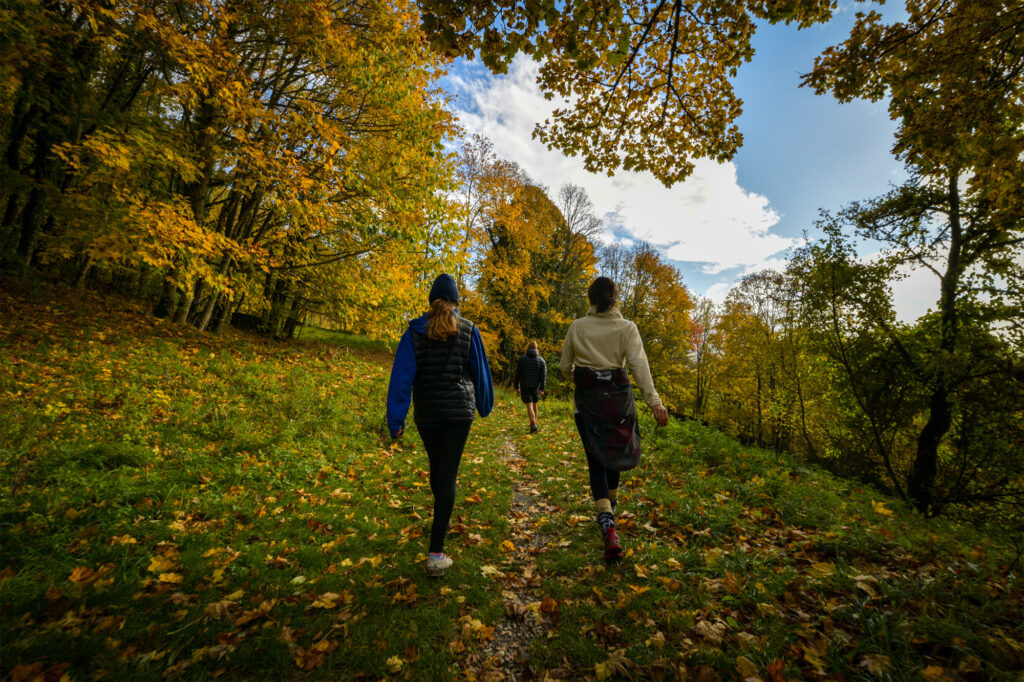
- Walking in nature: The forests of the Casentino National Park are particularly quiet and photogenic in winter. Cold, clear days offer views that are often lost in the summer haze.
- Truffle hunting: The winter truffle, the black Tuber melanosporum, is at its very best in December and January. A guided truffle hunt is an unforgettable winter experience.
- Visiting Christmas markets: Cities such as Arezzo, Florence, and Siena host atmospheric Christmas markets with local produce, crafts, and seasonal dishes.
- Historic monasteries and churches: The monastery of La Verna, within walking distance of the Casentino valley, is particularly impressive in winter and virtually free of tourists.
- Pasta and wine: Pasta-making workshops and wine tastings are intimate and personal in winter, without the summer crowds.
- Relaxing in a hot tub: After a cold day of walking, a warm outdoor bath is one of the most appreciated winter pleasures in the Tuscan hills.
Is it cold in Tuscany at Christmas?
Tuscany experiences fresh to cold temperatures in December, but no extreme cold. During the day, temperatures in the hills and valleys typically range between 5 and 12 degrees Celsius. In the evenings and at night it can freeze, especially at higher altitudes. Snow is possible, but not guaranteed.
In the coastal towns and lower-lying areas it is slightly milder than inland. The Casentino valley, which sits higher and is more sheltered, experiences colder nights and a greater chance of fog and wintry precipitation. This actually adds to the atmosphere, but does call for warm clothing.
Expect:
- Daytime temperatures of 6 to 12 degrees inland, slightly higher on the coast
- Night temperatures that can drop to 0 to 3 degrees in the hills
- A chance of rain in December, but also many clear winter days with a low sun
- Occasional snow at higher altitudes, which makes the landscape spectacular
- Shorter days with sunset around 4:30 PM
The cold is perfectly manageable for most visitors and actually adds something to the atmosphere. An open fireplace, a glass of local red wine, and a steaming bowl of ribollita simply taste better when it is chilly outside.
What are the pros and cons of visiting Tuscany at Christmas?
A visit to Tuscany at Christmas has clear advantages, but also a number of practical points to bear in mind. Knowing what to expect allows you to plan the trip optimally.
Advantages of Tuscany in December
Tuscany is considerably quieter in winter than in summer. Popular attractions can be visited without waiting times. Accommodations are cheaper and more personal. Nature has a subdued beauty that does not exist in summer. And the Italian Christmas traditions give you a glimpse into the real life of the local population, far from the tourist façade.
Points to consider for a winter visit
Some restaurants, agriturismos, and attractions are closed during the Christmas holidays or operate on limited opening hours. On Christmas Day and Boxing Day, many villages are completely silent. Those relying on public transport will find it runs less frequently in the winter months. And those going purely for sun and warmth will need to adjust their expectations. Tuscany at Christmas calls for a different mindset: slower, more inward-looking, and focused on experience rather than relaxing by the pool.
What dishes belong to Christmas in Tuscany?
Christmas in Tuscany is inextricably linked to Tuscan cuisine at its most seasonal. The so-called cucina povera, the simple cooking of the poor farmer, takes center stage in winter and is at its most flavorful precisely then.
Typical Christmas dishes and products from Tuscany include:
- Ribollita: a hearty soup of bread, beans, and kale, perfect for cold winter days
- Pappardelle al cinghiale: wide pasta with wild boar ragù, a classic winter dish
- Arista di maiale: roasted pork loin with rosemary and garlic
- Panforte: the typical Tuscan Christmas cake from Siena, made with nuts, dried fruit, and spices
- Tartufo nero: the black winter truffle, used in pasta, risotto, or simply on toasted bread
- Vin brûlé: warm red wine with orange peel, cinnamon, and cloves, indispensable at Christmas markets
The Tuscan Christmas table is not a quick meal. It is a ritual that lasts for hours, with each dish telling its own story about the land and the season.
When is the best time to visit Tuscany at Christmas?
The best period to visit Tuscany at Christmas is the second half of December, preferably from December 18th through the 27th. During this period the Christmas atmosphere is at its peak in the villages and towns, most activities and restaurants are still open, and you benefit from the quiet, authentic winter Tuscany.
Those seeking absolute peace are better off traveling just before Christmas or in the first week of January, after New Year. The tourists are gone, prices are low, and the landscape is at its quietest and most understated. The period around Epifania (January 6th) is festive in Italy and provides a beautiful close to the Christmas season.
Avoid December 24th and 25th if you are relying on restaurants or public facilities. On Christmas Eve and Christmas Day, Italy is largely closed to outsiders. Plan your stay so that on those days you can enjoy your accommodation, the surroundings, and the silence, rather than searching for open eateries.
How Novanta helps you experience Tuscany at Christmas
Novanta, tucked away in the Casentino hills of Tuscany, offers exactly what makes a winter visit to Tuscany so special: authenticity, peace, and a deep sense of connection with the surroundings. The borgo consists of 16 restored houses in the once-abandoned Gello valley, surrounded by more than 300 hectares of forests and fields bordering the Casentino National Park. In winter, this setting is at its most unspoiled.
What Novanta concretely offers for a Christmas holiday in Tuscany:
- Atmospheric accommodations in authentic stone buildings with open fireplaces, terracotta floors, and rustic wooden beams, ranging from hotel rooms to spacious holiday homes
- Winter experiences such as truffle hunting, wine tastings, pasta making, and walks through the Casentino valleys, all organized together with the local community
- A wooden hot tub for after a cold day of walking in the national park
- Meals at long tables, inspired by the cucina povera, with seasonal produce from local farmers
- Proximity to La Verna, the historic monastery within walking distance that is particularly impressive in winter
Novanta is not a traditional luxury hotel, but a place for travelers who want to feel Tuscany rather than merely see it. Would you like to spend the Christmas holidays in an authentic Tuscan borgo, surrounded by nature and far from the crowds? Then explore the experiences and possibilities on the Novanta website and plan your winter stay in the Casentino valley.
