

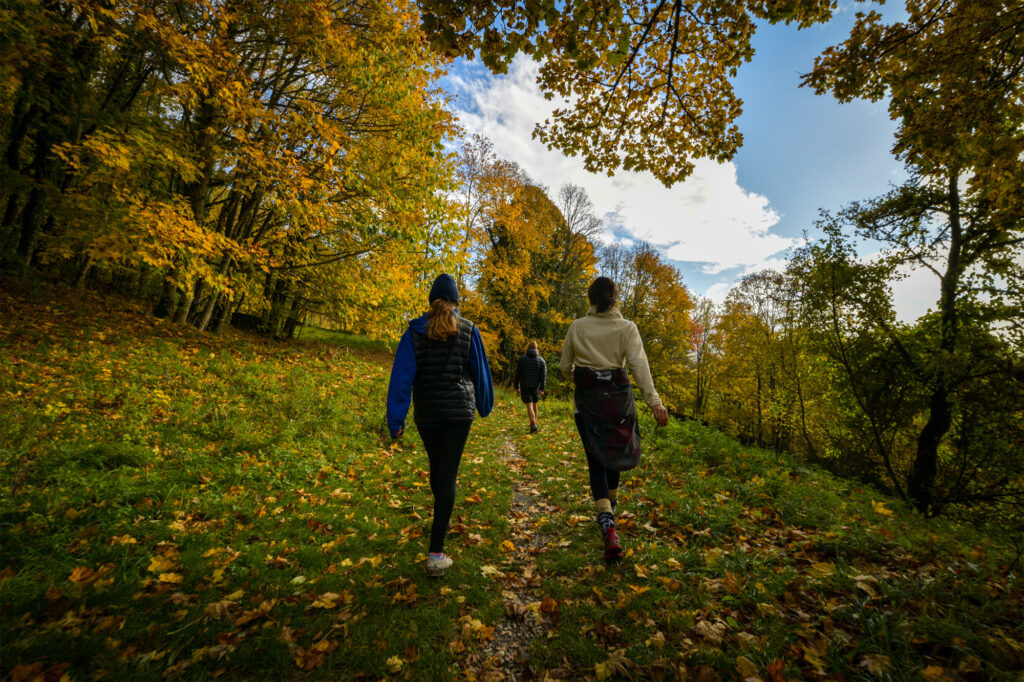
Tuscany during the autumn school holiday with children is an excellent choice. The landscape turns gold and red, the summer crowds have disappeared, and there is plenty to experience: hiking through forests, searching for chestnuts, smelling truffles, and making pasta with authentic Italian ingredients. Autumn brings Tuscany to life in a way that summer simply cannot, and children benefit fully from the space, nature, and adventure. In this article, we answer the most frequently asked questions about an autumn holiday in Tuscany with the family.
What makes Tuscany during the autumn holiday so suitable for families?
Tuscany is particularly well-suited for families during the autumn holiday because temperatures are pleasant, tourist crowds have thinned, and nature is at its most beautiful. Children have plenty of room to move, explore, and play in an environment that is safe, green, and stimulating. Autumn also brings a wealth of seasonal experiences that simply do not exist in summer.
The Tuscan autumn is characterised by daytime temperatures that often remain between 15 and 20 degrees Celsius, ideal for active outings without the sweltering summer heat. Forests turn shades of orange, yellow, and red, and the surroundings feel like a living picture book for children. In the Casentino valley, one of the most unspoiled corners of Tuscany, the forests of the Casentino National Park are truly spectacular in autumn.
What also appeals to families is the tranquillity. While popular cities such as Florence and Siena are overcrowded in summer, the atmosphere in autumn is relaxed and authentic. Children have the freedom to explore at their own pace, without having to push through crowds. This makes an autumn holiday in Tuscany not only more enjoyable, but also richer as a family experience.
What outdoor activities are available in Tuscany for children in autumn?
In the Tuscan autumn there are plenty of outdoor activities for children: hiking through colourful forests, searching for chestnuts and mushrooms, archery, cycling, and playing by the river. The combination of nature and adventure makes autumn one of the most active seasons for families in Tuscany.
Here are some popular activities for children in autumn:
- Forest hiking: The trails through the Casentino National Park are well-maintained and full of surprises. Children can spot wildlife, discover unusual mushrooms, and collect chestnuts.
- Archery: An active experience that appeals to children of all ages. Learning to aim, the thrill of shooting, and then the satisfaction of hitting the target.
- River exploration: Even in autumn, the Corsalone river is an adventurous playground. Stacking stones, climbing upstream, and discovering pools are activities children can lose themselves in for hours.
- E-mountain biking: For families with older children, a guided e-mountain bike tour through the hills offers an unforgettable way to explore the landscape.
- Stargazing: In autumn, the nights are clear and dark. Free from light pollution, the night sky above the Casentino valley is impressive, even for children.
An added benefit of autumn is that activities are not carried out in the heat. Walks that are impractical in August are a pleasure in October.
What can children learn during an agriturismo stay in Tuscany?
During an agriturismo stay in Tuscany, children learn how food is grown, prepared, and shared. They are introduced to artisanal traditions such as making pasta, baking bread, and recognising seasonal produce. These kinds of experiences connect them in a tangible way with nature and Italian culture.
An agriturismo in autumn offers a unique learning environment that cannot be replicated at home. Children see how olives are harvested, smell fresh truffles, and understand why food is seasonal. That knowledge stays with them far longer than a museum visit.
In practical terms, children learn, among other things:
- Making pasta from fresh ingredients: Kneading, rolling, and shaping dough is both play and learning for children. They discover that food is more than what ends up on their plate.
- Truffle hunting with trained dogs: A search through the forest where children learn how truffles grow, how dogs are used, and why this fungus is so special.
- Recognising local produce: Which cheeses come from the region? What grows in autumn? By eating and cooking together, children learn the connection between land and table.
- Practising Italian: Simple words, polite greetings, ordering something. Children pick up language incredibly fast when they are immersed in it.
- Understanding sustainable living: Seeing how a community shops locally, avoids food waste, and respects nature gives children a concrete example of what sustainability means.
These kinds of experiences also align well with what schools are increasingly encouraging: learning outside the classroom, using all the senses.
Which day trips from the Casentino valley are enjoyable for children?
From the Casentino valley there are several day trips that appeal to children. The monastery of La Verna with its spectacular forest trail is a favourite, but the historic cities of Arezzo and Florence are also easily accessible for a cultural outing. The region offers a wonderful mix of nature, history, and adventure within a short distance.
A few concrete day trips that work well with children:
- La Verna: The Franciscan monastery high in the forest is accessible via a beautiful forest path. The walk takes four to five hours in total and is manageable for children too. Inside the monastery there are remarkable works of art and peaceful courtyards to discover. The return route via Fabrizio’s farm makes it a complete day out.
- Arezzo: Less than an hour’s drive away, with a charming historic centre, a large piazza, and lively markets. Children enjoy wandering around and eating Italian ice cream.
- Florence: Approximately an hour and a half’s drive. Save this for a day with older children who have an interest in art and architecture. The Uffizi can be overwhelming, but the Ponte Vecchio and the Piazza della Signoria appeal to everyone.
- Bibbiena and surroundings: The nearby market town of Bibbiena is perfect for a morning of shopping, a visit to a local bar, and a glimpse into everyday Tuscan life.
The beauty of the Casentino valley is that you can alternate day trips with quiet days on the farm. This way children do not become overstimulated and you keep the holiday in balance.
How do you plan an autumn holiday to Tuscany with young children?
The best way to plan an autumn holiday to Tuscany with young children is to choose accommodation with plenty of space, a fixed home base, and a mix of organised activities and free time. Do not drive to a new destination every day; instead, choose one place from which you explore the surroundings at your own pace.
Practical tips for planning:
- Choose space: A holiday home or cottage is more comfortable for families with young children than a hotel room. Children need room to play, and parents benefit from their own kitchen and living room.
- Allow for changeable weather: October and November can bring rainy days. Plan an indoor activity for those days, such as making pasta or visiting a local market.
- Keep driving days short: Tuscany is larger than it looks. Limit driving times on any single day to a maximum of an hour and a half for young children.
- Book activities in advance: Truffle hunting, pasta making, and guided walks are popular and fill up quickly, even in the low season.
- Dress in layers: Mornings and evenings can be cool. Layering works better than one heavy jacket.
The autumn school holiday in the Netherlands typically falls in the second half of October, a period when Tuscany is still ablaze with autumn colours and daytime temperatures are pleasant. This makes it an ideal time for families who want to travel outside the summer season.
What do children enjoy eating during a holiday in Tuscany?
Children eat surprisingly well in Tuscany, because Tuscan cuisine revolves around simple, familiar flavours: fresh bread, pasta, pizza, soup, and grilled meat. The “cucina povera” philosophy, based on honest and uncomplicated food, aligns well with what children enjoy.
Tuscan children’s favourites include:
- Pappardelle al cinghiale: Wide pasta with wild boar ragù is a classic autumn dish that children who love pasta will take to immediately.
- Ribollita: A hearty Tuscan vegetable and bread soup, perfect for cooler autumn days and nourishing enough after a long walk.
- Homemade pizza: Pizza evenings at an agriturismo are a highlight for children. Choosing your own toppings and rolling out the dough makes it extra special.
- Castagnaccio: A traditional autumn cake made from chestnut flour, rosemary, and walnuts. Not an instant hit with every child, but the autumnal aroma is unforgettable.
- Fresh fruit and local cheese: Simple, but children accustomed to the supermarket discover here how different fresh fruit tastes.
The great advantage of eating in Tuscany in autumn is how rich the season is. Chestnuts, mushrooms, truffles, and pumpkins take centre stage in the kitchen, giving meals a character that children are unlikely to forget at home.
Novanta as a base for an autumn holiday with children
Novanta, tucked away in the Gello valley in the Casentino hills, is specially suited to families who want to experience Tuscany in autumn in an authentic way. The borgo offers everything you need for a relaxed and adventurous family holiday, without having to get in the car every day.
What Novanta concretely offers families in autumn:
- Spacious holiday homes with private space for families with children
- Guided culinary experiences such as pasta making and truffle hunting, enjoyable for children too
- Direct access to the Casentino National Park for hiking and nature exploration
- Archery, river exploration, and e-mountain biking on the property or in the immediate surroundings
- Meals at long tables based on local, seasonal ingredients
- A hot tub for after a cool autumn day in nature
- A car-free village where children can safely walk around and play
The philosophy of Novanta is a perfect fit for what families are looking for when they consciously travel outside the high season: peace, authenticity, nature, and the freedom to shape the day themselves. Would you like to approach the 2026 autumn holiday differently and discover Tuscany as it truly is? Check availability and plan your stay via the Novanta website.
