

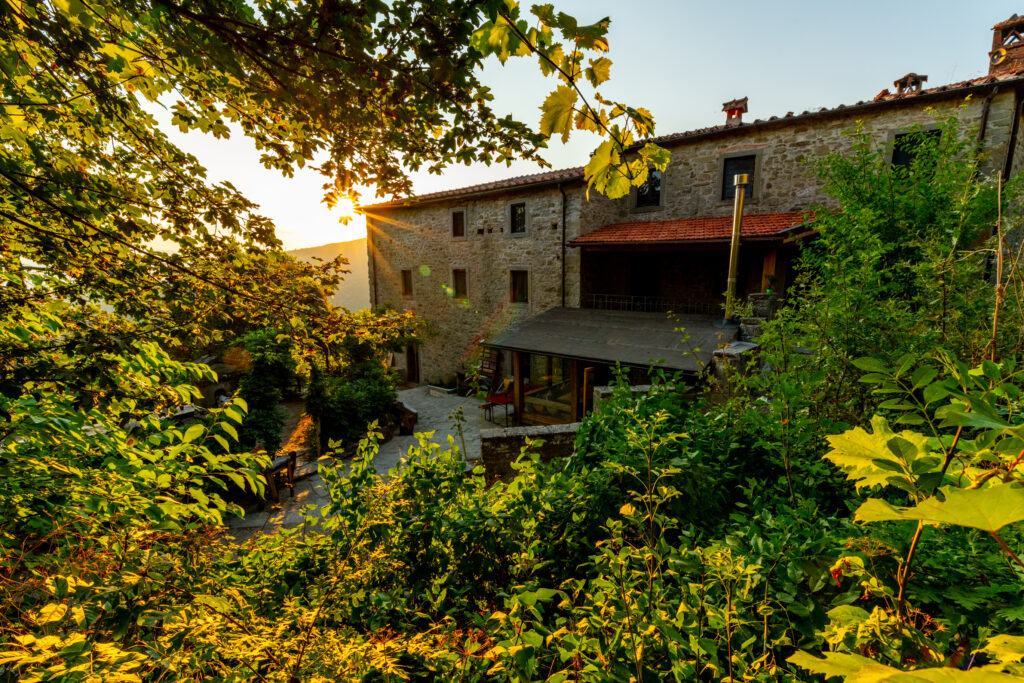
Yes, Tuscany is an excellent destination for hiking with children. The region offers a wide variety of routes: from short, easy paths through olive groves and vineyards to longer forest walks in the hills. Especially around the Casentino National Park, you’ll find routes specifically suited for families with both younger and older children.
The landscape is varied enough to keep children engaged, without the routes being technically challenging. In the sections below, you’ll find which routes are the best fit, what to expect along the way, and how to prepare for a hike properly.
Which hiking routes in Tuscany are suitable for children?
The most child-friendly hiking routes in Tuscany can be found in forested areas such as the Casentino, the Chianti hills, and the Maremma. These routes combine varied scenery with manageable distances and little elevation gain. Paths along streams, through chestnut forests, or leading to an abandoned borgo are particularly popular with children.
In the Casentino National Park, several signposted hiking trails are available that are specifically suited for families. Think of routes of two to five kilometers at a relaxed pace, where children have plenty to see and discover: mushrooms, wildflowers, animal tracks in the mud. The park borders directly on the Gello valley, making it an ideal base for daily hikes without having to drive far.
Child-friendly routes are characterized by:
- Clear markings and little navigation stress for parents
- Shaded forest paths, especially valuable in summer
- Rest stops at springs, picnic spots, or viewpoints
- Return options via an alternative route for extra variety
How far can children hike in Tuscany?
A general rule of thumb is that children can manage roughly one kilometer per year of age on a hiking day. An eight-year-old can therefore comfortably hike around eight kilometers, provided there are enough breaks and the terrain is not too demanding. In the Tuscan heat, it’s wise to adjust that distance slightly downward.
For teenagers, routes of ten to fifteen kilometers are very achievable, especially if the trail is interesting enough to keep them motivated. Combine a hike with a concrete goal, such as a swimming spot in the river, a viewpoint, or a picnic in a special location. That makes the difference between a walk that feels “too long” and one they’ll remember for years.
Also adjust your planning to the time of day. Start early, hike before midday, and plan a quieter afternoon by the pool. This keeps energy well distributed throughout the day.
What is the best time of year to hike with children in Tuscany?
The best periods for hiking with children in Tuscany are spring (April to mid-June) and early autumn (September and October). The weather is pleasant, nature is at its most beautiful, and the heat is manageable. In the summer months, particularly July and August, temperatures can climb above 35 degrees Celsius, making daytime hiking strenuous.
Families traveling during the summer holidays — the most common period for Dutch and Belgian families — are advised to plan hikes early in the morning. Between six and ten o’clock it is pleasantly cool and nature is at its most active. After lunch, it’s smarter to rest in the shade or head to the pool.
In September, Tuscany is at its best: grapes are being harvested, chestnut forests change color, and the summer crowds are gone. For families with a bit more flexibility in their planning, this is the ideal month.
What animals and plants can children encounter in Tuscany?
Tuscany is a rich environment for young explorers. In the forests and fields, you’ll come across a surprising variety of wildlife and plants, making hikes extra adventurous for children. The Casentino National Park is one of the most biodiverse areas in Italy.
Animals children can spot:
- Deer and wild boar, especially in the early morning
- Various birds of prey such as buzzards and red kites
- Lizards and salamanders along damp paths
- Butterflies and beetles in the flower-filled meadows
- Scorpions under rocks — rarely dangerous but always impressive
In terms of plants, chestnut trees, wild orchids, and herbs such as thyme and rosemary stand out. In autumn, mushrooms are a major attraction for children who love searching for hidden treasures in the moss. Bring a field guide or download an identification app for extra learning fun along the way.
How do you prepare for a hike in Tuscany with children?
Good preparation makes the difference between an enjoyable hike and a frustrated return. The Tuscan countryside is beautiful but demands respect: sun, heat, and unmarked paths can quickly derail an outing. With the right approach, however, hiking with children in Tuscany is one of the most rewarding experiences of the holiday.
Follow these steps for proper preparation:
- Choose your route in advance: Download the map offline or bring a paper version. Mobile coverage in the hills is not always reliable.
- Start early: Set off before nine o’clock to avoid the midday heat.
- Pack enough water: Allow for at least one liter per person per hour of hiking in summer.
- Wear closed shoes: Sturdy hiking shoes protect against stones, branches, and insects.
- Apply sunscreen: Both sunscreen and insect repellent, even on cloudy days.
- Bring a snack: Children hike better with regular energy top-ups. Local products such as nuts, cheese, and fresh fruit work excellently.
Can you go truffle hunting with children in Tuscany?
Yes, truffle hunting is one of the most child-friendly activities Tuscany has to offer. It combines walking in nature with the excitement of a treasure hunt — something that appeals to children of all ages. In the Casentino region, both black and white truffles grow, and local guides regularly take families out on the search.
A truffle hunt works best with a trained dog that picks up the scent of the truffle underground. Children are often allowed to dig themselves once the dog has indicated a spot, which makes the experience extra memorable. The outing lasts an average of one and a half to two hours and passes through forest and hill terrain, making it a beautiful walk at the same time.
After the hunt, the found truffles are often prepared in a simple meal, rounding the whole experience off as a genuine tasting experience. It is an activity children are unlikely to forget and one that fits seamlessly into an active, adventurous holiday in Tuscany.
Hiking with children in Tuscany from Novanta
Novanta is nestled in the Gello valley, directly bordering the Casentino National Park. This makes it an ideal base for families who want to combine hiking with other outdoor activities. From the borgo, hiking trails lead directly into nature without needing to get in the car first.
What Novanta concretely offers for hiking families:
- Guided truffle hunts through the surrounding forest, also for children
- Access to approximately 300 hectares of fields and forests around the borgo
- Tailored hiking advice from the local staff, including routes for different age groups
- A car-free village, so children can move freely without traffic
- Self-contained holiday homes in Tuscany with their own kitchen, ideal for families who want flexibility when eating after a long day of hiking
- Swimming pool and river as the perfect reward after a morning of hiking
Want to plan an active family holiday in Tuscany where hiking, nature, and authenticity take center stage? Browse the available accommodations at Novanta and discover how the Gello valley can serve as your home base for your adventure.
Frequently Asked Questions
What are the best hiking shoes for children in Tuscany?
For children, lightweight hiking shoes with good ankle support and a sturdy sole are most suitable. Make sure the shoes are broken in before the holiday, as new shoes on a warm hiking day quickly cause blisters. Sandals or flip-flops are not recommended on Tuscan forest paths due to stones, roots, and insects.
What do you do if a child refuses to continue halfway through a hike?
Always build in a concrete intermediate goal, such as a picnic spot, a spring, or a viewpoint, so children have something to walk toward. A small reward along the way, such as a special treat or the promise of swimming afterward, also works well as a motivator. Preferably plan loops or routes with a return option so you can shorten the hike flexibly if needed.
Is hiking in Tuscany safe for young children, such as toddlers or preschoolers?
Yes, as long as you adapt the route to the age group. For toddlers and preschoolers, short paths of één to two kilometers are ideal, preferably on flat terrain with little elevation change. A baby carrier or light hiking backpack for the youngest children is a smart investment for moments when they get tired. Watch out for the sun, bring enough water, and avoid hiking during the hottest part of the day.
Which apps or tools are useful when hiking with children in Tuscany?
Apps such as Komoot and AllTrails offer detailed hiking maps that can be downloaded offline, which is essential in areas with poor mobile coverage. For identifying plants and animals, apps such as iNaturalist or PlantNet are a fun addition that keeps children actively engaged. A physical field guide to Italian flora and fauna is also recommended, especially for children who like to have something in their hands.
How do you keep children motivated during a longer hike?
Give children their own role, such as navigator with the map, photographer of interesting plants, or wildlife spotter with binoculars. Turn it into a game by creating a simple nature bingo with things they can spot, such as a butterfly, a mushroom, or a bird of prey. Regular short breaks with a snack and a clear end goal are the most effective ways to keep motivation high.
Do you need to book hiking routes in Tuscany in advance, or is spontaneous hiking also possible?
Most hiking routes in Tuscany are freely accessible and require no reservation. For guided activities such as a truffle hunt or a guided forest walk, booking in advance is advisable, especially during peak season. Ask at your accommodation upon arrival for up-to-date route information, as paths may be temporarily closed after heavy rainfall.
What are common mistakes when hiking with children in Tuscany?
The most common mistake is starting too late: setting off at eleven o’clock means you quickly run into the midday heat. In addition, many parents underestimate water consumption; in the Tuscan heat, children need considerably more to drink than at home. Finally, some families choose routes that are too technical or too long for the age group, which turns the hike into a frustrating experience rather than a positive one.
