
Tuscan dishes are surprisingly popular with children. Tuscan cuisine is built on simple, honest ingredients such as pasta, bread, beans, cheese, and fresh fruit — flavors that children naturally enjoy, without excessive seasoning or complex preparations. Below you will find answers to the most frequently asked questions about Tuscan food and children, from pasta to dessert and from picky eaters to cooking together.
Which Italian flavors do children enjoy the most?
Children generally prefer mild, savory flavors with a familiar base. In Tuscan cuisine, these include flavors such as tomato, cheese, olive oil, fresh bread, and pasta. These ingredients are not only delicious but also familiar enough to win over even cautious eaters.
What makes Tuscan cuisine so child-friendly is the absence of overly sharp spices or heavy sauces. The flavor lies in the quality of the ingredients themselves. A ripe tomato from the field, freshly pressed olive oil, a pinch of salt, and good pasta — that is already enough to keep children happily at the table.
Children who are normally picky often discover in Tuscany that they enjoy more than they thought. The combination of playing outside, fresh mountain air, and dining together means that appetite and adventurousness go hand in hand.
What are the most popular Tuscan pasta dishes for children?
Pasta is a safe choice for most children, and in Tuscany the selection is broad enough to please everyone. The most popular dishes with children are pappardelle with a simple tomato sauce, tagliatelle with butter and Parmesan, and ribollita, a hearty vegetable and bread soup that resembles a thick pasta dish more than a soup.
Pici is a thick, handmade pasta typical of the region around Siena and Arezzo. Its coarse texture and neutral flavor make it ideal for children. Combined with a simple garlic and olive oil sauce or a light tomato sauce, it is a dish that is rarely refused.
Lasagne alla fiorentina, with spinach and béchamel sauce, is another classic that goes down well with children who are ready to be a little more adventurous. The creamy sauce softens the flavor of the vegetables, making even vegetable-averse children happy.
Are Tuscan bread and antipasto dishes suitable for picky eaters?
Yes, Tuscan bread and antipasto are excellent choices for picky eaters. The well-known pane sciocco, the unsalted Tuscan bread, has a neutral flavor that rarely puts children off. Combined with mild toppings such as fresh ricotta, soft cheese, or a thin layer of tomato sauce, it makes for an accessible start to the meal.
A typical Tuscan antipasto platter contains dishes that are easy to share, so children can choose what they want to try:
- Bruschetta with tomato, toasted bread with fresh tomato and olive oil, simple and well-loved
- Crostini with soft cheese, small toasts with mild spreadable cheese or ricotta
- Fresh vegetables with dip, pinzimonio, raw vegetables dipped in olive oil with salt
- Mild salami or prosciutto, for children who enjoy meat, a familiar flavor
The antipasto moment is also social: everyone shares from the same platters, which invites children to taste without pressure. That makes it ideally suited to the shared dining culture so characteristic of a holiday in the Tuscan hills.
How do children respond to the cucina povera style of cooking?
Children respond surprisingly positively to the cucina povera style, precisely because the food is honest and uncomplicated. Cucina povera, literally “poor kitchen,” is about getting the most out of simple ingredients: beans, bread, vegetables, eggs, and seasonal produce from the land. No bells and whistles, just pure flavor.
What appeals to children is the familiarity. A plate of white beans in tomato sauce, a fried egg on bread, or a bowl of ribollita with crusty bread alongside — these are dishes with no surprises. The preparations are not elaborate, but they are full of flavor thanks to good ingredients.
Moreover, cucina povera has something magical for children on holiday: the food tastes different from home, yet still feels familiar. That is exactly the combination that adventurous families look for in a holiday home in Tuscany — new without being strange.
Which Tuscan desserts are favorites with children?
Tuscan desserts are generally less sweet than elsewhere in Italy, but that does not make them any less popular with children. The favorites are dishes with a clear flavor and a recognizable texture.
- Cantucci with vin santo, the hard almond cookies are wonderful for children to dip in milk or lemonade, as an alternative to the adults’ wine
- Panforte, a dense, spiced cake with nuts and dried fruit, loved by children who enjoy something substantial
- Gelato, ubiquitous in Tuscany too, and always a hit with young and old alike
- Castagnaccio, a flat cake made from chestnut flour with rosemary and pine nuts, ideal for children who enjoy sweet-savory combinations
- Ricciarelli, soft almond cookies from Siena, less hard than cantucci and therefore also suitable for younger children
Desserts in Tuscany are also a moment of connection: after a long day outdoors, sitting together at the table with something delicious is a ritual that children remember.
Can children take part in making Tuscan food?
Yes, children can fully participate in preparing Tuscan food, and that is precisely one of the most enjoyable aspects of a holiday in the region. Tuscan cuisine lends itself perfectly to hands-on cooking: rolling out pasta, kneading dough, stirring sauces, and baking bread are activities in which children of all ages can play a meaningful role.
Pasta making is the most popular activity for families. Children love making the dough themselves, rolling it out, and cutting the pasta into shapes. They then eat the result with extra pride. That feeling of “I made this myself” is something that stays with them for a long time.
In addition to pasta, there are other ways children can be actively involved in the food:
- Picking vegetables or snipping herbs from the kitchen garden
- Kneading bread dough for the daily pane sciocco
- Joining a foraging walk to look for wild herbs or chestnuts
- Helping to arrange an antipasto platter
These experiences connect seamlessly with the broader atmosphere of an active, authentic holiday in the Tuscan countryside — where food is not just something you consume, but something you experience together.
How Novanta helps children discover Tuscan cuisine
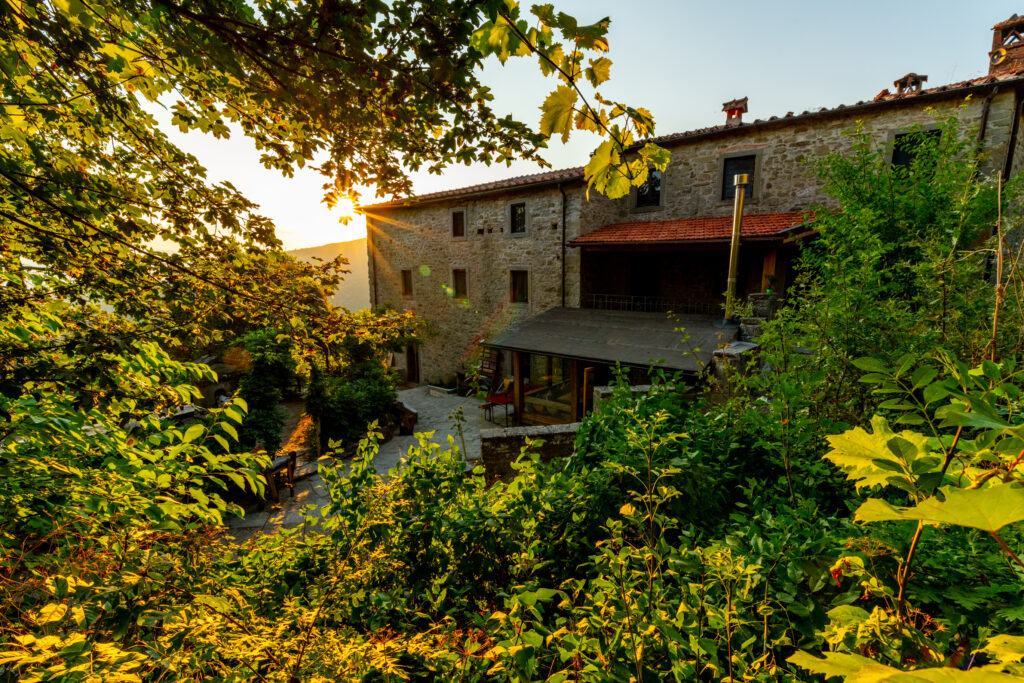
Novanta, tucked away in the Gello valley high in the Casentino hills, offers families a place where food and experience come together. It is not an all-inclusive resort, but an authentic agriturismo in Tuscany with children as full participants in the life of the borgo. Concretely, Novanta offers the following for families:
- Pasta making with local chefs, children roll out the dough themselves and eat what they have made
- Shared tables with Tuscan food based on the cucina povera tradition
- Foraging walks where children learn what is edible in nature
- Holiday homes with their own kitchen for families who want to cook with local produce
- Truffle hunting in the surrounding forests, adventurous and educational at the same time
Whether you choose a hotel room or a self-contained holiday home, Novanta ensures that children not only eat well, but also understand where that food comes from. Want to know which accommodation suits your family best? Browse the available holiday homes in Tuscany and plan your family holiday in the heart of the Casentino.
Frequently Asked Questions
What do I do if my child absolutely refuses to eat vegetables during a Tuscan dinner?
In Tuscan cuisine, vegetables are often prepared in a way that makes them less visible but still flavorful — think spinach in lasagne, beans in a thick ribollita, or finely chopped vegetables in a tomato sauce. Start small: let your child help arrange an antipasto platter or chop vegetables, because children who are involved in the preparation are more likely to taste. The social dining atmosphere in Tuscany, where everyone shares from the same platters, also lowers the barrier to trying something new.
Are there Tuscan dishes that children with a gluten intolerance or allergy can still eat?
Yes, Tuscan cuisine offers surprisingly many options for children with a gluten intolerance. Castagnaccio, the chestnut flour cake, is naturally gluten-free, as is polenta and many bean and vegetable dishes from the cucina povera tradition. When staying in a holiday home with its own kitchen, such as those at Novanta, you can purchase local, fresh ingredients yourself and easily adapt dishes to suit your child’s needs.
At what age can children take part in a pasta-making workshop?
Children can meaningfully take part in making pasta from around the age of three, for example by kneading dough or tearing off pieces. From around the age of six, they can also roll out and cut the pasta themselves under supervision. At Novanta, pasta-making activities are guided by local chefs who are experienced in working with families, ensuring the activity is safe and fun for a range of ages.
How do I prepare my child at home for Tuscan cuisine, so they are less picky on holiday?
Good preparation starts at home: in the weeks before departure, make a simple Tuscan dish together, such as bruschetta with fresh tomato or tagliatelle with butter and Parmesan, so the flavors already feel familiar. Tell your child enthusiastically about what you will be eating and cooking on holiday, and give them a small role, such as choosing a dessert or helping with a shopping list. Children who feel they have a say are generally much more open to new flavors.
Where can I buy local products in Tuscany to cook Tuscan food with my children?
Most Tuscan villages have a weekly market where local farmers sell fresh vegetables, cheese, olive oil, and bread — a visit there is itself a fun outing with children. Agriturismo establishments such as Novanta often also offer their own products or can point you to local producers nearby. Supermarkets in the region such as Coop or Conad also carry a wide range of regional products, such as pici, local olive oil, and chestnut flour, which you can easily use at home in your holiday house.
Is Tuscan dining culture, with long meals and late dinner times, suitable for young children?
Long meals can be a challenge for young children, but Tuscan dining culture also has its advantages: food is served in several small courses, giving children the chance to taste something and then be distracted for a while. A practical tip is to dine early — Italian restaurants often serve families with children from 6:00 pm onwards — and the antipasto platter as a first course gives hungry children something to nibble on straight away. Those staying in a holiday home also have the freedom to adapt the rhythm entirely to the family.
What are the best Tuscan regions or cities for culinary experiences with children?
The region around Siena is ideal for families who want to discover Tuscan cuisine: this is where pici, ricciarelli, and panforte originate, and there are regular local markets and food festivals. The Casentino, where Novanta is located, is less touristy and offers a more authentic experience with foraging walks, truffle hunting, and direct contact with local producers. Florence is a good choice for a day trip with older children who already have a little more interest in the broader culinary and cultural context of the region.
