

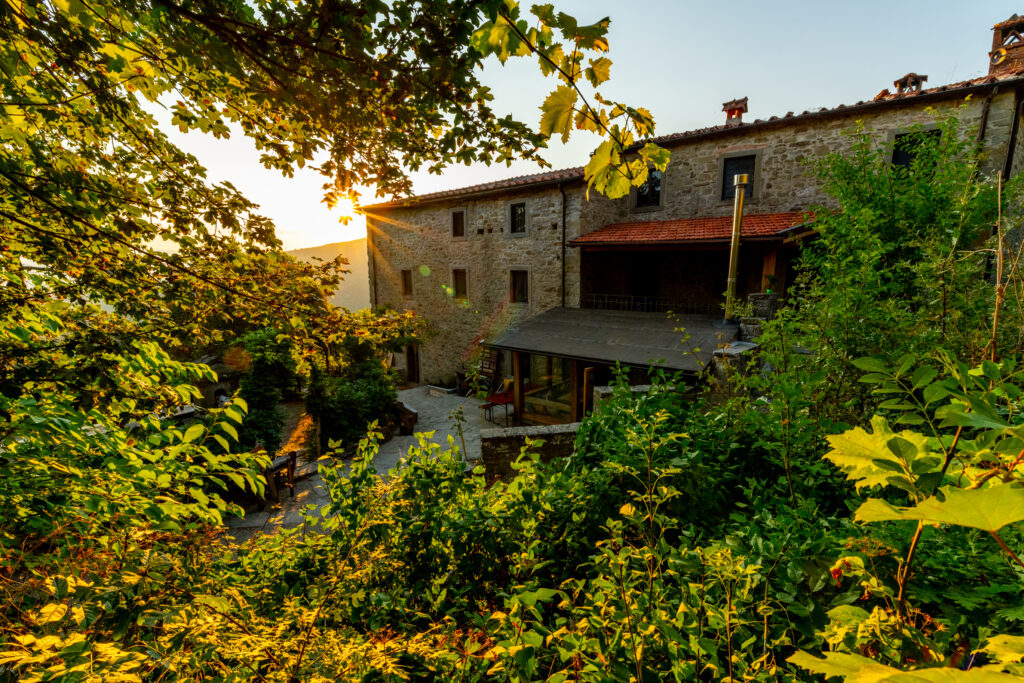
An agriturismo in Tuscany promises more than just a place to sleep in the countryside. It is a way of traveling where the surroundings, the food, and the rhythm of daily rural life take center stage. For families looking for an authentic family vacation in Tuscany, far from busy cities and tourist crowds, an agriturismo with a swimming pool offers exactly that combination of nature, freedom, and understated luxury that more and more people are seeking.
But what can you actually expect? And does an agriturismo really differ that much from a regular hotel or holiday park? This article explains it all, from the accommodation to the food and the activities.
What sets an agriturismo apart from a regular hotel
At its core, an agriturismo is a working or historic farm that welcomes guests. That sounds simple, but the impact on the holiday experience is significant. Where a hotel rents you a room and asks little else of you, an agriturismo invites you to become part of a place with its own history, rhythm, and community.
The atmosphere is more informal, the surroundings often wilder, and the connection to the landscape far more direct. Think of walking trails that begin at your front door, views over unspoiled hills, and meals made with ingredients from the land itself. There is no room service or concierge, but there is genuine peace and space. For families who value adventure and authenticity over comfort and pampering, that is a deliberate choice.
Accommodation: from hotel room to private holiday home
The variety in accommodation types is one of the greatest strengths of a good agriturismo. Depending on the group size and the desired level of independence, there are usually several options available.
Smaller families or couples often opt for a hotel room or suite, where meals and social life revolve around the shared spaces. Larger families or groups of friends benefit more from a self-contained holiday home with its own kitchen and living area. That independence makes a big difference: children can roam freely, there is room for cooking your own meals, and multiple families can spend time together without being on top of each other.
Rustic charm and modern comfort need not be mutually exclusive. Good agriturismo properties invest in comfortable beds, well-kept bathrooms, and functional kitchens, without losing the authentic character of the building.
The swimming pool as the focal point of the stay
In the Tuscan summer, a swimming pool is not a luxury — it is a necessity. Temperatures in July and August regularly climb above 35 degrees, and the afternoon is the time to seek shade and slow down.
At an agriturismo, the swimming pool is rarely an anonymous recreational facility. It is the place where guests meet, children make friends, and the day finds its own rhythm. Morning walks, afternoon swims, evening meals together. That rhythm is, for many families, exactly what a holiday should be. A twenty-meter pool also offers plenty of room for both relaxed swimming sessions and games with children.
Food and drink: cucina povera and long shared tables
The culinary heart of a traditional Tuscan agriturismo beats with the so-called cucina povera: the cooking of the poor. No complicated sauces or elaborate menus, but simple, seasonal dishes with maximum flavor. Fresh pasta, ribollita, bruschetta with local olive oil, roasted meat with wild herbs.
Meals at long, shared tables are more than just eating. They are a social event where guests from different countries sit side by side and conversations arise that would never happen back home. For children, that is a special experience. For parents too. The food is part of the holiday, not merely a side note.
Activities in and around the estate
An agriturismo in the Tuscan hills offers a wide range of activities, both on the property itself and in the immediate surroundings. The combination of nature, culture, and local knowledge means that every day can be different.
- Hiking through forests and over rolling hills, often directly from the estate
- Truffle hunting with a local guide and an experienced dog
- Making pasta or sausage in a traditional cooking workshop
- Wine tasting from local producers in the area
- E-mountain biking for those who want to explore the hills at their own pace
- River and forest excursions for families with children who want to explore
Most of these activities are organized with or by local people, which makes the connection to the region feel all the more authentic. It is not the kind of program you tick off a list, but experiences that stay with you.
Sustainability and local rootedness
A good agriturismo does not stand apart from its surroundings but actively takes part in them. In practice, that means sourcing locally, collaborating with farmers and craftspeople from the area, and being mindful of energy use and waste.
For travelers with an ecological awareness, that is not a minor detail. It is a reason to choose precisely this type of accommodation. An agriturismo that involves its guests in the local community, contributes to the preservation of the landscape, and leaves no unnecessary footprint aligns with a way of traveling that more and more people are consciously pursuing.
Sustainability here also means: less by car, more on foot. Many agriturismo properties in remote valleys are car-free within the village, which greatly enhances the peace and safety for children.
Who is an agriturismo with a swimming pool the right choice for?
Not every traveler is suited to an agriturismo, and that is perfectly fine. This type of holiday calls for a certain mindset: openness to the unexpected, an appreciation for simplicity, and a willingness to accept nature as the main attraction.
The following travelers typically find exactly what they are looking for here:
- Families with children who want space to explore, make friends, and be outdoors without everything being organized for them
- Groups of friends or multiple families together who want a place of their own with shared facilities
- Travelers who prefer authenticity over five-star service and room service
- Nature and culture lovers who want to be active but also want to slow down
- Eco-conscious travelers who want to align their holiday with local and sustainable values
An agriturismo is not a holiday park and not a design hotel. Those who understand and embrace that will go home with a rich experience.
How Novanta makes an agriturismo holiday in Tuscany possible
Novanta is located in the historic Borgo di Gello, tucked away in the Casentino hills of Tuscany, bordering the Casentino National Park. The borgo comprises 16 houses and a church, and offers a combination of hotel rooms and self-contained holiday homes — exactly the mix that suits the varying needs of families and groups.
What Novanta concretely offers for an authentic family vacation in Tuscany:
- Self-contained holiday homes with their own kitchen for larger families or groups of friends
- Hotel rooms, studios, and cottages for those looking for a smaller, more looked-after option
- A 20-meter swimming pool as the shared focal point of the stay
- Activities such as truffle hunting, pasta making, wine tasting, and e-mountain biking
- Meals based on the cucina povera, at long tables with other guests
- A car-free village with direct access to nature, walking trails, and the river
- A strong focus on local collaboration and sustainability
Would you like to know more about the accommodation options or plan a stay? View the full offering on the Novanta website and discover which option best suits your family or group.
Frequently Asked Questions
Wat is de beste tijd van het jaar om een agriturismo in Toscane te bezoeken met kinderen?
De maanden mei, juni en september zijn ideaal voor een gezinsvakantie op een agriturismo in Toscane. Het weer is aangenaam warm zonder de extreme hitte van juli en augustus, de natuur staat in volle bloei en het is er een stuk rustiger. Juli en augustus zijn ook mogelijk, maar houd dan rekening met temperaturen boven de 35 graden; een zwembad is in die periode dan ook onmisbaar.
Hoe ver van de bewoonde wereld ligt een typische agriturismo, en heb ik altijd een auto nodig?
De meeste agriturismo’s in de Toscaanse heuvels liggen relatief afgelegen, wat juist onderdeel is van de charme. Een huurauto is aan te raden om uitstapjes naar nabijgelegen stadjes zoals Arezzo, Poppi of Cortona te maken. Binnen het landgoed zelf, zoals bij een autovrij borgo als Novanta, heb je echter geen auto nodig: wandelpaden, de rivier en alle voorzieningen zijn te voet bereikbaar.
Zijn de activiteiten zoals truffels zoeken en pasta maken ook geschikt voor jonge kinderen?
Absoluut. Activiteiten zoals truffels zoeken met een hond en een gids of een eenvoudige pastaworkshop zijn juist erg populair bij kinderen van alle leeftijden. Ze zijn praktisch, interactief en hoeven geen voorkennis. Het is wel verstandig om vooraf te informeren naar de minimumleeftijd of het tempo van een specifieke workshop, zodat je de activiteit kunt afstemmen op de jongste deelnemers in jouw groep.
Wat is het verschil tussen een hotelkamer en een zelfstandig vakantiehuis op een agriturismo?
Een hotelkamer of suite op een agriturismo biedt een meer verzorgde ervaring waarbij maaltijden en gedeelde ruimtes centraal staan; ideaal voor stellen of kleine gezinnen die weinig zelf willen regelen. Een zelfstandig vakantiehuis geeft je een eigen keuken, woonkamer en buitenruimte, wat meer vrijheid en privacy biedt. Voor grotere gezinnen of meerdere gezinnen samen is een vakantiehuis vaak de betere keuze, omdat kinderen vrij kunnen rondlopen en je op eigen tempo kunt leven.
Hoe ver op voorhand moet ik boeken voor een zomervakantie op een agriturismo in Toscane?
Voor de populaire zomermaanden juli en augustus is het sterk aan te raden om minstens vier tot zes maanden op voorhand te boeken, zeker als je een zelfstandig vakantiehuis of een specifiek accommodatietype op het oog hebt. Goede agriturismo’s met een zwembad en authentieke ligging raken snel volgeboekt. Voor mei, juni of september is drie maanden op voorhand doorgaans voldoende, maar vroeg boeken vergroot altijd je keuzemogelijkheden.
Wat als mijn kinderen kieskeurig zijn met eten — past de Toscaanse keuken daar wel bij?
De cucina povera van Toscane is verrassend kindvriendelijk: verse pasta, gegrild vlees, bruschetta met olijfolie en eenvoudige soepen zijn gerechten die de meeste kinderen wel lusten. Bovendien zijn de maaltijden op een agriturismo doorgaans informeel en flexibel van opzet. Als je een vakantiehuis met eigen keuken boekt, kun je altijd zelf koken voor de meest kieskeurige eters. Het is altijd een goed idee om bij boeking even te vermelden of er specifieke dieetwensen of allergieën zijn.
Is een agriturismo ook geschikt voor een vakantie met meerdere gezinnen samen, en hoe werkt dat praktisch?
Een agriturismo is bij uitstek geschikt voor meerdere gezinnen samen, zeker als er zelfstandige vakantiehuizen beschikbaar zijn. Elk gezin heeft dan zijn eigen privéruimte, terwijl gedeelde voorzieningen zoals het zwembad, de eettafel en de activiteiten een gemeenschappelijke beleving creëren. Het is praktisch om bij boeking te controleren of de huizen dicht bij elkaar liggen en of er mogelijkheden zijn voor gezamenlijke maaltijden, zodat je het beste van beide werelden combineert.
Related Articles
- Is een natuurvakantie in Toscane geschikt voor het hele gezin?
- Wat zijn leuke buitenactiviteiten voor kinderen in Toscane?
- Agriturismo met zwembad in Toscane: wat kun je verwachten?
- Wat zijn de voordelen van een vakantiehuis met eigen keuken voor een gezin in Toscane?
- Agriturismo with swimming pool in Tuscany: what can you expect?
