

Planning a holiday with a large group in Tuscany is one of the most wonderful things you can do, and at the same time one of the most complex. Whether it’s two families wanting to travel together, a group of friends with teenagers, or an extended family finally taking the time to be together: once you’re looking for a holiday home for eight or more people, questions arise that you’d never think about with a regular booking. What counts as enough space? How do you split the costs fairly? And what does the rental contract actually say? This article guides you through the key points to consider, so that your family holiday in Tuscany gets off to a smooth start.
How many bedrooms and bathrooms are really enough?
The number of bedrooms is the first thing everyone looks at, but the number of bathrooms is just as important in determining how the holiday feels. A house with six bedrooms and two bathrooms sounds spacious, but in the morning, when everyone wants to shower at the same time, it quickly becomes a bottleneck.
A rule of thumb that works well: count on at least one bathroom per three to four people. For larger groups with children, it’s convenient to have an extra toilet available, separate from the bathrooms. Also look at the layout of the house: are the bedrooms spread across multiple floors or wings, so that families have their own space? Privacy within a group holiday is not a luxury — it’s a prerequisite for a relaxed atmosphere.
When comparing holiday homes, also pay attention to the sleeping arrangements. “Eight people” can mean four double rooms, but also six single beds and a bunk bed. Always check the exact sleeping configuration before booking, especially if you’re travelling with teenagers who no longer want to sleep in a bunk bed.
Shared spaces that keep a large group together
A large group needs more than just bedrooms. The shared spaces largely determine whether the holiday truly feels like a shared experience, or whether everyone retreats to their own room.
When choosing a holiday home, consider the following points:
- A dining table where everyone can sit at the same time — a table for twelve is not a given in smaller homes
- A kitchen suitable for large-scale cooking, with enough hob burners, a large fridge, and sufficient workspace
- An outdoor terrace or garden where the group can sit together in the evenings
- A living room large enough for everyone, without having to drag chairs from the bedrooms
- A pool or outdoor space that keeps the group together during the day without needing to get in the car
It’s precisely those shared moments — the communal dinners, the spontaneous conversations by the pool — that turn a group holiday into a lasting memory. A house that provides the physical space for that is worth every penny.
Location and accessibility: remote versus central in Tuscany
Tuscany is large and varied. The choice between a house near Florence, deep in the Chianti hills, or in a lesser-known region such as the Casentino has a significant impact on how the holiday unfolds.
A central location sounds practical, but for large groups it isn’t always the best choice. Popular areas are busier, more expensive, and less suitable if you’re looking for peace and space. A more remote location requires more planning — you can’t just pop out for groceries — but in return it offers tranquillity, nature, and an authentic atmosphere that is hard to find in tourist centres.
When choosing a location, also ask yourself how the group plans to get around. Does everyone have their own car, or does the group travel together? A holiday home that is only accessible via narrow mountain roads requires driving skill and good preparation. Also check whether there is sufficient parking for multiple vehicles.
What is and isn’t in the contract?
The rental contract is the least glamorous part of the preparation, but the most decisive when something goes wrong. Take the time to read it carefully, even if it’s in Italian or English.
At a minimum, check the following points:
- Deposit: How high is the security deposit, when is it paid, and under what conditions is it refunded?
- Cancellation policy: What happens if someone in the group drops out or if the trip cannot go ahead?
- Cleaning fees: Are they included or added on top of the rental price?
- Maximum occupancy: Is there a maximum number of guests stated in the contract? Some landlords charge extra for more people than specified.
- Pets and smoking: Are they permitted, and if so, under what conditions?
- Use of facilities: Is the pool always available, or are there fixed hours or additional costs associated with its use?
A good contract protects both parties. If you have doubts about a clause, ask for clarification before you sign. Landlords who are unwilling to provide that are a red flag in any case.
Activities and surroundings: more than just a pool
A pool is a must for most groups, but a two-week holiday consists of more than just lounging by the water. Especially with teenagers or active families, it’s important that there is plenty to do in the surrounding area.
When choosing a location, also look at what the immediate surroundings have to offer. Are there walking routes from the house itself? Is there a river or lake nearby? Are there local markets, wineries, or culinary experiences the group can visit? That combination of active and culinary experiences makes a holiday in Tuscany richer than a stay where you have to get in the car every day.
For groups who want more than standard tourist attractions, experiences such as truffle hunting, a pasta-making class, or a local wine tasting are particularly suitable. They are accessible to different age groups, bring the group together, and give a sense of how people in the region really live.
Budget allocation for a shared group holiday
Money is the topic most likely to cause tension within a group, especially when not everyone has the same financial means. A clear agreement in advance prevents awkward conversations afterwards.
Divide the costs into categories and decide per category how to split them: equally per person, per family, or based on usage. The rental price is typically divided per family or per bedroom, but groceries, day trips, and restaurant visits are better tracked per person using a shared app. There are handy apps available that make it easy to track group expenses and settle up at the end of the holiday.
Also account for hidden costs: cleaning fees, the deposit, fuel for day trips, and any extras such as a barbecue or bike rental. By naming these in advance and including them in the shared budget, you avoid surprises.
How Novanta helps with a group holiday in Tuscany
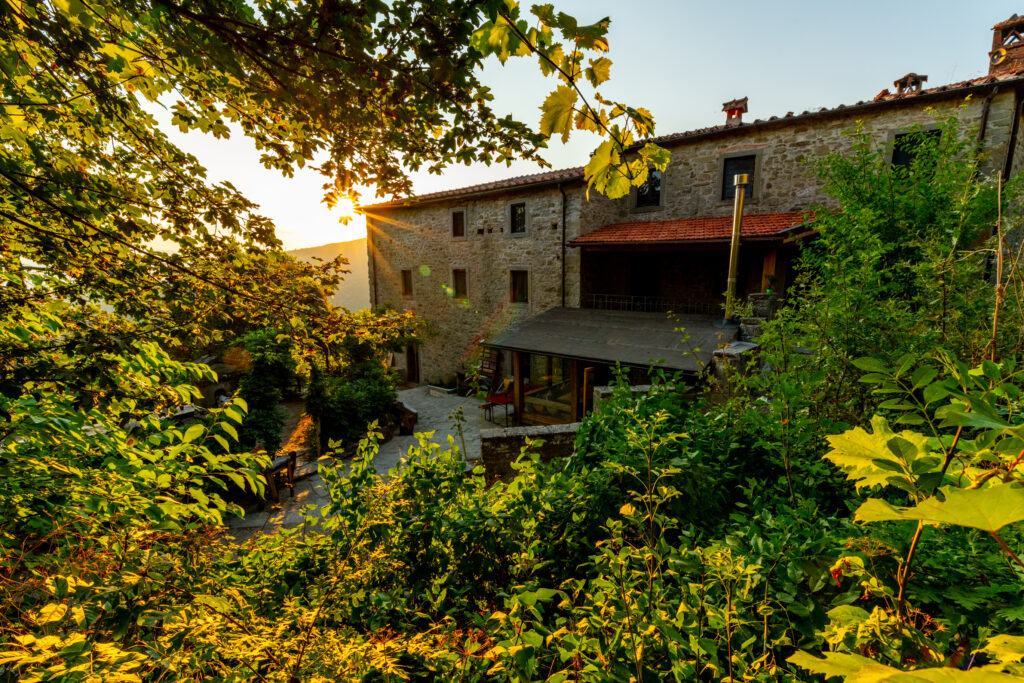
Novanta offers in the Gello valley in the Casentino a unique combination of self-contained holiday homes in Tuscany and a rich surrounding area that accommodates large groups and multiple families together. The borgo has sixteen houses with two or three bedrooms, each with its own kitchen and space for a family or part of the group, while the shared spaces and the twenty-metre pool bring the group together.
What sets Novanta apart from a standard holiday home:
- Car-free village: the car stays at the entrance, luggage is transported by 4×4 — ideal for families with young children or a lot of luggage
- Direct access to nature: walking routes, a river, and the Casentino National Park begin literally at the doorstep
- Local experiences such as truffle hunting, pasta making, wine tastings, and e-mountain biking, organised together with local residents
- Sustainable approach with local produce and energy-efficient systems, for travellers who make conscious choices
- Suitable for groups of up to one hundred guests for special occasions
Want to know which houses are available for your group and travel period? Browse the range of holiday homes at Novanta and enquire directly about the options for multiple families together.
Frequently Asked Questions
Hoe ver van tevoren moet ik een vakantiehuis voor een grote groep in Toscane boeken?
Voor grote groepen is het sterk aan te raden om minimaal zes tot twaalf maanden van tevoren te boeken, zeker voor de zomermaanden (juli en augustus). Het aanbod van vakantiehuizen dat geschikt is voor acht of meer personen is beperkter dan het standaardaanbod, en de mooiste locaties zijn snel vergeven. Boek je via een borgo zoals Novanta, waarbij meerdere huizen tegelijk beschikbaar zijn, dan heb je iets meer flexibiliteit, maar ook daar geldt: hoe eerder, hoe beter.
Wat is de beste manier om de kamerverdeling eerlijk te regelen binnen de groep?
Bespreek de kamerverdeling vóór de boeking, niet erna. Maak een overzicht van de beschikbare kamers met hun kenmerken (grootte, eigen badkamer, uitzicht) en laat iedereen een voorkeur aangeven. Bij gelijke aanspraken op een populaire kamer kun je loten of een roulatiesysteem afspreken voor een langere vakantie. Door dit transparant en vroeg te regelen, voorkom je dat er vlak voor of tijdens de vakantie ongemakkelijke discussies ontstaan.
Welke app gebruik je het best om groepsuitgaven bij te houden tijdens de vakantie?
Splitwise is de meest gebruikte en gebruiksvriendelijke app voor het bijhouden van gedeelde uitgaven in een groep: je voegt alle deelnemers toe, logt elke uitgave en de app berekent automatisch wie wie hoeveel verschuldigd is. Tricount is een goed Nederlandstalig alternatief dat veel Nederlandse reizigers gebruiken. Spreek vooraf af wie welke uitgaven invoert, zodat er aan het einde van de vakantie geen discussie is over wat wel of niet is meegenomen.
Is een reisverzekering noodzakelijk bij een groepsvakantie, en hoe regel je dat?
Een reisverzekering is bij een groepsvakantie eigenlijk nog belangrijker dan bij een individuele reis, omdat de financiële gevolgen van een annulering of incident groter zijn. Ieder gezin of individu sluit bij voorkeur een eigen annuleringsverzekering af, zodat iemand die wegvalt zijn of haar deel van de kosten vergoed kan krijgen zonder dat de rest van de groep daarvoor opdraait. Controleer ook of je reisverzekering een aansprakelijkheidsdekking bevat, voor het geval er schade ontstaat aan het vakantiehuis.
Hoe houd je rekening met verschillende wensen en leeftijden binnen de groep bij het plannen van activiteiten?
Plan een mix van gestructureerde groepsactiviteiten en vrije dagen waarop iedereen zijn eigen gang kan gaan. Ervaringen zoals een pastales, truffeljacht of wijnproeverij zijn toegankelijk voor brede leeftijdsgroepen en zorgen voor gedeelde herinneringen zonder dat iedereen hetzelfde tempo hoeft aan te houden. Maak bij aankomst een globaal weekschema en vraag iedereen om één activiteit in te brengen die hij of zij graag wil doen, zo voelt niemand zich buitengesloten en is er voor elk wat wils.
Wat moet ik controleren als het vakantiehuis bij aankomst niet overeenkomt met de beschrijving?
Documenteer eventuele afwijkingen direct bij aankomst met foto’s en video’s, en meld dit dezelfde dag schriftelijk bij de verhuurder of het boekingsplatform. Wacht niet tot het einde van de vakantie, want veel platforms en verhuurders hanteren strikte meldingstermijnen. Heb je geboekt via een platform zoals Airbnb of Booking.com, dan kun je een geschil openen via hun klantenservice. Heb je rechtstreeks geboekt, verwijs dan naar de beschrijving in het contract als bewijs.
Is het voordeliger om één groot vakantiehuis te huren of meerdere kleinere huizen naast elkaar?
Dat hangt af van de samenstelling en de wensen van de groep. Eén groot huis is doorgaans goedkoper per persoon en bevordert het groepsgevoel, maar biedt minder privacy voor afzonderlijke gezinnen. Meerdere kleinere huizen op dezelfde locatie, zoals bij een borgo, combineren het beste van beide werelden: elk gezin heeft zijn eigen ruimte en ritme, terwijl gedeelde faciliteiten zoals een zwembad en een gemeenschappelijk terras de groep samenbrengen. Voor groepen met jonge kinderen of uiteenlopende slaapritmes is die combinatie vaak de meest comfortabele keuze.
