

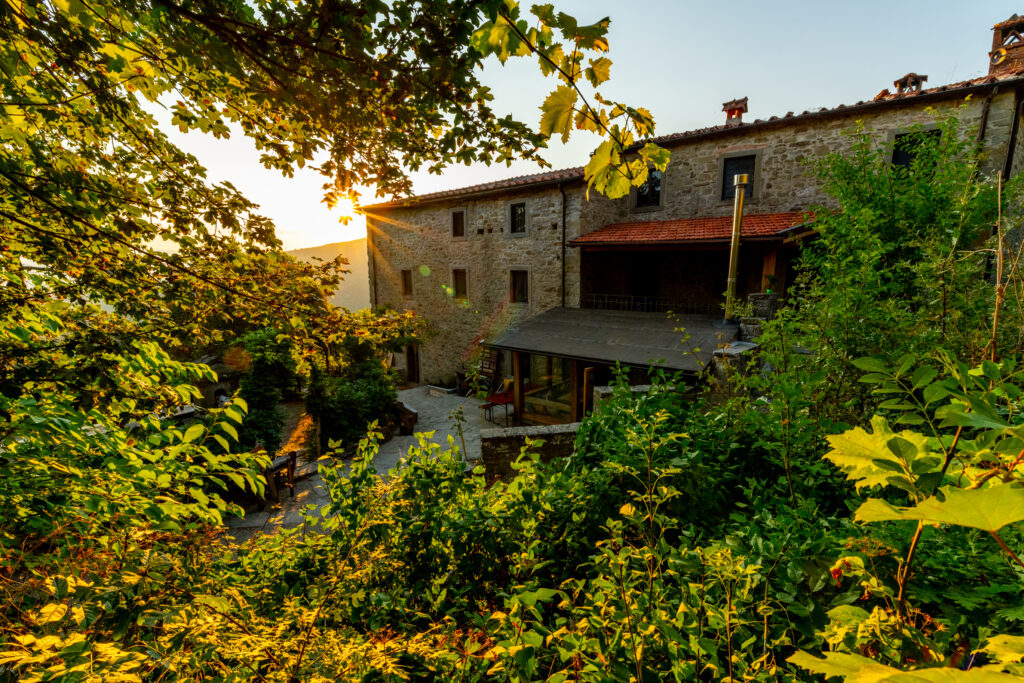
Tuscany has been high on the wish list of families looking for a holiday with character for years. Rolling hills, centuries-old villages, local flavors, and the space to truly unwind — it’s a destination that has something to offer both children and parents. But when is the best time to go to Tuscany with kids? The answer depends on the age of your children, school holidays, and what you’re looking for in a family holiday in Tuscany. This article helps you decide.
Season by season: what can you expect?
Tuscany has a pronounced Mediterranean climate, but the four seasons vary greatly in atmosphere, crowds, and comfort for families with children.
- Spring (April–May): Mild and green, with blooming fields and relatively few tourists. Ideal for hikers and nature lovers. Rain showers are possible, but temperatures are pleasant.
- Summer (June–August): Warm to hot, lively, and perfect for families who want to enjoy pools, outdoor activities, and long evenings outside. The busiest period, but also the most atmospheric.
- Autumn (September–October): Truffle season begins, grapes are harvested, and the heat is gone. Less touristy, but also less suitable for young children who need warmth and a swimming pool for their enjoyment.
- Winter (November–March): Quiet, cold, and atmospheric in the cities, but not very appealing for an active family holiday in nature. Many accommodations and activities are closed.
For most families, the choice quickly falls on the period between May and September. But even within that window, there are clear differences worth knowing.
Why summer is the logical choice for most families
The summer months are by far the most popular period for a family holiday in Tuscany, and for good reason. Temperatures between 28 and 35 degrees, long days, and a pool that truly invites — it’s a combination that’s hard to beat for families with children.
Children benefit from structure and predictability, and summer provides exactly that. Outdoor activities are possible without exception: hiking through the hills in the morning, swimming in the afternoon, dining together at sunset. Local festivals and markets are in full swing in July and August, giving the atmosphere an authentic and lively feel.
Moreover, the Dutch and Belgian summer holidays — roughly mid-June to late August — coincide precisely with the most active period in Tuscany. This means children from other families are also present, which makes social interaction easier, especially if you’re traveling with multiple families at once.
The only downside is the heat during the hottest part of the day. A good strategy is to be active early and reserve the hours between 1:00 PM and 4:00 PM for rest, shade, and water.
The pros and cons of the shoulder months May and September
Those who have flexibility with school holidays, or whose children are not yet of compulsory school age, may consider traveling to Tuscany in May or September. Both months have their own distinct character.
May: green, quiet, and surprisingly pleasant
May is one of the most beautiful months in Tuscany. Nature is in full bloom, temperatures are comfortably around 20 to 25 degrees, and tourist crowds are limited. Hiking, cycling, and foraging trips are particularly enjoyable in this season. The pool may still be cold, which can be a disappointment for younger children.
September: warmth with a hint of autumn
September combines the best of both worlds: the warmth of summer remains (often still 25 to 30 degrees), but the crowds diminish. The harvest season begins, truffles are found in the forests, and the local cuisine is at its richest. For families with older children who have an appreciation for culture and culinary experiences, September is an excellent choice.
The downside of both shoulder months is that they fall outside the school holidays for most families in the Netherlands and Belgium. That makes them less accessible, but all the more valuable for those who have the opportunity.
The age of the children also determines the ideal time
The age of the children plays a bigger role than many parents realize in advance. A toddler has different needs than a teenager, and planning a family holiday in Tuscany differs considerably as a result.
Toddlers and preschoolers (0–5 years) benefit most from predictability, a pool within walking distance, and plenty of shade. The heat of August can be tough on the youngest ones. June or early September are more comfortable.
Primary school children (6–12 years) are the ideal travelers for Tuscany. They’re old enough to hike, curious enough to participate in activities like pasta-making or truffle hunting, and young enough to enjoy the freedom of a large estate. The entire summer is suitable for them.
Teenagers (13+) appreciate the combination of adventure and autonomy. E-mountain biking through the hills, swimming in the river, meeting new people — these are experiences that appeal to them. They’re less bothered by the heat and enjoy the atmosphere in the evenings. July and August are ideal for them.
Practical tips for a successful Tuscan summer holiday with the family
Good preparation makes the difference between a good and an unforgettable holiday. A few insights that apply specifically to families in Tuscany:
- Book early: Popular accommodations in Tuscany fill up quickly during the summer holidays, especially if you want to travel with multiple families and need a larger house or multiple units.
- Plan activities in the morning: Hikes, truffle hunts, and cycling tours are most enjoyable before 11:00 AM. Reserve the afternoon for the pool or a siesta.
- Choose a location with its own kitchen: Children don’t always eat what’s on the menu. A holiday home with a kitchen gives you the freedom to cook for yourself and follow the family’s own rhythms.
- Prepare children for the adventurous side: Tuscany in the hills is not a theme park. Insects, unpaved paths, and a bit of walking from the parking area are part of the experience. That’s precisely what makes it special.
- Combine rest and activity: Don’t fill every day to the brim. Tuscany works best when you take the time to breathe, cook, and laze around. Children who are given the space to discover things for themselves remember that holiday the longest.
How Novanta helps with a family holiday in Tuscany
Novanta, nestled in the Gello valley in the Casentino hills, is particularly well suited for families looking for an authentic Tuscan holiday away from the tourist crowds. The concept is designed for people who prefer nature, community, and experience over pampering and fuss.
- Holiday homes with their own kitchen for families or multiple families together, with 2 or 3 bedrooms and access to the 20-meter-long swimming pool
- Car-free village: the car stays at the entrance, luggage is transported by 4×4 — children explore the borgo at their own pace
- Activities in the valley: truffle hunting, pasta-making, e-mountain biking, wine tasting, and river trips — all together with the local community
- Surrounded by the Casentino National Park: 300 hectares of forests and fields as your backyard
- Available from June through September — exactly the period that best aligns with the Dutch and Belgian summer holidays
Curious whether Novanta is a good fit for your family? Browse the holiday homes in Tuscany and discover which accommodation best suits the size of your group and the wishes of the children.
Frequently Asked Questions
Hoe ver van tevoren moet ik een vakantiehuis in Toscane boeken voor de zomervakantie?
Voor de Nederlandse en Belgische zomervakantie — met name juli en augustus — is het verstandig om minimaal 6 tot 9 maanden van tevoren te boeken. Populaire accommodaties, zeker die geschikt zijn voor meerdere families of grotere groepen, raken vaak al in het vroege voorjaar volgeboekt. Wie in mei of september reist, heeft doorgaans iets meer speelruimte, maar ook dan geldt: hoe vroeger, hoe beter.
Wat zijn de beste activiteiten in Toscane voor kinderen die niet van lange wandelingen houden?
Toscane biedt genoeg alternatieven voor kinderen die liever niet te lang lopen. Denk aan een interactieve pastamakesessie, een truffeljacht met een lokale gids en een speurhond, of een rustige fietstocht op een e-bike door de heuvels. Zwemmen in een rivier of het zwembad, lokale markten verkennen en meedoen aan een eenvoudige wijnproeverij voor kinderen (met druivensap) zijn ook populaire opties die weinig inspanning vragen maar veel indruk maken.
Is Toscane ook geschikt voor een vakantie met een baby of peuter?
Ja, maar het vraagt om een doordachte aanpak. Kies bij voorkeur voor juni of vroeg september om de extreme hitte van augustus te vermijden, en zorg voor een accommodatie met een zwembad op loopafstand en voldoende schaduw. Een vakantiehuis met eigen keuken is een grote plus, zodat je zelf maaltijden kunt bereiden op het ritme van de jongste kinderen. Houd dagprogramma’s kort en flexibel — de ontspannen sfeer van Toscane past verrassend goed bij het tempo van een peuter.
Wat als mijn kind niet gewend is aan warm weer — hoe bereid ik hem of haar voor op de Toscaanse hitte?
Begin in de weken voor vertrek met het opbouwen van blootstelling aan warmte, en bespreek met kinderen wat ze kunnen verwachten. Zorg tijdens de vakantie voor voldoende water, lichte kleding en een goede zonnebrandcrème met hoge beschermingsfactor. Plan de drukste activiteiten in de vroege ochtend en gebruik de middag als rustperiode — een siësta is in Toscane niet alleen cultureel, maar ook praktisch. Kinderen passen zich doorgaans snel aan, zeker als er een zwembad in de buurt is.
Kunnen we als gezin ook buiten de schoolvakanties naar Toscane, en is dat echt de moeite waard?
Als je kinderen nog niet leerplichtig zijn, of als je als ouder de mogelijkheid hebt om buiten de reguliere schoolvakanties te reizen, is mei of september een uitstekende keuze. De drukte is aanzienlijk minder, de prijzen liggen vaak lager en de natuur staat op zijn mooist. September heeft als extra voordeel dat de oogstperiode begint, met truffels, druiven en een rijke lokale keuken die de beleving extra diepgang geeft. Voor gezinnen die van authenticiteit houden, zijn dit de meest waardevolle maanden.
Hoe houd ik tieners enthousiast tijdens een familievakantie in Toscane?
Tieners hebben behoefte aan autonomie en avontuur, en Toscane biedt dat in overvloed. Geef ze de ruimte om zelf te ontdekken binnen een veilige omgeving, en plan activiteiten die hun energie aanspreken: e-mountainbiken door de heuvels, zwemmen in de rivier, of een truffeljacht door het bos. Betrek ze ook bij de voorbereiding — laat ze meebeslissen over uitstapjes of restaurantkeuzes. Avonden buiten met lokale sfeer en eten zijn voor tieners vaak de meest memorabele momenten van de vakantie.
Wat is het grootste verschil tussen een vakantiehuis en een hotel voor een gezinsvakantie in Toscane?
Een vakantiehuis biedt de flexibiliteit en ruimte die gezinnen met kinderen nodig hebben: een eigen keuken voor wie kieskeurige eters heeft, een eigen tuin of terras om vrij te bewegen, en geen vaste etenstijden of hotelregels. Voor families die meerdere weken blijven of samen reizen met andere gezinnen, is een huis ook financieel aantrekkelijker. Een hotel kan comfortabeler zijn voor korte verblijven, maar wie echt wil inleven in het Toscaanse leven — koken met lokale ingrediënten, luieren op het terras, de kinderen buiten laten spelen — kiest bij voorkeur voor een authentiek vakantiehuis.
