

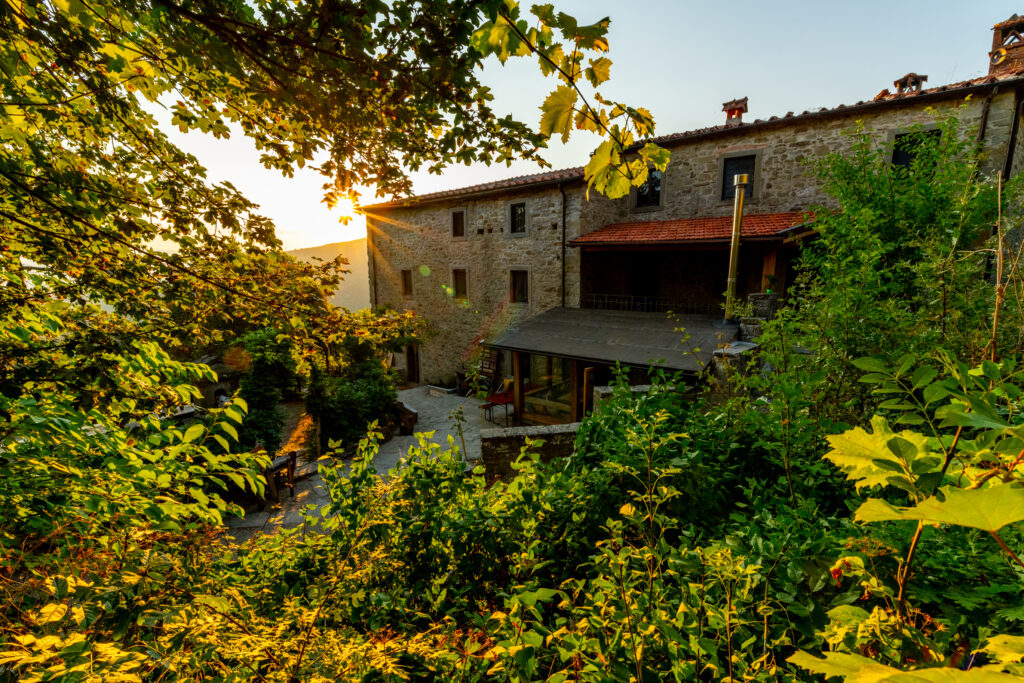
A family holiday in Tuscany conjures images of rolling hills, olive groves, and long tables laden with food. But those who look beyond the classic tourist trail discover a type of holiday that combines all that romance with genuine experience: the agriturismo. And not just any place to sleep on a farm, but a place where the pool, nature, and local culture come together into something you won’t soon forget.
More and more families are deliberately choosing an agriturismo with a pool in Tuscany, precisely because it offers an alternative to the busy tourism of cities like Florence or Siena. But what can you realistically expect? And how do you choose the right place? This article will help you get started.
What sets an agriturismo apart from a regular hotel
An agriturismo is originally an Italian concept in which guests stay on a working farm or estate. The owners combine agriculture or livestock farming with hospitality, and guests benefit from that connection to the land. That sounds simple, but the difference from a regular hotel is fundamental.
Where a hotel focuses on service and comfort as its end product, an agriturismo revolves around connection: with the surroundings, with the local community, and with the seasons. You are not a consumer of a holiday product, but a guest in a living place. That asks something of you as a traveler, but it also gives back so much more.
In practical terms, this means an agriturismo is often a little rougher around the edges than a hotel. The road leading to it may be unpaved, the wifi is sometimes slow, and an encounter with a lizard or insect comes with the territory. Families who can appreciate that will find a deeper holiday experience here than any five-star resort can offer.
The accommodation: rooms, cottages, and your own kitchen
Agriturismi typically offer various types of accommodation, from simple hotel rooms to fully equipped holiday homes with their own kitchen. For families, and especially for larger groups or multiple families together, that distinction matters.
A holiday home with its own kitchen gives you the freedom to cook for yourself, shop at the local market, and set your own pace. At the same time, you don’t have to arrange everything yourself: most agriturismi also offer shared facilities such as a pool, a communal dining area, or activities you can join whenever it suits you.
Cottages are popular with families who want to combine privacy with the atmosphere of a larger estate. Rooms in the main building are a better fit for smaller families or couples who prefer not to deal with household tasks on holiday. The choice depends on how independent you want to be and how much space you need.
Eating at long tables: the cucina povera experience
Perhaps the most distinctive feature of a good agriturismo is the food. Italian cucina povera, literally “poor kitchen,” revolves around simple ingredients prepared with craftsmanship. No frills, no complicated sauces, but pasta made from freshly ground flour, beans from the garden, and olive oil from the estate.
Meals are traditionally served at long, shared tables. That is more than a logistical choice: it is a social experience. Children get to know other children, adults strike up conversations with people they would never otherwise have met, and the meal becomes a centerpiece of the day rather than an interruption of it.
For families with children, this is particularly valuable. Children who are normally fussy eaters discover that homemade pasta with fresh tomato sauce suddenly tastes completely different. And if they made that pasta themselves during a cooking workshop, the effect is even greater.
Activities in and around the estate for the whole family
An agriturismo with a pool is more than a place to lounge around. The surroundings naturally provide a rich basis for activities that are interesting for both children and adults.
Typical activities you can expect at a well-situated agriturismo in Tuscany:
- Truffle hunting with a local guide and trained dog through the forest
- Hiking and cycling trips through hills and national parks
- Making pasta or sausage with ingredients from the estate or the region
- Wine tastings at local producers
- Swimming in the outdoor pool or a nearby river
- E-mountain biking through the rolling landscape
What these activities have in common is that they are connected to the place itself. They are not imported or artificial: you do what the locals do, learn from people who live and work there, and take away something that goes beyond a souvenir. For children who are looking for space and adventure, that is exactly what they need.
What to look for when choosing an agriturismo with a pool
Not every agriturismo is the same, especially when you’re traveling with a family. A number of practical points will help you make the right choice.
- Location and accessibility: How far is the agriturismo from the nearest town or supermarket? Is the road accessible by a regular car? Some estates are deliberately remote, which offers tranquility but also requires good preparation.
- Pool and safety: Check whether the pool is fenced, whether there is supervision, and whether it is suitable for young children. A large pool is great, but safety comes first.
- Type of accommodation: Make a deliberate choice between a hotel room, cottage, or full holiday home. Think about how much privacy and independence you want.
- Range of activities: Ask in advance what is organized and whether this is included or must be paid for separately. Especially with children, a varied offering is a real plus.
- Sustainability: Does the agriturismo work with local products? Are there solar panels or other sustainable measures? For eco-conscious travelers, this is increasingly a deciding factor.
Also take the time to read reviews from other families, not just from couples or business travelers. The experience with children can be fundamentally different, and that is reflected in the feedback from parents who have already been there.
How Novanta shapes your family holiday in Tuscany
Novanta combines everything that characterizes a strong agriturismo experience, in a place that seems purpose-made for it: the secluded Gello valley high in the Casentino hills, surrounded by approximately 300 hectares of nature bordering the Casentino National Park.
What Novanta concretely offers for families and groups:
- Self-contained holiday homes with 2 or 3 bedrooms and their own kitchen, suitable for multiple families together
- Hotel rooms, studios, and cottages for smaller families who don’t want a full house
- A 20-meter outdoor pool and access to the river in the valley
- Activities organized together with the local community: truffle hunting, pasta making, wine tastings, e-mountain biking, and river trips
- A car-free village: the car stays at the entrance, and luggage is taken to the house by 4×4
- Meals at long tables, based on the cucina povera tradition with local and sustainable ingredients
Novanta is not intended for those looking for pampering and room service. It is a place for families who value nature, authenticity, and community over comfort as an end in itself. Want to know whether Novanta is the right fit for your family holiday in Tuscany? Browse the offerings on the website and discover which accommodation suits you best.
Frequently Asked Questions
Wat is de beste tijd van het jaar voor een familievakantie op een agriturismo in Toscane?
De mooiste periodes zijn mei-juni en september-oktober: het weer is aangenaam, de drukte valt mee en de natuur staat op zijn mooist. Juli en augustus zijn populairder maar ook heter en drukker, wat met jonge kinderen soms minder ideaal is. Boek in die maanden wel ruim van tevoren, want goede agriturismi zoals Novanta zijn dan snel volgeboekt.
Hoe ver van tevoren moet ik een agriturismo met zwembad in Toscane boeken?
Voor het hoogseizoen (juli-augustus) reken je idealiter op 6 tot 9 maanden vooruit, zeker als je een vakantiehuis of cottage wilt voor meerdere families samen. In het voor- en naseizoen is 2 tot 3 maanden doorgaans voldoende. Houd er rekening mee dat populaire agriturismi vaak terugkerende gasten hebben die al vroeg herboeken, waardoor de beschikbaarheid beperkter is dan je zou verwachten.
Mijn kinderen zijn kieskeurig met eten — is een agriturismo dan wel de juiste keuze?
Juist wel. De ervaring leert dat kinderen op een agriturismo opvallend vaker nieuwe gerechten proberen, simpelweg omdat ze betrokken zijn bij het proces: groenten plukken, pasta rollen of deelnemen aan een kookworkshop maakt nieuwsgierig. De cucina povera-keuken is bovendien eerlijk en herkenbaar — pasta, brood, verse groenten — zonder ingewikkelde smaken. Vertel de gastheer bij aankomst gerust over eventuele allergieën of sterke voorkeuren; een goede agriturismo houdt daar rekening mee.
Kan ik een agriturismo combineren met uitstapjes naar steden als Florence of Siena?
Absoluut, al is het goed om bewust te kiezen hoe je je tijd verdeelt. De meeste agriturismi liggen op 45 minuten tot anderhalf uur rijden van de grote steden, dus een daguitstap is prima haalbaar. Maar houd er rekening mee dat het ritme op een agriturismo langzamer en meer ontspannen is — te veel uitstapjes inplannen haalt je uit die flow. Twee of drie stedentrips in een week van zeven dagen is een fijne balans voor de meeste gezinnen.
Wat zijn veelgemaakte fouten bij het boeken van een agriturismo met gezin?
De meest voorkomende fout is te weinig vragen stellen vóór de boeking: over de staat van de wegen, de diepte van het zwembad, de leeftijdsgeschiktheid van activiteiten of het beleid rondom huisdieren. Een tweede valkuil is uitsluitend afgaan op foto’s — die kunnen rooskleuriger zijn dan de werkelijkheid. Lees altijd recensies van andere gezinnen met kinderen in vergelijkbare leeftijden, en neem bij twijfel direct contact op met de eigenaar. Een goede gastheer beantwoordt je vragen graag en eerlijk.
Is een agriturismo ook geschikt voor meerdere families die samen op vakantie willen?
Dat is zelfs een van de sterkste toepassingen van dit type accommodatie. Agriturismi met meerdere vakantiehuizen of cottages op hetzelfde domein bieden precies de combinatie van samen zijn én eigen ruimte hebben. Kinderen spelen samen op het terrein, volwassenen eten samen aan lange tafels, maar elke familie heeft zijn eigen slaapkamers en keuken. Sommige domeinen, zoals Novanta, zijn specifiek ingericht op groepen en bieden de mogelijkheid meerdere woningen tegelijk te boeken.
Hoe duurzaam is een vakantie op een agriturismo vergeleken met een gewone hotelreis?
Een agriturismo scoort op meerdere punten beter: de voedselkilometers zijn laag doordat ingrediënten lokaal of op het domein zelf worden geproduceerd, je verblijft in een bestaand gebouw dat vaak duurzaam is gerenoveerd, en je draagt direct bij aan de lokale economie. Let bij je keuze op certificeringen of concrete duurzaamheidsmaatregelen zoals zonnepanelen, regenwateropvang of een biologische moestuin. Hoe meer de agriturismo echt verbonden is met het land en de streek, hoe groter de positieve impact van jouw verblijf.
