

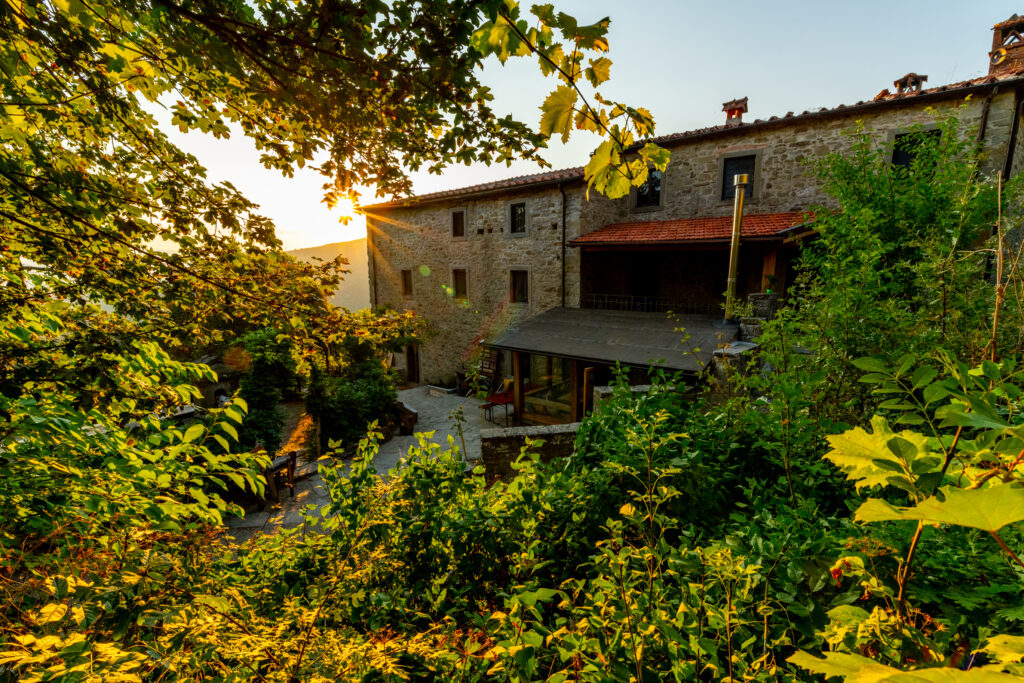
An agriturismo is more than a place to sleep — it is a way of traveling that appeals to a growing number of families looking for something real. No endless buffets, no entertainment teams, but space, silence, and the smell of freshly baked bread from a stone oven. For a family holiday in Tuscany, an agriturismo is therefore a particularly attractive choice: the region combines impressive nature with a rich culinary culture that introduces children to the Italian way of life in a playful way.
But is an agriturismo truly suitable for children? And what makes it different from a regular hotel or holiday park? This article explains everything, from the day-to-day experience to the practical side of traveling with a family.
How an agriturismo differs from a regular hotel
An agriturismo is originally a working farm that welcomes guests. The concept is deeply rooted in Italian rural culture and differs fundamentally from a standard hotel. Where a hotel revolves around service and comfort, an agriturismo revolves around authenticity and a connection with the surroundings.
In practice, this means guests often stay in renovated farmhouses or historic buildings, surrounded by olive groves, vineyards, or forests. Meals are prepared using produce from the property’s own land or from local farmers. The atmosphere is informal and communal — long tables, shared experiences, and conversations with the owners are the norm rather than the exception.
For families accustomed to the predictability of a hotel, an agriturismo requires a small shift in mindset. It is less about what is done for you and more about what you experience and discover yourself. That is precisely what makes it so special.
What children experience at an agriturismo
Children thrive at an agriturismo, precisely because it is not a holiday park. There is room to run, climb, and explore without everything already being arranged for them. That freedom, combined with genuine activities, leaves a lasting impression.
Typical experiences for children at an agriturismo include:
- Joining in the kitchen – making pasta or kneading bread together with the host or hostess
- Exploring nature – walking through forests, searching for wild plants or insects
- Meeting animals – on many agriturismi, chickens, goats, or sheep roam freely
- Truffle hunting – an adventurous search through the forest that equally excites children and adults
- Swimming and being outdoors – a swimming pool surrounded by hills is a very different experience from an indoor hotel pool
Teenagers who are initially skeptical are often surprised by how much there is to do and by the sense of freedom such a place offers. Friendships with other children on the farm develop naturally, without any activity program needed to make it happen.
Practical considerations for families
An agriturismo offers a great deal, but also requires realistic expectations. Those looking for a tightly organized holiday should know that the atmosphere here is deliberately relaxed and sometimes unpolished — and that is precisely its charm.
A few things to keep in mind:
- Accessibility – many agriturismi are remotely located. A car is almost always necessary, and narrow mountain roads come with the territory. Some locations even require a short walk from the parking area to the accommodation.
- Accommodation size – check whether there is enough space for the whole family. A private kitchen and separate bedrooms make a big difference with multiple children or a longer stay.
- Meals and allergies – the cuisine is often traditional and seasonal. Communicate dietary preferences or allergies in advance.
- Nature and minor inconveniences – insects, uneven floors, no air conditioning in older buildings: this is part of the experience. Children with an adventurous spirit will love it. Children used to maximum comfort may need a little more time to adjust.
- Wi-Fi and screens – connectivity can be limited in remote locations. For many families, this is a plus, but it is good to prepare children for this in advance.
Agriturismo in Tuscany: why this region is popular with families
Tuscany is one of the most popular regions for a family holiday in Italy for good reason. The combination of a mild climate, varied landscape, and a rich culinary tradition makes it an ideal destination for families with children of different ages.
The hills of Tuscany, from the Chianti region to the Casentino, offer a varied landscape that invites walking, cycling, and exploring. National parks, medieval villages, and ancient forests are within cycling distance or a short drive from most agriturismi. Added to this is the fact that Tuscan cuisine, with its simple, honest ingredients, also goes down well with children.
What sets Tuscany apart from other Italian regions is the density of authentic agriturismo accommodations. The region has a long tradition of welcoming guests to the countryside, which means quality and choice are high. Families who consciously choose a non-touristy Italy will find exactly what they are looking for here.
How to choose the right agriturismo for your family
Not every agriturismo is the same, and the choice depends greatly on what the family is looking for. A few targeted questions help find the right match.
First, consider the desired level of independence. Does the family want to be completely self-sufficient, with their own kitchen and private outdoor space? Then a holiday home with its own kitchen is the best choice. Those who prefer to leave the cooking to others and seek more interaction with fellow guests are better off choosing a room or suite with shared facilities.
Beyond that, these are the most important selection criteria:
- Age of the children – for toddlers, safety and a fenced grounds matter most; for teenagers, activities and freedom are more important
- Travel group – multiple families traveling together requires sufficient space and separate sleeping arrangements
- Activity offerings – check whether there are guided experiences such as cooking classes, cycling tours, or nature guides
- Location – how far is the agriturismo from the nearest town or supermarket?
- Sustainability – for eco-conscious families, it is worth knowing how the accommodation handles energy, waste, and local sourcing
How Novanta fits a family agriturismo holiday in Tuscany
Novanta, tucked away in the Gello valley high in the Casentino hills, is exactly the kind of place families are looking for when they want a genuine agriturismo experience without compromising on comfort. The borgo comprises 16 houses and a church, surrounded by some 300 hectares of rolling fields and forests bordering the Casentino National Park.
What Novanta concretely offers families:
- Spacious holiday homes with 2 or 3 bedrooms and a private kitchen – ideal for families or multiple families together
- A car-free village: the car stays at the entrance, luggage is transported by 4×4 – children explore the borgo freely and safely
- A 20-meter swimming pool, access to the river, and endless walking trails through the adjoining national park
- Guided experiences such as truffle hunting, pasta making, e-mountain biking, and wine tastings – organized together with the local community
- A culinary concept based on Tuscan “cucina povera”: simple, honest, and seasonal
Novanta is not a five-star hotel and has no desire to be one. It is a place for families who prefer nature, authenticity, and shared experiences over pampering. Want to know whether Novanta suits your holiday plans for 2026? Browse the available options on the website and discover which accommodation best matches the size and wishes of your travel group.
Frequently Asked Questions
Vanaf welke leeftijd is een agriturismo geschikt voor kinderen?
Een agriturismo is in principe geschikt voor kinderen van alle leeftijden, maar de ideale leeftijd hangt af van de specifieke locatie. Voor peuters en kleuters is het belangrijk dat het terrein omheind is en dat er veilige buitenruimte is om vrij te spelen. Kinderen vanaf een jaar of zes halen het meeste uit activiteiten zoals truffels zoeken, pasta maken en dieren voeren, terwijl tieners vooral genieten van de vrijheid, de natuur en de ongedwongen sfeer. Vraag bij de boeking altijd naar de kindvriendelijkheid van de specifieke accommodatie.
Hoe ver van tevoren moet ik een agriturismo in Toscane boeken voor de zomervakantie?
Voor een zomervakantie in Toscane, met name in juli en augustus, is het sterk aan te raden om minimaal zes tot negen maanden van tevoren te boeken. De populairste agriturismi, zeker die met ruime gezinsaccommodaties en een zwembad, raken snel vol. Wie flexibel is in reisdatum en kiest voor de schoudermaanden mei, juni of september, heeft meer keuze en profiteert bovendien van aangenamer weer en minder drukte.
Wat als mijn kind kieskeurig is met eten – is de Toscaanse keuken dan wel geschikt?
De Toscaanse keuken staat bekend om zijn eerlijke, herkenbare ingrediënten: pasta, brood, olijfolie, tomaten, kaas en vlees. Voor de meeste kinderen is dat geen probleem, maar kieskeurige eters kunnen soms botsen met een menu dat volledig seizoensgebonden en traditioneel is. Communiceer dit altijd van tevoren met de gastheer of gastvrouw, zij zijn doorgaans bereid om een eenvoudige alternatieve maaltijd te bereiden. Het voordeel van een accommodatie met eigen keuken is dat je altijd zelf kunt koken als dat nodig is.
Hebben we echt een auto nodig, of kunnen we ook zonder rondkomen?
Voor de meeste agriturismi in Toscane is een auto vrijwel onmisbaar. De mooiste en meest authentieke locaties liggen bewust afgelegen, ver van treinstations en busroutes. Zonder auto ben je sterk beperkt in je uitstapjes naar middeleeuwse dorpjes, markten of nationale parken. Huur je ter plekke een auto, dan heb je de meeste vrijheid. Houd er rekening mee dat smalle, onverharde wegen in de heuvels soms een hogere auto of 4×4 vereisen.
Kunnen meerdere gezinnen samen een agriturismo boeken?
Ja, en dat is juist een van de grote voordelen van een agriturismo ten opzichte van een hotel. Veel locaties bieden meerdere vakantiehuizen of appartementen op hetzelfde terrein, zodat twee of drie gezinnen samen kunnen reizen met elk een eigen privéruimte maar gedeelde buitenruimte. Dit is ideaal voor kinderen, die direct speelkameraden hebben, en voor ouders, die de kosten kunnen delen en toch hun eigen ritme bewaren. Boek in dat geval vroeg en geef duidelijk aan hoeveel volwassenen en kinderen meereizen.
Wat zijn veelgemaakte fouten bij het kiezen van een agriturismo voor een gezinsvakantie?
Een veelgemaakte fout is uitsluitend afgaan op foto’s zonder de praktische details te checken, zoals de afstand tot een supermarkt, de beschikbaarheid van een zwembad of de aanwezigheid van airconditioning in oudere gebouwen. Een andere valkuil is een accommodatie kiezen die te klein is voor het gezelschap, waardoor de vakantie onnodig stressvol wordt. Lees altijd recente beoordelingen van andere gezinnen en neem bij twijfel direct contact op met de eigenaar om je specifieke vragen te stellen.
Hoe bereid ik mijn kinderen voor op een agriturismo-vakantie zonder dat ze teleurgesteld zijn?
De sleutel is eerlijke verwachtingen scheppen vóór vertrek. Leg kinderen uit dat er geen animatieteam of speelhal is, maar dat er in ruil daarvoor echte avonturen wachten: dieren voeren, truffels zoeken en pasta maken met een echte Italiaanse kok. Betrek kinderen bij de voorbereiding door hen te laten meekijken op de website of foto’s van de locatie te laten zien. Kinderen die weten wat hen te wachten staat en zich er op verheugen, passen zich doorgaans veel sneller aan de rustiger, avontuurlijkere sfeer aan.
